
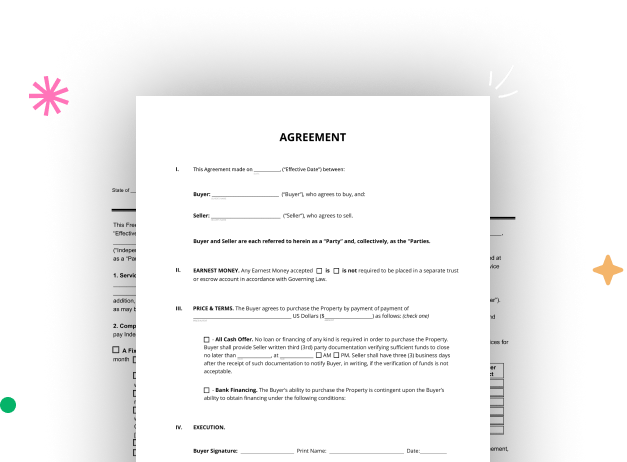
Create your Mortgage Closing Document from scratch

Start Building Now
Title decoration

Here's how it works

01. Start with a blank Mortgage Closing Document
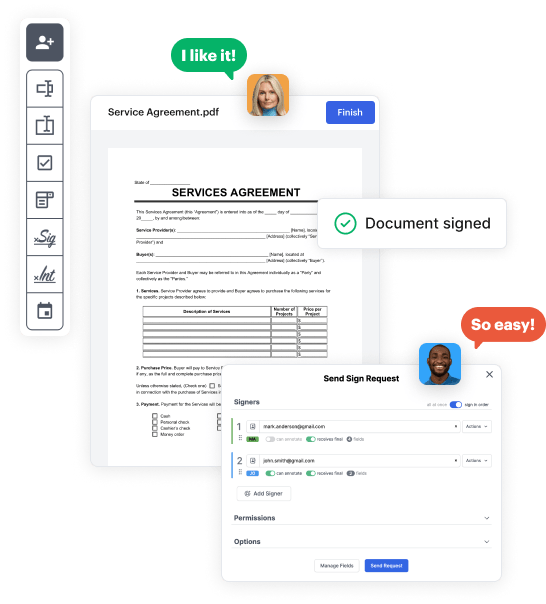
Open the blank document in the editor, set the document view, and add extra pages if applicable.
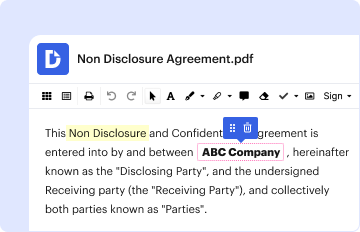
02. Add and configure fillable fields
Use the top toolbar to insert fields like text and signature boxes, radio buttons, checkboxes, and more. Assign users to fields.
03. Distribute your form
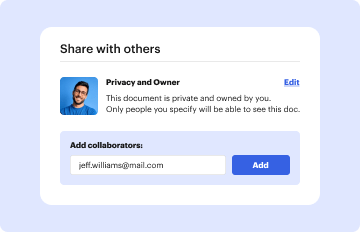
Share your Mortgage Closing Document in seconds via email or a link. You can also download it, export it, or print it out.

A brief guide on how to create a polished Mortgage Closing Document

Form edit decoration

Step 1: Sign in to DocHub to begin creating your Mortgage Closing Document.

First, sign in to your DocHub account. If you don't have one, you can easily register for free.

Step 2: Head to the dashboard.

Once logged in, head to your dashboard. This is your primary hub for all document-based operations.

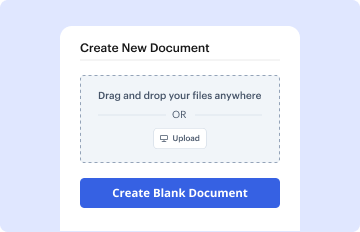
Step 3: Launch new document creation.

In your dashboard, choose New Document in the upper left corner. Pick Create Blank Document to build the Mortgage Closing Document from the ground up.

Step 4: Add form fillable areas.

Add numerous fields like text boxes, images, signature fields, and other interactive areas to your form and designate these fields to certain users as required.

Step 5: Fine-tune your document.

Personalize your template by inserting walkthroughs or any other necessary tips utilizing the text feature.

Step 6: Review and tweak the form.

Attentively check your created Mortgage Closing Document for any typos or essential adjustments. Utilize DocHub's editing capabilities to enhance your document.

Step 7: Share or download the document.

After finalizing, save your work. You may choose to save it within DocHub, transfer it to various storage solutions, or send it via a link or email.


be ready to get more

Build your Mortgage Closing Document in minutes

Start creating now

Got questions?

We have answers to the most popular questions from our customers. If you can't find an answer to your question, please contact us.
Contact us
A revised Closing Disclosure may be delivered at or before consummation reflecting any changed terms, unless: The disclosed APR becomes inaccurate. The Loan Product changes prior Closing Disclosure becomes inaccurate. A Prepayment penalty is added.
A new 3-day waiting period before closing (from the date the borrower receives the revised CD) is required only if 1) the APR varies by more than 1/8 of one percentage point, OR 2) a prepayment penalty is added, OR 3) the loan product has changed.
Key points on potential Closing Disclosure changes post-signing. It is most common that only minor changes occur, typically due to slight recalculations of tax prorations, prepaid interest, escrow account adjustments or minor modifications in the final loan amount after the last underwriting review.
Your lender is required to send you a Closing Disclosure that you must receive at least three business days before your closing. Its important that you carefully review the Closing Disclosure to make sure that the terms of your loan are what you are expecting.
List of closing documents Closing disclosure. The closing disclosure contains all of the details of your mortgage, including an itemized list of closing costs. Proof of homeowners insurance. Loan application. Mortgage or deed of trust. Note. Deed. Affidavit of title. Title insurance policy.
be ready to get more

Build your Mortgage Closing Document in minutes

Start creating now

Related Q&A to Mortgage Closing Document

However, three major adjustments will trigger a new, corrected Closing Disclosure: A change in your loans annual percentage rate (APR) A prepayment penalty is added. A change in loan product (such as switching from an adjustable interest rate to a fixed one)
Extraordinary events: Unforeseen circumstances such as natural disasters, changes in tax laws, or regulatory changes that affect the cost of the loan or settlement charges can trigger a valid change of circumstance.
Its best to keep the most recent mortgage documents for at least three to seven years, even after the home is sold. If you received a certificate of satisfaction for paying off a mortgage, then this document should be kept as well. These documents may become necessary in the case of an IRS audit or estate settlement.

Additional resources on building your forms