
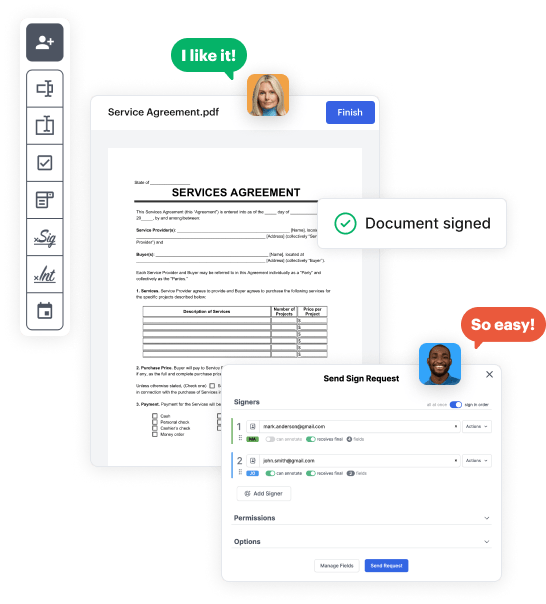
Create your Mississippi Landlord Form from scratch

Start Building Now
Title decoration

Here's how it works

01. Start with a blank Mississippi Landlord Form
Open the blank document in the editor, set the document view, and add extra pages if applicable.
02. Add and configure fillable fields
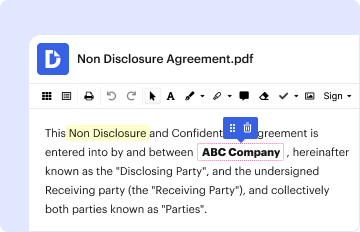
Use the top toolbar to insert fields like text and signature boxes, radio buttons, checkboxes, and more. Assign users to fields.
03. Distribute your form
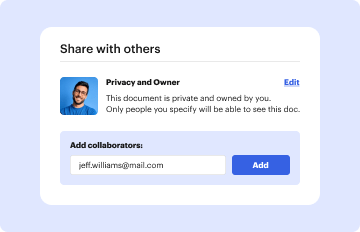
Share your Mississippi Landlord Form in seconds via email or a link. You can also download it, export it, or print it out.

A simple tutorial on how to build a polished Mississippi Landlord Form

Form edit decoration

Step 1: Sign in to DocHub to begin creating your Mississippi Landlord Form.

First, log in to your DocHub account. If you don't have one, you can easily register for free.

Step 2: Head to the dashboard.

Once signed in, go to your dashboard. This is your main hub for all document-related operations.

Step 3: Launch new document creation.

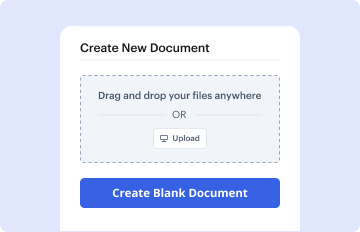
In your dashboard, hit New Document in the upper left corner. Hit Create Blank Document to craft the Mississippi Landlord Form from scratch.

Step 4: Incorporate template fillable areas.

Add different fields like text boxes, photos, signature fields, and other options to your template and assign these fields to certain individuals as required.

Step 5: Configure your form.

Personalize your document by inserting directions or any other required tips leveraging the text option.

Step 6: Double-check and correct the document.

Carefully review your created Mississippi Landlord Form for any inaccuracies or required adjustments. Utilize DocHub's editing capabilities to polish your form.

Step 7: Send out or download the form.

After finalizing, save your work. You can opt to save it within DocHub, export it to various storage solutions, or send it via a link or email.


be ready to get more

Build your Mississippi Landlord Form in minutes

Start creating now

Got questions?

We have answers to the most popular questions from our customers. If you can't find an answer to your question, please contact us.
Contact us
A landlord should give a tenant advance notice of intent to enter the unit to conduct an inspection, make repairs or supply services. Only in an emergency can a landlord enter the residence without consent. Consent to enter may be granted within the terms of the lease.
Landlords in Mississippi cannot raise the rent during the term of a lease and must provide at least seven days notice before raising the rent on week-to-week tenants and thirty days notice before raising the rent on month-to-month tenants.
A landlord is not permitted to retaliate against a tenant for the tenants exercise of rights related to repair. A tenant has a defense to eviction if the primary reason for the eviction is the landlords retaliation against the tenant for exercise of rights under the Act.
Windows, Doors, Elevators, Peepholes, and Heating and Air Conditioning. We cannot find specific laws in Mississippi addressing this issue. However, landlords are required to provide safe, sanitary, and livable housing conditions.
Mississippi repair and maintenance laws Mississippi state law requires landlords to comply with building and housing codes that materially affect a tenants health and safety. This includes making repairs within 14 days of receiving written notice from renters.
be ready to get more

Build your Mississippi Landlord Form in minutes

Start creating now

Related Q&A to Mississippi Landlord Form

If you fail to pay the rent ing to the terms of the rental agreement, the landlord, after giving 3 days written notice, may terminate the lease. If you pay the rent within the 3 day notice period, the lease is not terminated. If you do not pay the rent within the 3 day notice period, the lease is terminated.
Some examples of illegal landlord actions include: changing locks without giving notice. entering a tenants apartment without permission. refusing to make necessary repairs.
Can a landlord evict by locking a tenant out? No. Even if a landlord is permitted to use self-help to remove a tenant, he may not accomplish the eviction by locking the tenant out of the premises and locking the tenants belongings in the premises.

Additional resources on building your forms


