


Create your Mississippi Civil Procedure Form from scratch

Start Building Now
Title decoration

Here's how it works

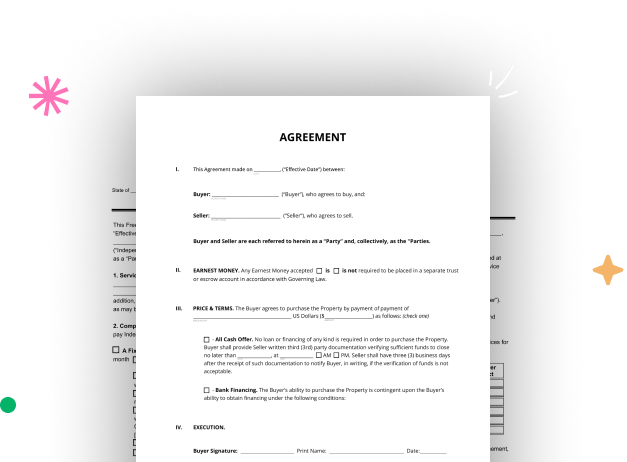
01. Start with a blank Mississippi Civil Procedure Form
Open the blank document in the editor, set the document view, and add extra pages if applicable.
02. Add and configure fillable fields
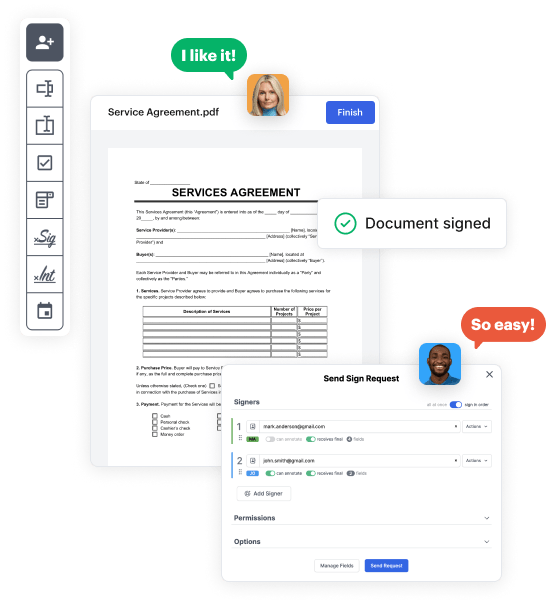
Use the top toolbar to insert fields like text and signature boxes, radio buttons, checkboxes, and more. Assign users to fields.
03. Distribute your form
Share your Mississippi Civil Procedure Form in seconds via email or a link. You can also download it, export it, or print it out.

Create your Mississippi Civil Procedure Form in a matter of minutes

Form edit decoration

Step 1: Access DocHub to build your Mississippi Civil Procedure Form.

Start signining into your DocHub account. Explore the pro DocHub functionality free for 30 days.

Step 2: Navigate to the dashboard.

Once logged in, head to the DocHub dashboard. This is where you'll create your forms and handle your document workflow.

Step 3: Design the Mississippi Civil Procedure Form.

Click on New Document and choose Create Blank Document to be redirected to the form builder.

Step 4: Design the form layout.

Use the DocHub toolset to add and arrange form fields like text areas, signature boxes, images, and others to your form.

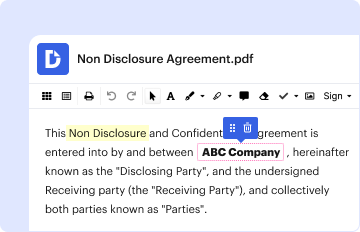
Step 5: Insert text and titles.

Include necessary text, such as questions or instructions, using the text tool to lead the users in your form.

Step 6: Configure field settings.

Alter the properties of each field, such as making them required or formatting them according to the data you expect to collect. Assign recipients if applicable.

Step 7: Review and save.

After you’ve managed to design the Mississippi Civil Procedure Form, make a final review of your form. Then, save the form within DocHub, send it to your selected location, or distribute it via a link or email.


be ready to get more

Build your Mississippi Civil Procedure Form in minutes

Start creating now

Got questions?

We have answers to the most popular questions from our customers. If you can't find an answer to your question, please contact us.
Contact us
Rule 53 - Masters, Referees, and Commissioners (a) Appointment and Compensation. The court may appoint one or more persons in each county to be masters of the court, and the court in which any action is pending may appoint a special master therein.
Rule 40 - Assignment of Cases for Trial (a) Methods. Courts shall provide for placing of actions upon the trial calendar (1) without request of the parties; or (2) upon request of a party and notice to the other parties; or, (3) in such other manner as the court deems expedient.
On a motion for a new trial in an action tried without a jury, the court may open the judgment if one has been entered, take additional testimony, amend findings of fact and conclusions of law or make new findings and conclusions, and direct the entry of a new judgment.
A party against whom a claim, counter-claim, or crossclaim is asserted or a declaratory judgment is sought may, at any time, move with or without supporting affidavits for a summary judgment in his favor as to all or any part thereof.
Once a default judgment has been entered, a creditor can then use it to seek to garnish your wages and other property. In Mississippi, a default judgment acts as a lien against property you have in any county where the judgment has been properly entered.
be ready to get more

Build your Mississippi Civil Procedure Form in minutes

Start creating now

Related Q&A to Mississippi Civil Procedure Form

No restraining order or preliminary injunction shall issue except upon the giving of security by the applicant, in such sum as the court deems proper, for the payment of such costs, damages, and reasonable attorneys fees as may be incurred or suffered by any party who is found to have been wrongfully enjoined or
Rule 81 requires use of a special summons which commands that the defendant appear and defend at a specific time and place set by order of the court and informs him or her that no answer is necessary.
The court may, on motion, grant a new trial on all or some of the issues and to any party-as follows: (A) after a jury trial, for any reason for which a new trial has heretofore been granted in an action at law; or (B) after a nonjury trial, for any reason for which a rehearing has heretofore been granted in a suit in

Additional resources on building your forms