
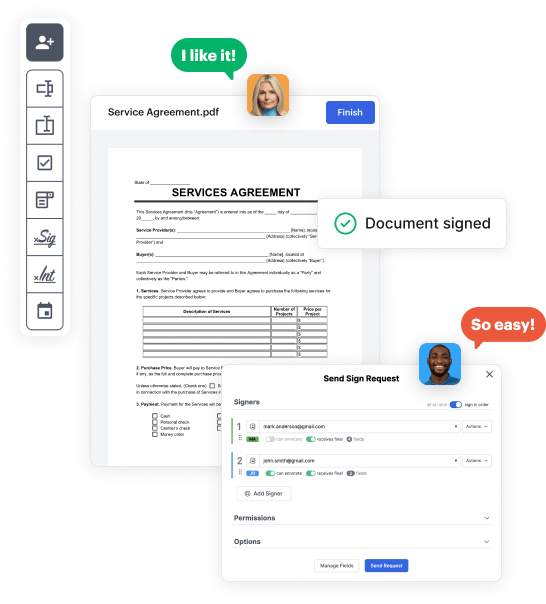
Create your Mental Health Legal Document from scratch

Start Building Now
Title decoration

Here's how it works

01. Start with a blank Mental Health Legal Document
Open the blank document in the editor, set the document view, and add extra pages if applicable.
02. Add and configure fillable fields
Use the top toolbar to insert fields like text and signature boxes, radio buttons, checkboxes, and more. Assign users to fields.
03. Distribute your form
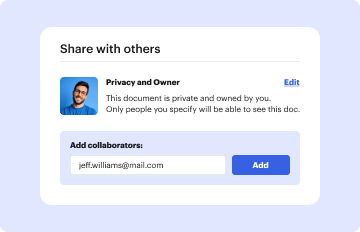
Share your Mental Health Legal Document in seconds via email or a link. You can also download it, export it, or print it out.

A quick guide on how to set up a professional-looking Mental Health Legal Document

Form edit decoration

Step 1: Log in to DocHub to begin creating your Mental Health Legal Document.

First, log in to your DocHub account. If you don't have one, you can easily sign up for free.

Step 2: Head to the dashboard.

Once signed in, go to your dashboard. This is your main hub for all document-related activities.

Step 3: Launch new document creation.

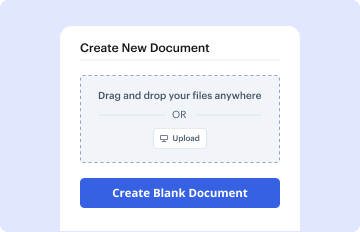
In your dashboard, hit New Document in the upper left corner. Choose Create Blank Document to build the Mental Health Legal Document from scratch.

Step 4: Add template fillable areas.

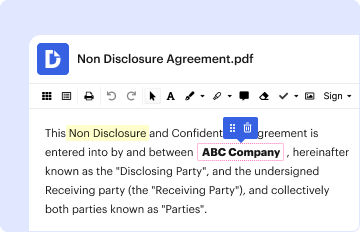
Place various elements like text boxes, photos, signature fields, and other interactive areas to your template and designate these fields to particular individuals as needed.

Step 5: Customize your form.

Personalize your document by incorporating directions or any other essential tips utilizing the text option.

Step 6: Go over and adjust the form.

Thoroughly check your created Mental Health Legal Document for any mistakes or required adjustments. Make use of DocHub's editing capabilities to enhance your form.

Step 7: Share or download the form.

After completing, save your file. You can opt to save it within DocHub, export it to various storage platforms, or send it via a link or email.


be ready to get more

Build your Mental Health Legal Document in minutes

Start creating now

Got questions?

We have answers to the most popular questions from our customers. If you can't find an answer to your question, please contact us.
Contact us
What can I do? Learn about mental illness and addiction. Talk to your family member about your concerns, and encourage them to seek support. Get support for yourself and your family. Take care of yourself. Support other family members. When a family member chooses not to seek help - CAMH CAMH guides-and-publications when-a CAMH guides-and-publications when-a
No person having a mental illness or cognitive impairment so as to be incapable of understanding the proceedings or making a defense shall be tried, sentenced, or punished for any crime; but the person shall not be excused from criminal liability except upon proof that at the time of committing the alleged criminal act Mental Illness Criminal Liability - Vogel Law Firm Vogel Law Firm mental-illness-criminal-liabi Vogel Law Firm mental-illness-criminal-liabi
Kendras Law (9.60 of the Mental Hygiene Law) mandates mental health services for a small number of individuals who have difficulty engaging in rehabilitation and can pose a risk to themselves or others in the community. The order is granted in civil court. Assisted Outpatient Treatment (AOT) - NYC.gov NYC.gov site doh health health-topics NYC.gov site doh health health-topics
Kendras Law violates the fundamental freedoms of competent, non-dangerous persons with psychiatric disabilities who constitutionally could not be detained involuntarily in psychiatric facilities. Kendras Law keeps these persons under the control of the State after they have been released.
Timothys Law is a New York State law that requires many health insurance policies for small groups (those with 50 or fewer participants) issued or delivered in New York State to provide certain minimum benefits for mental illness. Timothys Law - EmblemHealth EmblemHealth legal timothys-law EmblemHealth legal timothys-law
be ready to get more

Build your Mental Health Legal Document in minutes

Start creating now

Related Q&A to Mental Health Legal Document

Kendras Law allows courts to order certain people diagnosed with mental illness to attend treatment as a condition for living in the community.
New York State legislation provides for court-ordered assisted outpatient treatment (AOT). AOT is for certain people with mental illness who, in view of their treatment history and present circumstances, are unlikely to survive safely in the community without supervision.
Kendras Law must be renewed every five years, and is currently set to expire in 2027. Goldstein was convicted of manslaughter and sentenced to 23 years in prison in October 2006. Like Webdale, Michelle Go was pushed onto an oncoming subway by a mentally ill man this past January.

Additional resources on building your forms

