

Create your Massachusetts Real Estate Form from scratch

Start Building Now
Title decoration

Here's how it works

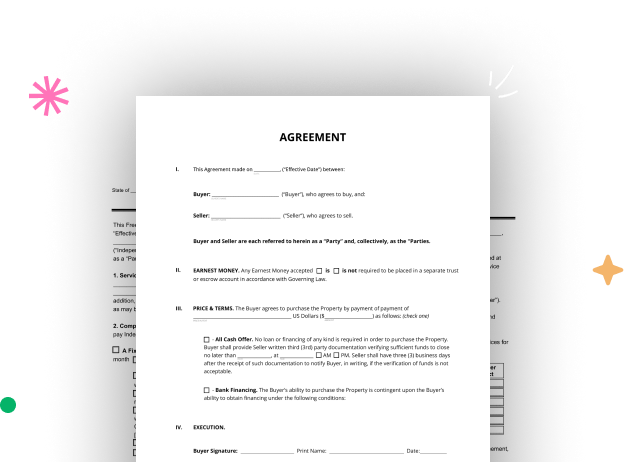
01. Start with a blank Massachusetts Real Estate Form
Open the blank document in the editor, set the document view, and add extra pages if applicable.
02. Add and configure fillable fields
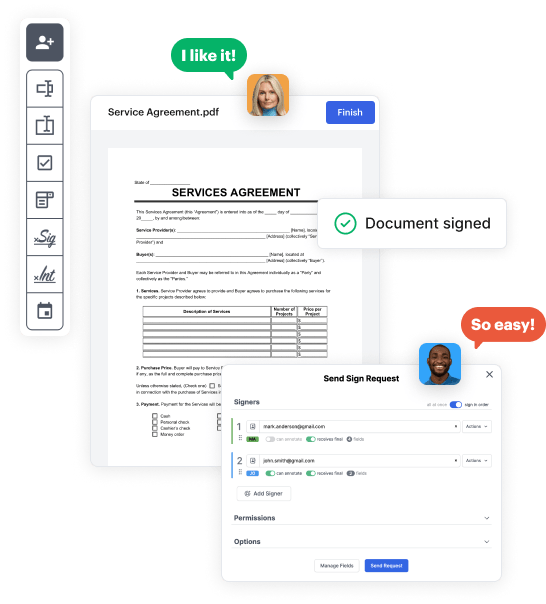
Use the top toolbar to insert fields like text and signature boxes, radio buttons, checkboxes, and more. Assign users to fields.
03. Distribute your form
Share your Massachusetts Real Estate Form in seconds via email or a link. You can also download it, export it, or print it out.

Design your Massachusetts Real Estate Form in a matter of minutes

Form edit decoration

Step 1: Access DocHub to set up your Massachusetts Real Estate Form.

Begin signining into your DocHub account. Utilize the advanced DocHub functionality free for 30 days.

Step 2: Navigate to the dashboard.

Once logged in, go to the DocHub dashboard. This is where you'll build your forms and handle your document workflow.

Step 3: Design the Massachusetts Real Estate Form.

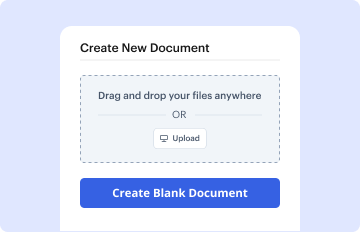
Hit New Document and choose Create Blank Document to be redirected to the form builder.

Step 4: Design the form layout.

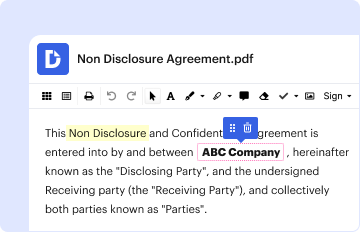
Use the DocHub features to insert and configure form fields like text areas, signature boxes, images, and others to your document.

Step 5: Insert text and titles.

Include necessary text, such as questions or instructions, using the text field to assist the users in your document.

Step 6: Customize field properties.

Alter the properties of each field, such as making them required or arranging them according to the data you expect to collect. Designate recipients if applicable.

Step 7: Review and save.

After you’ve managed to design the Massachusetts Real Estate Form, make a final review of your document. Then, save the form within DocHub, export it to your chosen location, or share it via a link or email.


be ready to get more

Build your Massachusetts Real Estate Form in minutes

Start creating now

Got questions?

We have answers to the most popular questions from our customers. If you can't find an answer to your question, please contact us.
Contact us
A house offer letter is a written letter to the seller of a home telling them a bit about who you are, why you want to buy their home, how much you would enjoy it, your ability to complete the sale, and why they should choose your bid over another offer on a house.
A purchase sale agreement (PS) is a legal document prepared and agreed to by attorneys representing both the buyer and seller in the home purchase transaction. The PS is signed by both the buyer and seller, and will include final sale price and all terms of the purchase.
An Offer to Purchase is a legal document that outlines the terms and conditions of a real estate transaction. It is typically prepared by the buyer and presented to the seller. The Offer to Purchase will include details such as the purchase price, financing terms, and the date of closing.
Technically, anyone can make up a new deed, but we strongly advise you to hire a lawyer to do it. If you are doing it for the first time it is easy to make a mistake that could jeopardize your ownership of the property. Once the new deed is created, signed and docHubd, it should be recorded at the Registry of Deeds.
A signed offer letter can serve as a contract, but many offer letters include language giving the employer the right to modify terms. While specific promises made by the employer are not the same as an employment contract, they may be enforced under certain limited circumstances if you reasonably relied on them.
be ready to get more

Build your Massachusetts Real Estate Form in minutes

Start creating now

Related Q&A to Massachusetts Real Estate Form

The benefit of submitting an LOI is that the most important aspects of the transaction are easy to read and understand. In commercial real estate, this can help both buyers and sellers come to clear terms on large purchases, one of the key differentiating factors in a letter of intent vs offer to purchase.
Form A - Agent/Seller Agreement This is perhaps the most common type of form, which serves as a contract between the agent and the seller of the property. This form legally mandates the agent to act on the sellers behalf by marketing the property and managing interested buyers.

Additional resources on building your forms