
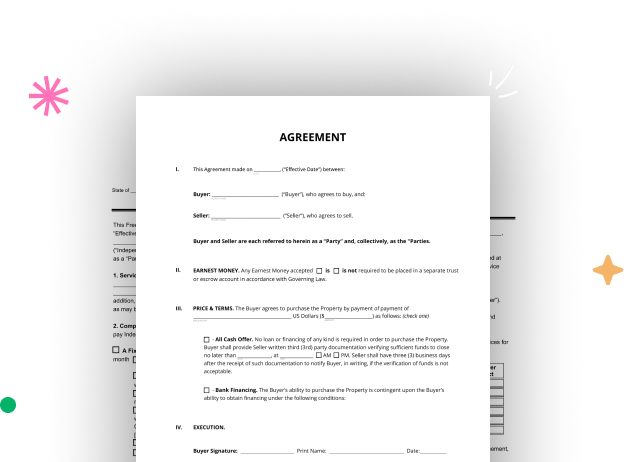

Create your Marital Property Transfer Form from scratch

Start Building Now
Title decoration

Here's how it works

01. Start with a blank Marital Property Transfer Form
Open the blank document in the editor, set the document view, and add extra pages if applicable.
02. Add and configure fillable fields
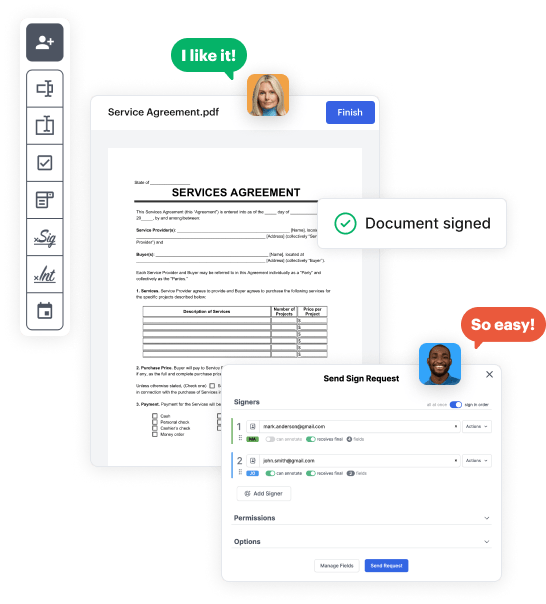
Use the top toolbar to insert fields like text and signature boxes, radio buttons, checkboxes, and more. Assign users to fields.
03. Distribute your form
Share your Marital Property Transfer Form in seconds via email or a link. You can also download it, export it, or print it out.

A quick guide on how to create a polished Marital Property Transfer Form

Form edit decoration

Step 1: Log in to DocHub to create your Marital Property Transfer Form.

First, sign in to your DocHub account. If you don't have one, you can simply sign up for free.

Step 2: Navigate to the dashboard.

Once logged in, head to your dashboard. This is your main hub for all document-related tasks.

Step 3: Launch new document creation.

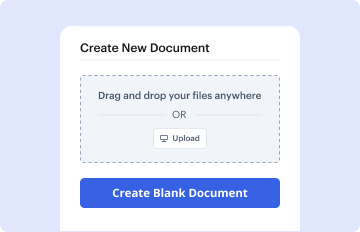
In your dashboard, select New Document in the upper left corner. Choose Create Blank Document to build the Marital Property Transfer Form from scratch.

Step 4: Add template elements.

Add different fields like text boxes, photos, signature fields, and other interactive areas to your template and assign these fields to certain individuals as needed.

Step 5: Configure your form.

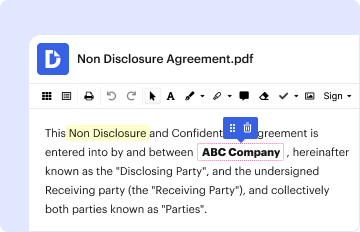
Personalize your template by incorporating instructions or any other required tips leveraging the text tool.

Step 6: Review and adjust the document.

Carefully check your created Marital Property Transfer Form for any errors or required adjustments. Take advantage of DocHub's editing tools to fine-tune your form.

Step 7: Send out or export the form.

After completing, save your copy. You can choose to keep it within DocHub, transfer it to various storage services, or send it via a link or email.


be ready to get more

Build your Marital Property Transfer Form in minutes

Start creating now

Got questions?

We have answers to the most popular questions from our customers. If you can't find an answer to your question, please contact us.
Contact us
An interspousal transfer deed is a legal instrument used to provide sole ownership to a property that is jointly owned. For instance, the deed can be used to provide the title to a house to one person in a marriage. Note that the technical term for interspousal transfer deed is interspousal transfer grant deed.
It can be used to release a nominal real estate interest as it can effectively transfer whatever interest the grantor has, regardless of its value. However, a quitclaim deed cannot be used to warrant that a title is valid since it does not guarantee the grantors ownership interest.
An interspousal transfer gives full interest in the property to the transferee, whereas a quitclaim leaves the transferer still liable for any obligations related to the property, even though the transferer no longer has a residential interest in it.
Preparing an Interspousal Deed be in writing. list the spouses involved in the transfer. identify the property being transferred by address and legal description. be signed before a notary public, and. be recorded in the county where the property is located.
Contact the county recorders office to obtain a copy of the real estate deed. Locate a blank form to complete a new deed and transfer ownership from the couple to only one of the spouses. These forms are typically available online. Both spouses should sign the new document in the presence of a notary public.
be ready to get more

Build your Marital Property Transfer Form in minutes

Start creating now

Related Q&A to Marital Property Transfer Form

INTERSPOUSAL TRANSFER DEED The distribution of a legal entitys property to a spouse or former spouse in exchange for the interest of such spouse in the legal entity in connection with a property settlement agreement or a decree of dissolution of a marriage or legal separation.
An interspousal transfer deed is used to transfer the property title from one spouse to another. This special type of deed is most commonly used in the case of divorce, when the proceedings result in the requirement that property goes to one spouse over the other.

Additional resources on building your forms


