


Create your Maine Real Estate Legal Form from scratch

Start Building Now
Title decoration

Here's how it works

01. Start with a blank Maine Real Estate Legal Form
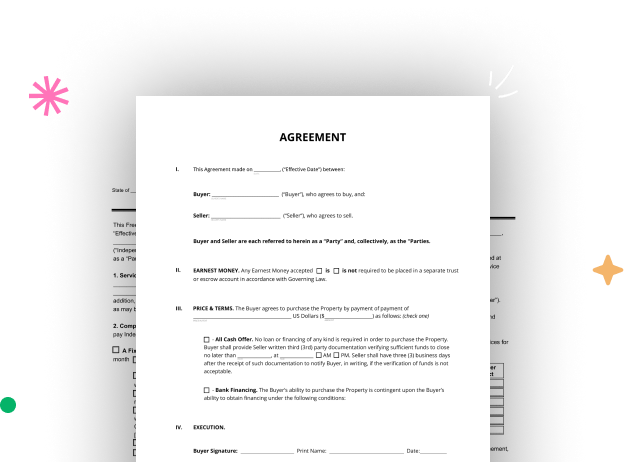
Open the blank document in the editor, set the document view, and add extra pages if applicable.
02. Add and configure fillable fields
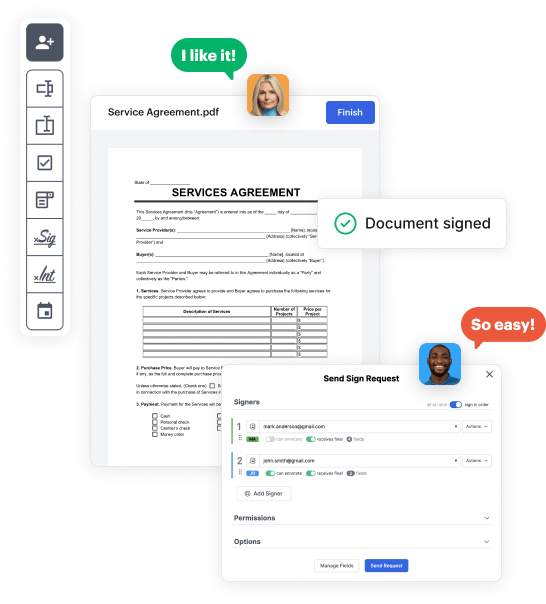
Use the top toolbar to insert fields like text and signature boxes, radio buttons, checkboxes, and more. Assign users to fields.
03. Distribute your form
Share your Maine Real Estate Legal Form in seconds via email or a link. You can also download it, export it, or print it out.

A simple guide on how to set up a professional-looking Maine Real Estate Legal Form

Form edit decoration

Step 1: Sign in to DocHub to begin creating your Maine Real Estate Legal Form.

First, log in to your DocHub account. If you don't have one, you can easily register for free.

Step 2: Navigate to the dashboard.

Once you’re in, access your dashboard. This is your main hub for all document-related processes.

Step 3: Launch new document creation.

In your dashboard, select New Document in the upper left corner. Select Create Blank Document to design the Maine Real Estate Legal Form from a blank slate.

Step 4: Insert template elements.

Add numerous elements like text boxes, photos, signature fields, and other fields to your template and assign these fields to specific individuals as needed.

Step 5: Configure your form.

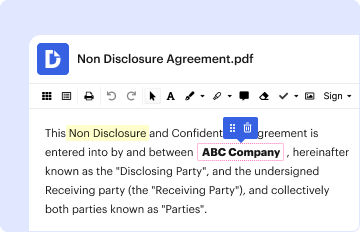
Personalize your document by including walkthroughs or any other crucial information using the text option.

Step 6: Double-check and modify the form.

Attentively examine your created Maine Real Estate Legal Form for any inaccuracies or necessary adjustments. Utilize DocHub's editing features to perfect your form.

Step 7: Send out or download the form.

After finalizing, save your work. You may opt to keep it within DocHub, transfer it to various storage solutions, or send it via a link or email.


be ready to get more

Build your Maine Real Estate Legal Form in minutes

Start creating now

Got questions?

We have answers to the most popular questions from our customers. If you can't find an answer to your question, please contact us.
Contact us
The only way to add or remove a name on a deed is to have a new deed recorded. Once a document is recorded, it cannot be altered. In order to protect your legal interests, we strongly suggest that you contact an attorney to have this done for you.
4641-4641-N. The transfer tax is collected on the following two transactions. The rate of tax is $2.20 for each $500 or fractional part of $500 of the value of the property being transferred. The tax is imposed on the grantor, on the grantee.
Deeds must have the name of the grantor and grantee as well as consideration paid for the property. In addition, a legal description of the property is required. A notary or an officer of the court, such as an attorney or court clerk, must sign an acknowledgment before the deed may be filed with the registry of deeds.
In Maine, recording a quitclaim deed incurs a fee of $19.00 for the first page and $2.00 for each additional page. If more than four names are indexed, there is an additional charge of $1.00 per name.
The signer requirements for a Maine quitclaim deed without covenant include the need for a Notary Public or an officer of the court to witness the Grantor(s) signatures on the deed. Additionally, the deed must be acknowledged by a notary and filed with the Registry of Deeds in the County where the property is located.
be ready to get more

Build your Maine Real Estate Legal Form in minutes

Start creating now

Related Q&A to Maine Real Estate Legal Form

To be able to record the deed, it must be accompanied by a transfer tax form and payment of transfer tax. Transfer tax rate in Maine is $2.20 per $500 or fractional part of $500 of the value of the property being transferred. Further, transfer tax is imposed 50/50 on both the grantor and grantee.
Gift deeds convey title to real property from one party to another with no exchange of consideration, monetary or otherwise. Often used to transfer property between family members or to gift property as a charitable act or donation, these conveyances occur during the grantors lifetime.

Additional resources on building your forms