


Create your Louisiana Property Law from scratch

Start Building Now
Title decoration

Here's how it works

01. Start with a blank Louisiana Property Law
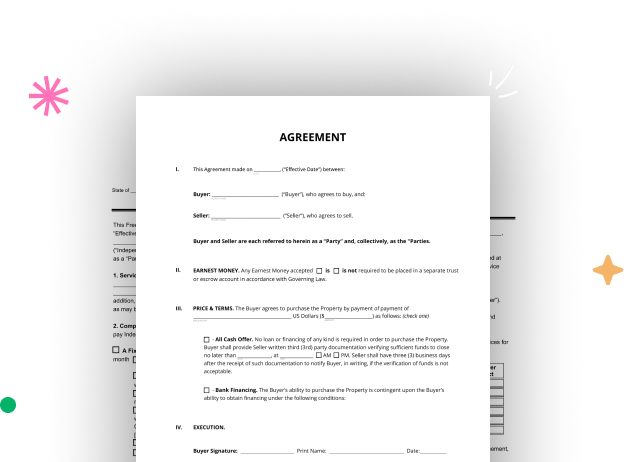
Open the blank document in the editor, set the document view, and add extra pages if applicable.
02. Add and configure fillable fields
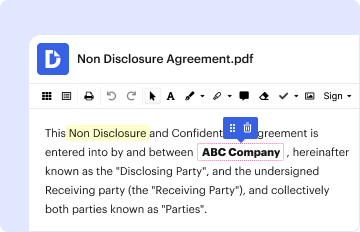
Use the top toolbar to insert fields like text and signature boxes, radio buttons, checkboxes, and more. Assign users to fields.
03. Distribute your form
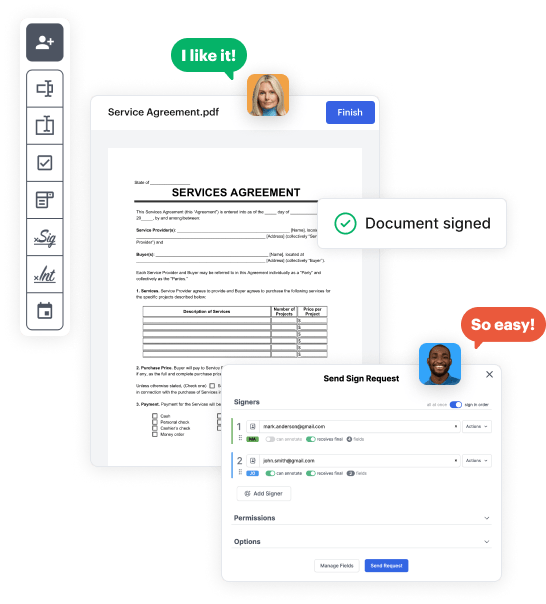
Share your Louisiana Property Law in seconds via email or a link. You can also download it, export it, or print it out.

Craft Louisiana Property Law from the ground up with these detailed instructions

Form edit decoration

Step 1: Get started with DocHub.

Begin by registering a free DocHub account using any available sign-up method. Simply log in if you already have one.

Step 2: Sign up for a free 30-day trial.

Try out the complete suite of DocHub's advanced features by signing up for a free 30-day trial of the Pro plan and proceed to craft your Louisiana Property Law.

Step 3: Add a new blank document.

In your dashboard, choose the New Document button > scroll down and hit Create Blank Document. You’ll be taken to the editor.

Step 4: Organize the document’s view.

Utilize the Page Controls icon marked by the arrow to toggle between different page views and layouts for more flexibility.

Step 5: Begin by adding fields to create the dynamic Louisiana Property Law.

Use the top toolbar to place document fields. Add and configure text boxes, the signature block (if applicable), embed images, etc.

Step 6: Prepare and configure the added fields.

Configure the fillable areas you added based on your desired layout. Customize the size, font, and alignment to ensure the form is easy to use and polished.

Step 7: Finalize and share your template.

Save the finalized copy in DocHub or in platforms like Google Drive or Dropbox, or design a new Louisiana Property Law. Share your form via email or utilize a public link to reach more people.


be ready to get more

Build your Louisiana Property Law in minutes

Start creating now

Got questions?

We have answers to the most popular questions from our customers. If you can't find an answer to your question, please contact us.
Contact us
Thus, the three basic elements of private property are (1) exclusivity of rights to choose the use of a resource, (2) exclusivity of rights to the services of a resource, and (3) rights to exchange the resource at mutually agreeable terms.
Under Louisiana law, separate property includes: property a spouse acquired before the marriage or acquired during the marriage with that spouses separate assets. property acquired with both separate and community assets, but only if community property contribution was relatively minimal.
Legal rights, in contrast, are based on a societys customs, laws, statutes or actions by legislatures. An example of a legal right is the right to vote of citizens. Citizenship, itself, is often considered as the basis for having legal rights, and has been defined as the right to have rights.
The 10-year fence law in Louisiana stipulates that a property owner could lose a portion of land to a neighbor if the neighbor encloses the owners land with a fence or another enclosure for a period of 10 years, effectively allowing the neighbor to claim that land through adverse possession.
Property rights give the owner or right holder the ability to do with the property what they choose. That includes holding on to it, selling or renting it out for profit, or transferring it to another party.
be ready to get more

Build your Louisiana Property Law in minutes

Start creating now

Related Q&A to Louisiana Property Law

Importantly, payment of taxes does not increase a co-owners ownership interest. Rather, it creates a claim for reimbursement from any co-owner who is not paying the taxes. Anyone who pays taxes on the property should keep tax bills and receipts so that they can request or claim reimbursement.
The American Constitution established property rights for all citizens. The Fifth Amendment specifies that the government cannot seize private property for public use without providing fair compensation.

Additional resources on building your forms


