




Improve your template managing with Loan Documents
Your workflows always benefit when you are able to get all of the forms and documents you require at your fingertips. DocHub supplies a a huge collection of forms to relieve your daily pains. Get hold of Loan Documents category and easily discover your form.
Start working with Loan Documents in a few clicks:
- Browse Loan Documents and get the form you require.
- Click Get Form to open it in the editor.
- Start modifying your document: add fillable fields, highlight sentences, or blackout sensitive information and facts.
- The application saves your modifications automatically, and after you are ready, you are able to download or share your file with other contributors.
Enjoy effortless record management with DocHub. Check out our Loan Documents online library and locate your form right now!
Video Guide on Loan Documents management

Commonly Asked Questions about Loan Documents
What are the two main components of a loan document?
There are two main parts of a loan: The principal -- the money that you borrow. The interest -- this is like paying rent on the money you borrow.
Who is the person who takes out a loan?
Borrower: An eligible person as specified in an executed Certification of Eligibility, prepared by the appropriate campus representative, who will be primarily responsible for the repayment of a Program loan.
Why is loan documentation important?
Record-Keeping and Audit Trail: Proper loan documentation serves as a record-keeping mechanism, providing an audit trail for both borrowers and lenders. It ensures that all relevant information, including financial statements, credit reports, and legal documents, are properly organized and accessible.
How do I make a loan document?
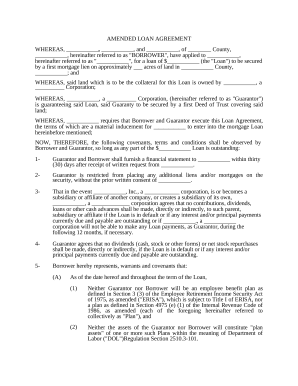
To draft a Loan Agreement, you should include the following: The addresses and contact information of all parties involved. The conditions of use of the loan (what the money can be used for) Any repayment options. The payment schedule. The interest rates. The length of the term. Any collateral. The cancellation policy.
Is a loan document a legal document?
Loan agreements should be used even when lending money to a friend or family member. Unlike a casual IOU, a formal contract makes every detail clear for both parties, can be legally binding, and can help prevent disputes.
What do you mean by loan documents?
In particular, loan documents serve as a legal and binding contract between the institution and a borrower, detail the terms in which the borrower must repay the debt, and provide a way to secure collateral that is pledged on a loan.
What are the three primary loan financing documents?
A real estate sale involving financing typically contains at least three main documents; the loan agreement, a promissory note, and a mortgage instrument or deed of trust. In this lesson we will explain the details and purpose of each document.
What is a loan document?
Loan documents are documents provided and requested by lenders for the purpose of providing a loan. They are typically statements of personal and financial information of the borrower to approve a loan. These documents are used by the lenders to evaluate whether or not they will provide you with a loan.
Who draws up loan documents?
A personal loan agreement is a legally binding contract that defines the expectations for both a borrower and a lender. It can be drawn up with an official lender, like a bank or credit union, or used in a more informal situation, such as with a friend whos lending you an amount of money.
How to draw up a loan agreement between friends?
What a personal loan agreement should include Legal names and address of both parties. Names and address of the loan cosigner (if applicable). Amount to be borrowed. Date the loan is to be provided. Repayment date. Interest rate to be charged (if applicable). Annual percentage rate (if applicable).