

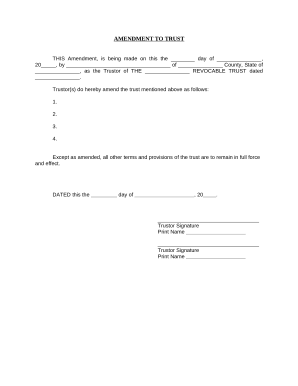
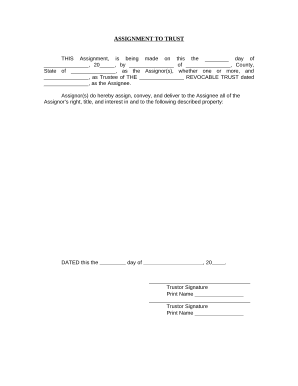
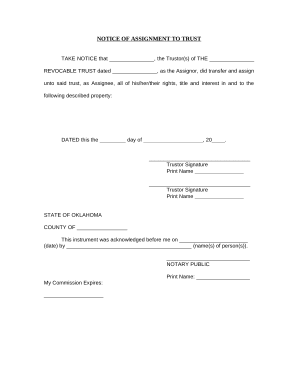
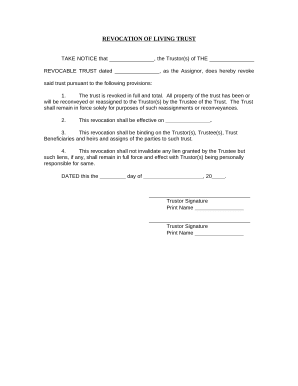
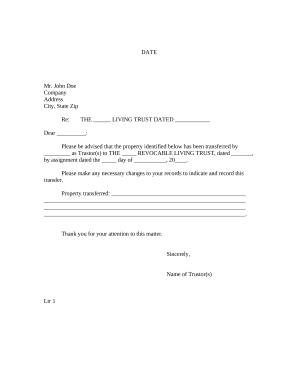
Get and handle Living Trust Documents online

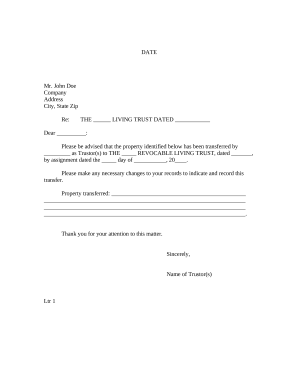
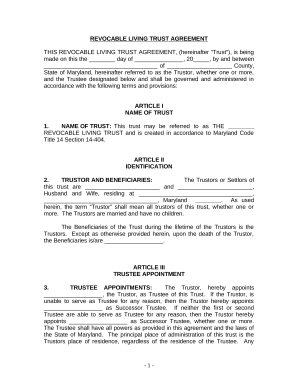
Boost your file administration with the Living Trust Documents library with ready-made form templates that meet your needs. Access the form, edit it, complete it, and share it with your contributors without breaking a sweat. Begin working more efficiently with your documents.

The best way to manage our Living Trust Documents:

  1. Open our Living Trust Documents and find the form you need.
  2. Preview your form to ensure it’s what you want, and click Get Form to begin working on it.
  3. Alter, include new text, or point out important information with DocHub tools.
  4. Prepare your form and save the changes.
  5. Download or share your document with other people.

Examine all the opportunities for your online file administration with the Living Trust Documents. Get a free free DocHub account today!


Video Guide on Living Trust Documents management

video background

Commonly Asked Questions about Living Trust Documents

The assets you cannot put into a trust include the following: Medical savings accounts (MSAs) Health savings accounts (HSAs) Retirement assets: 403(b)s, 401(k)s, IRAs. Any assets that are held outside of the United States. Cash. Vehicles.
Contents List your assets and decide which youll include in the trust. Gather the paperwork. Decide whether you will be the sole grantor. Choose beneficiaries. Choose a successor trustee. Choose someone to manage property for minor children. Prepare the trust document. Sign and docHub. Make a living trust: A quick checklist | .com articles make-a-living-tr .com articles make-a-living-tr
Limited Asset Protection: While it provides privacy, a living trust may not shield assets from creditors or lawsuits as effectively as an irrevocable trust. Funding Challenges: Transferring assets into the trust can be overlooked or require constant updates as financial situations change.
Unlike a testamentary trust, a Living Trust goes into effect during the settlors lifetime. In most cases, the settlor, trustee, and beneficiary are the same person (at least until that person dies or becomes incompetent).
A living trust is a legal document that, just like a will, contains your instructions for what you want to happen to your assets when you die. But, unlike a will, a living trust can avoid probate at death, control all of your assets, and prevent the court from controlling your assets if you become incapacitated.
The 4 Biggest Mistakes Parents Make When Setting Up a Trust Fund Not choosing the right Trustee. Choosing the wrong Trustee is a common mistake parents make. Not being clear about the goals of the Trust. Not including asset protection provisions. Not reviewing the Trust annually.
A living trust is a form of estate planning that allows you to control your assets (your money and property) while you are still alive, but have it distributed to people or organizations you select when you die. Depending on your own financial situation they might be appropriate, but they are not for everyone. Living Trust Mills | State of California - Department of Justice - CA.gov ca.gov consumers general livingtrust ca.gov consumers general livingtrust
The main purpose of a living trust is to provide a flexible and efficient way to manage and distribute assets after the grantors death while avoiding the costly and time-consuming probate process.
You can pay a New York attorney as little as $1,000 to create a simple living trust for you, or do the job yourself for free using downloadable templates and online tools. Creating an irrevocable trust for a large estate as part of a complex estate plan will cost you $3,000 to $10,000 or more if you use an attorney.