


Create your Living Trust Agreement from scratch

Start Building Now
Title decoration

Here's how it works

01. Start with a blank Living Trust Agreement
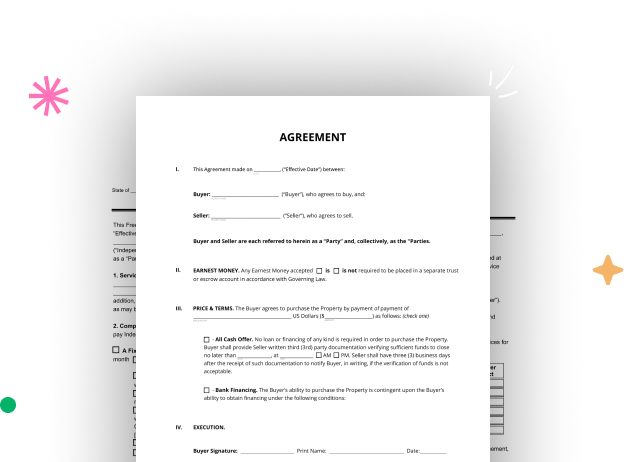
Open the blank document in the editor, set the document view, and add extra pages if applicable.
02. Add and configure fillable fields
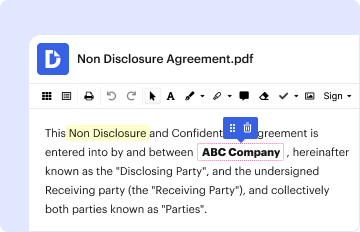
Use the top toolbar to insert fields like text and signature boxes, radio buttons, checkboxes, and more. Assign users to fields.
03. Distribute your form
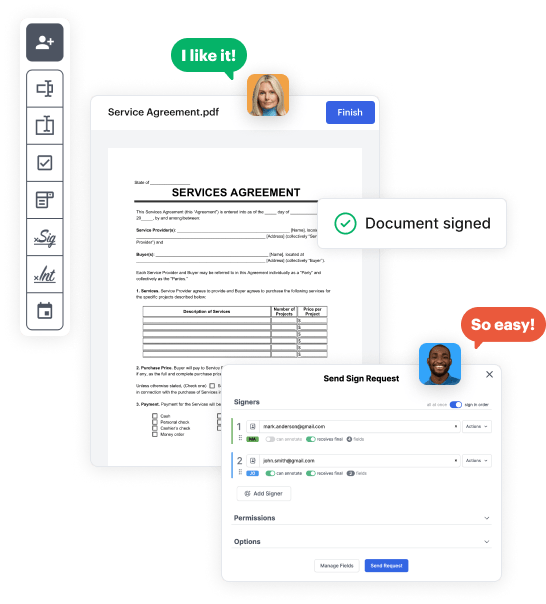
Share your Living Trust Agreement in seconds via email or a link. You can also download it, export it, or print it out.

Design your Living Trust Agreement in a matter of minutes

Form edit decoration

Step 1: Access DocHub to set up your Living Trust Agreement.

Start signining into your DocHub account. Try out the pro DocHub functionality free for 30 days.

Step 2: Go to the dashboard.

Once signed in, go to the DocHub dashboard. This is where you'll create your forms and handle your document workflow.

Step 3: Design the Living Trust Agreement.

Hit New Document and choose Create Blank Document to be taken to the form builder.

Step 4: Set up the form layout.

Use the DocHub toolset to add and arrange form fields like text areas, signature boxes, images, and others to your form.

Step 5: Insert text and titles.

Add necessary text, such as questions or instructions, using the text field to guide the users in your form.

Step 6: Customize field properties.

Alter the properties of each field, such as making them required or formatting them according to the data you expect to collect. Designate recipients if applicable.

Step 7: Review and save.

After you’ve managed to design the Living Trust Agreement, make a final review of your form. Then, save the form within DocHub, export it to your chosen location, or distribute it via a link or email.


be ready to get more

Build your Living Trust Agreement in minutes

Start creating now

Got questions?

We have answers to the most popular questions from our customers. If you can't find an answer to your question, please contact us.
Contact us
Under Texas trust laws, the following are required for a valid trust to be formed: The Settlor must have a present intent to create a trust. The Settlor must have capacity to convey assets to the trust. The trust must comply with the Statute of Frauds. The trust must have a legal purpose.
You can pay a New York attorney as little as $1,000 to create a simple living trust for you, or do the job yourself for free using downloadable templates and online tools. Creating an irrevocable trust for a large estate as part of a complex estate plan will cost you $3,000 to $10,000 or more if you use an attorney.
There isnt a clear cut rule on how much money you need to set up a trust, but if you have $100,000 or more and own real estate, you might benefit from a trust.
Setting up a living revocable trust in Texas can cost between $750 and $2,500 or more, depending on the complexity and size of the persons estate. Its advisable to consult with a wills and trusts attorney to ensure the estate plan is created correctly.
A Texas living trust allows you to avoid probate court, avoiding the costs and time investment probate requires. Avoiding probate court also reduces estate taxes, leaving more of your assets for your beneficiaries. Trusts in Texas also allow you to maintain your privacy, since they are not part of the public record.
be ready to get more

Build your Living Trust Agreement in minutes

Start creating now

Related Q&A to Living Trust Agreement

A trust is generally created in the same way as a will, that is, by a written document. Unlike a will, which is used to give property away after your death, a trust can manage and invest your money and property both during your lifetime and after your death.
The assets you cannot put into a trust include the following: Medical savings accounts (MSAs) Health savings accounts (HSAs) Retirement assets: 403(b)s, 401(k)s, IRAs. Any assets that are held outside of the United States. Cash. Vehicles.
The top reason Texas homeowners put their property into trusts is to avoid probate. The court-supervised probate process can sometimes take over a year in Texas. All assets in the deceased persons name must pass through probate before being distributed.

Additional resources on building your forms


