
Create your Liability Release Form from scratch

Start Building Now
Title decoration

Here's how it works

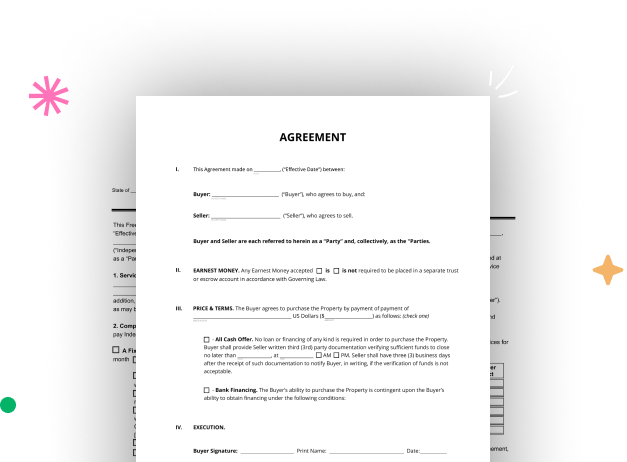
01. Start with a blank Liability Release Form
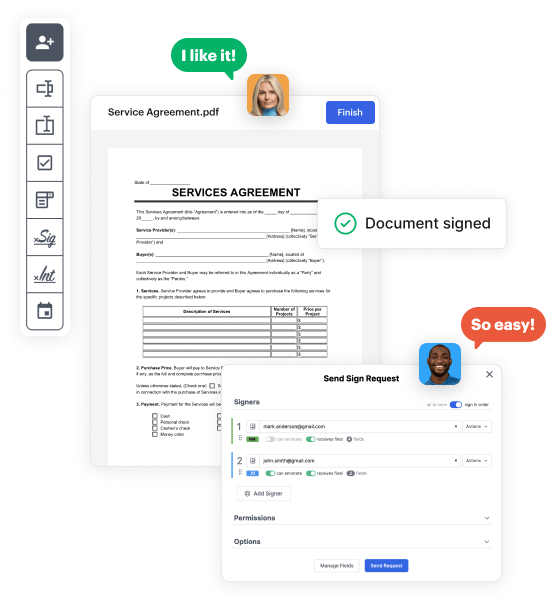
Open the blank document in the editor, set the document view, and add extra pages if applicable.
02. Add and configure fillable fields
Use the top toolbar to insert fields like text and signature boxes, radio buttons, checkboxes, and more. Assign users to fields.
03. Distribute your form
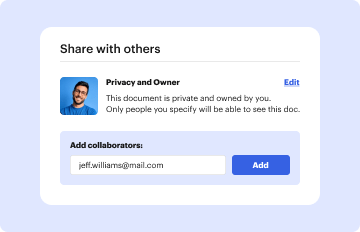
Share your Liability Release Form in seconds via email or a link. You can also download it, export it, or print it out.

Design your Liability Release Form in a matter of minutes

Form edit decoration

Step 1: Access DocHub to build your Liability Release Form.

Begin by accessing your DocHub account. Explore the advanced DocHub functionality at no cost for 30 days.

Step 2: Go to the dashboard.

Once signed in, head to the DocHub dashboard. This is where you'll build your forms and handle your document workflow.

Step 3: Design the Liability Release Form.

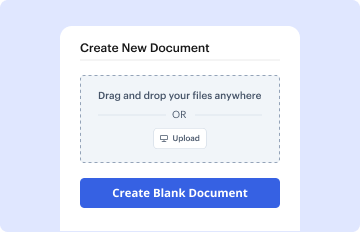
Hit New Document and choose Create Blank Document to be redirected to the form builder.

Step 4: Design the form layout.

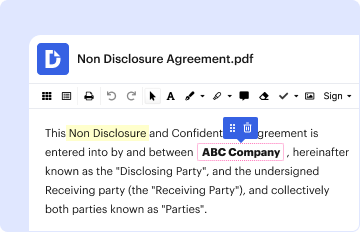
Use the DocHub toolset to insert and configure form fields like text areas, signature boxes, images, and others to your form.

Step 5: Add text and titles.

Add needed text, such as questions or instructions, using the text tool to guide the users in your document.

Step 6: Configure field properties.

Alter the properties of each field, such as making them mandatory or arranging them according to the data you expect to collect. Assign recipients if applicable.

Step 7: Review and save.

After you’ve managed to design the Liability Release Form, make a final review of your form. Then, save the form within DocHub, send it to your preferred location, or share it via a link or email.


be ready to get more

Build your Liability Release Form in minutes

Start creating now

Got questions?

We have answers to the most popular questions from our customers. If you can't find an answer to your question, please contact us.
Contact us
I am voluntarily participating in this Activity. I understand that there are risks associated with my participation in this Activity, such as physical and/or psychological injury, pain, suffering, illness, disfigurement, temporary or permanent disability, death or economic loss.
Use a clear concise style of writing that is easy to understand. Waiver letters are usually brief and limited to two or three paragraphs. Stick to the facts. Dont exaggerate the reasons why you require the waiver or dramatize your situation.
A release of liability, also known as a liability waiver or a hold harmless agreement, is a contract in which one party agrees not to hold another party liable for damages or injury. These contracts are common in fields that involve some risk to property, finances, or health.
Examples of waivers include the waiving of parental rights, waiving liability, tangible goods waivers, and waivers for grounds of inadmissibility. Waivers are common when finalizing lawsuits, as one party does not want the other pursuing them after a settlement is transferred.
Key Takeaways On How To Write A Waiver Choose a waiver template. Determine the type of activity or service. State the purpose of the waiver. Identify the risks. Include a title. Include customer information. Include waiver terms. Include a statement of understanding.
be ready to get more

Build your Liability Release Form in minutes

Start creating now

Related Q&A to Liability Release Form

As tempting as it may be, you should never write your own liability waiver. Unless youre a fully qualified lawyer with experience in this area, its likely that youll omit critical language that puts your business at risk for lawsuits.
How Do You Write a Media Release Form? Name of the parties involved, i.e., releasor and releasee. Detailed information about the project. Explicit information of the permissions granted. Any special considerations, including payment obligations or credit, if any. A space for all parties to sign.
Yes, you can use Google Forms for waivers.

Additional resources on building your forms