
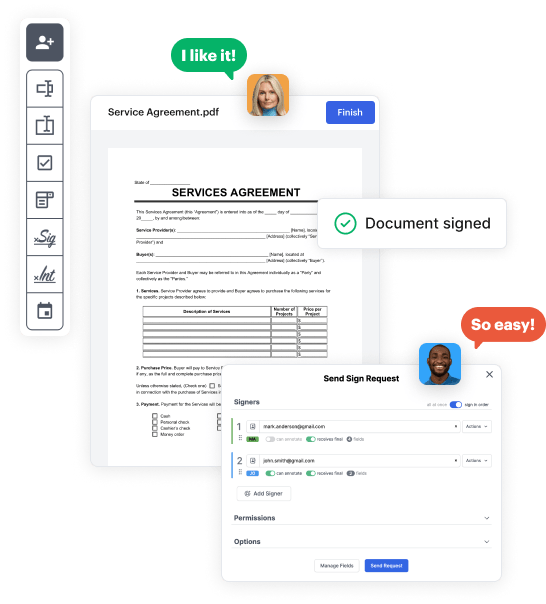
Create your Legal Notices and Letters Template from scratch

Start Building Now
Title decoration

Here's how it works

01. Start with a blank Legal Notices and Letters Template
Open the blank document in the editor, set the document view, and add extra pages if applicable.
02. Add and configure fillable fields
Use the top toolbar to insert fields like text and signature boxes, radio buttons, checkboxes, and more. Assign users to fields.
03. Distribute your form
Share your Legal Notices and Letters Template in seconds via email or a link. You can also download it, export it, or print it out.

Create Legal Notices and Letters Template from the ground up with these detailed instructions

Form edit decoration

Step 1: Get started with DocHub.

Begin by setting up a free DocHub account using any available sign-up method. Simply log in if you already have one.

Step 2: Register for a 30-day free trial.

Try out the entire suite of DocHub's advanced tools by registering for a free 30-day trial of the Pro plan and proceed to build your Legal Notices and Letters Template.

Step 3: Build a new blank document.

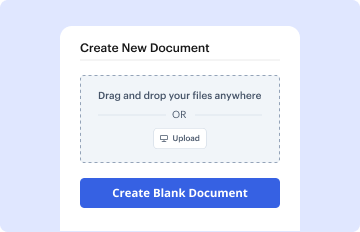
In your dashboard, select the New Document button > scroll down and hit Create Blank Document. You will be taken to the editor.

Step 4: Organize the document’s layout.

Use the Page Controls icon marked by the arrow to switch between different page views and layouts for more convenience.

Step 5: Begin by adding fields to create the dynamic Legal Notices and Letters Template.

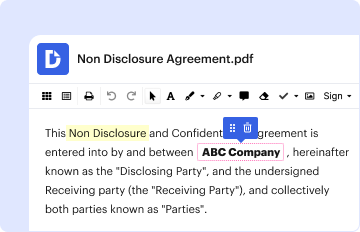
Navigate through the top toolbar to add document fields. Add and arrange text boxes, the signature block (if applicable), add photos, and other elements.

Step 6: Prepare and configure the added fields.

Configure the fillable areas you added per your chosen layout. Modify each field's size, font, and alignment to ensure the form is easy to use and neat-looking.

Step 7: Finalize and share your document.

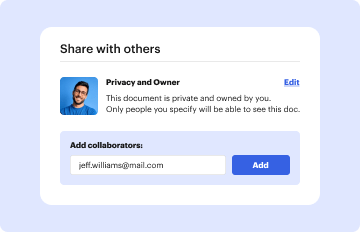
Save the finalized copy in DocHub or in platforms like Google Drive or Dropbox, or create a new Legal Notices and Letters Template. Send out your form via email or utilize a public link to engage with more people.


be ready to get more

Build your Legal Notices and Letters Template in minutes

Start creating now

Got questions?

We have answers to the most popular questions from our customers. If you can't find an answer to your question, please contact us.
Contact us
You can find several templates in the File menu, under New, and then search for business letter or letter. Alternatively, you can download a template from a reputable online source, such as the Microsoft Office website. Once you have selected a template, you can customize it with your own information and content.
Drafting Legal Letters Start with a clear opening statement, outlining the letters purpose. Organize the body into logical sections, using headings and bullet points for ease of reading. Conclude with a succinct summary and a call to action.
To ensure that the document has the desired impact of communicating what actions are being taken against another party, the following best practices need to be followed: Letterhead. Include Date. Address the Defendant. Attribute the Notice. Layout the Grievance. Action to be Taken. Signature. Final Practice.
Tip: If youre already in Word for the web, get to the letter templates by going to File New, and then below the template images click More on Office.com. Youll be on the Templates for Word page. In the list of categories, click Letters. As you work on the letter, youll probably want to rename it.
If you need help creating a resume or cover letter, start with one of the dozens of professionally-designed resume and cover letter templates that are available in Word. Go to File New. In the search box, type Resume or Cover Letter. Double-click the template you want to use.
be ready to get more

Build your Legal Notices and Letters Template in minutes

Start creating now

Related Q&A to Legal Notices and Letters Template

In Word, you can create a form that others can fill out and save or print. To do this, you will start with baseline content in a document, potentially via a form template. Then you can add content controls for elements such as check boxes, text boxes, date pickers, and drop-down lists.

Additional resources on building your forms