Create your Legal Lien Form from scratch

Start Building Now
Title decoration

Here's how it works

01. Start with a blank Legal Lien Form
Open the blank document in the editor, set the document view, and add extra pages if applicable.
02. Add and configure fillable fields
Use the top toolbar to insert fields like text and signature boxes, radio buttons, checkboxes, and more. Assign users to fields.
03. Distribute your form
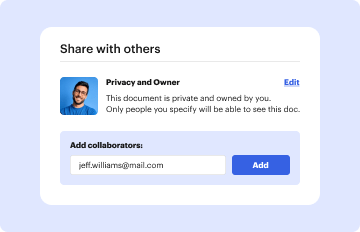
Share your Legal Lien Form in seconds via email or a link. You can also download it, export it, or print it out.

Create your Legal Lien Form in a matter of minutes
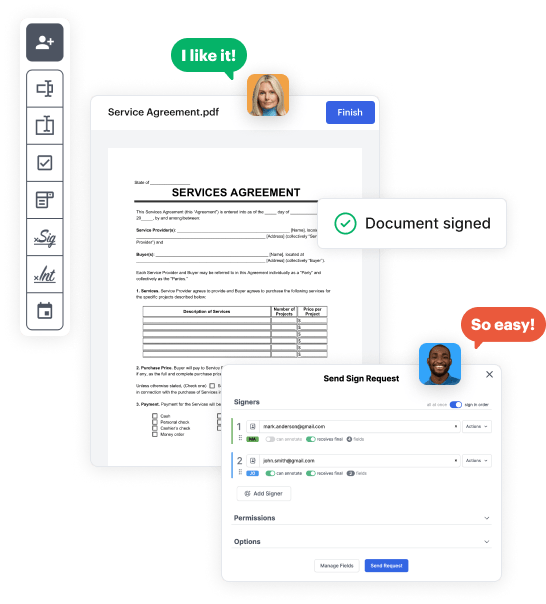
Form edit decoration

Step 1: Access DocHub to set up your Legal Lien Form.

Begin signining into your DocHub account. Explore the advanced DocHub functionality at no cost for 30 days.

Step 2: Go to the dashboard.

Once signed in, head to the DocHub dashboard. This is where you'll create your forms and manage your document workflow.

Step 3: Create the Legal Lien Form.

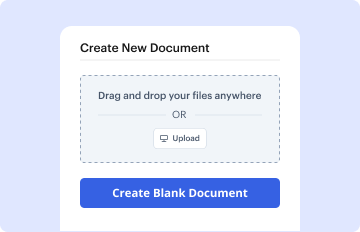
Click on New Document and choose Create Blank Document to be redirected to the form builder.

Step 4: Set up the form layout.

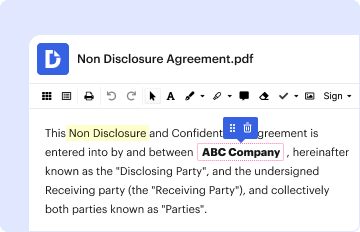
Use the DocHub tools to insert and configure form fields like text areas, signature boxes, images, and others to your document.

Step 5: Add text and titles.

Include necessary text, such as questions or instructions, using the text tool to lead the users in your document.

Step 6: Configure field properties.

Adjust the properties of each field, such as making them mandatory or arranging them according to the data you expect to collect. Assign recipients if applicable.

Step 7: Review and save.

After you’ve managed to design the Legal Lien Form, make a final review of your document. Then, save the form within DocHub, export it to your preferred location, or share it via a link or email.

be ready to get more

Build your Legal Lien Form in minutes

Start creating now

Got questions?

We have answers to the most popular questions from our customers. If you can't find an answer to your question, please contact us.
Contact us
If labor is performed for, or materials furnished to, a contractor or subcontractor for an improvement, the lien shall not be for a sum greater than the sum earned and unpaid on the contract at the time of filing the notice of lien, and any sum subsequently earned thereon.
Under New York law, the general rule is that liens have priority in the order that they are recorded first in the public land records which is known as the first in time, first in right rule, but there are many exceptions to the general rule.
How long does a judgment lien last in New York? A judgment lien in New York will remain attached to the debtors property (even if the property changes hands) for ten years.
A mechanics lien can be filed during the course of a construction project when payment becomes due, or it can be filed after the project is completed. However, it must be filed no later than 8 months from the last day that the party asserting the lien (the lienor) performed work or furnished materials for the project.
If you work or provide material to a contractor or subcontractor of a public improvement project for the City, you can file a Notice of Lien. A lien is a legal claim against property for outstanding debt. You can file the notice before the project is completed or within thirty days of completion.
be ready to get more

Build your Legal Lien Form in minutes

Start creating now

Related Q&A to Legal Lien Form

New York prohibits the waiving of lien rights prior to performance. Furthermore, waivers cannot be made in advance of payment, but only with, or after, payment. New York has no requirement that a lien waiver must be docHubd.
To file a notice of lien, you must complete the Public Improvement Lien Form. You must also sign and docHub both the Lien Form and the Affidavit of Service. You can submit everything to DOF by mail or in person.
Last updated July 24, 2024. If contractors and suppliers dont get paid on a construction project in New York, they can file a mechanics lien to secure payment. A mechanics lien is a legal tool that provides the unpaid party with a security interest in the property.

Additional resources on building your forms