


Create your Legal Guaranty Form from scratch

Start Building Now
Title decoration

Here's how it works

01. Start with a blank Legal Guaranty Form
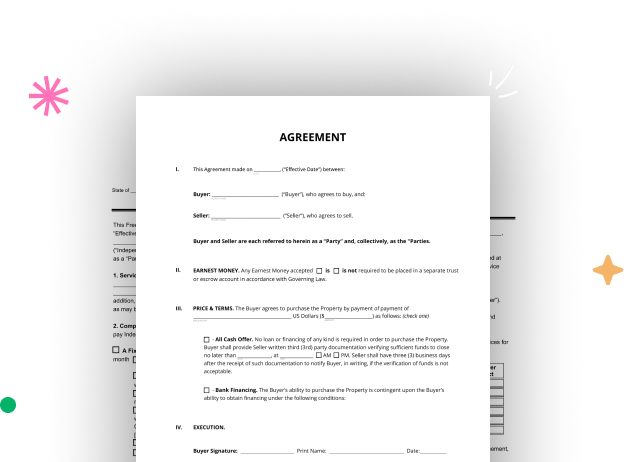
Open the blank document in the editor, set the document view, and add extra pages if applicable.
02. Add and configure fillable fields
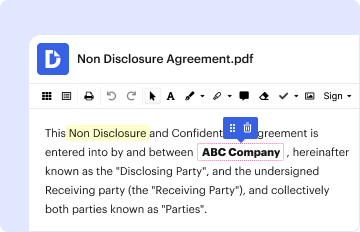
Use the top toolbar to insert fields like text and signature boxes, radio buttons, checkboxes, and more. Assign users to fields.
03. Distribute your form
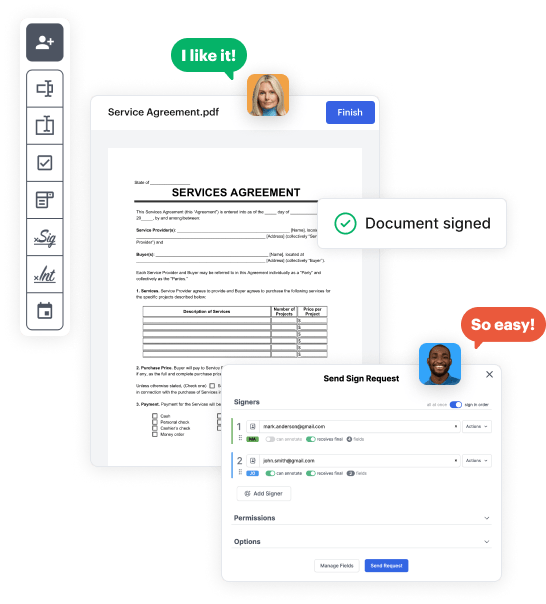
Share your Legal Guaranty Form in seconds via email or a link. You can also download it, export it, or print it out.

A detailed guide on how to build your Legal Guaranty Form online

Form edit decoration

Step 1: Start with DocHub's free trial.

Visit the DocHub website and sign up for the free trial. This provides access to every feature you’ll require to build your Legal Guaranty Form with no upfront cost.

Step 2: Access your dashboard.

Log in to your DocHub account and proceed to the dashboard.

Step 3: Craft a new document.

Click New Document in your dashboard, and choose Create Blank Document to create your Legal Guaranty Form from the ground up.

Step 4: Utilize editing tools.

Insert various fields such as text boxes, radio buttons, icons, signatures, etc. Organize these fields to suit the layout of your form and assign them to recipients if needed.

Step 5: Modify the form layout.

Organize your form effortlessly by adding, repositioning, removing, or combining pages with just a few clicks.

Step 6: Craft the Legal Guaranty Form template.

Convert your newly crafted form into a template if you need to send multiple copies of the same document multiple times.

Step 7: Save, export, or share the form.

Send the form via email, share a public link, or even publish it online if you want to collect responses from a broader audience.


be ready to get more

Build your Legal Guaranty Form in minutes

Start creating now

Got questions?

We have answers to the most popular questions from our customers. If you can't find an answer to your question, please contact us.
Contact us
A letter of guarantee is a document issued by your bank that ensures your supplier gets paid for the goods or services it provides to your company, in the event that your company itself cant pay. In that case, your bank will pay your supplier up to a specified amount.
A guaranty agreement is a contract between two parties where one party agrees to pay a debt or perform a duty in the event that the original party fails to do so. The party who makes the guaranty is called the guarantor. An agreement of this nature is often used in real estate, insurance, or financial transactions.
A personal guarantee is a legally binding agreement between a finance lender and a business owner or director which states that the business owner or director will be personally liable for repaying the loan if the business defaults on loan repayments or becomes insolvent.
A guarantors form should include a space to fill in the home address, work address, phone number, and email address. The contact details are what will be used to contact the guarantor in the future if the principal fails to meet agreement terms.
The Guarantor(s) declare that the Guarantor(s) has/have not received any security from the Borrower for the giving of this guarantee and the Guarantor(s) agree that so long as any moneys remain owing by the Borrower to the Bank or any liability incurred by the Bank remains outstanding, the Guarantor(s) will not take
be ready to get more

Build your Legal Guaranty Form in minutes

Start creating now

Related Q&A to Legal Guaranty Form

A guaranty can be defined as an undertaking or a promise from a guarantor to a guarantee. A guaranty can be thought as a collateral to a primary or principal obligation from the guarantor to perform.
Guarantees may take on the form of a security deposit. Common in the banking and lending industries, this is a form of collateral provided by the debtor that can be liquidated if the debtor defaults.
A guaranty agreement, in the realm of commercial insurance, refers to a legally binding contract where one party, known as the guarantor, promises to be responsible for the obligations or debts of another party, known as the debtor, if they fail to fulfill their financial commitments.

Additional resources on building your forms


