
Create your Legal Family Document from scratch

Start Building Now
Title decoration

Here's how it works

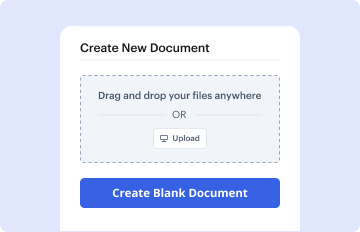
01. Start with a blank Legal Family Document
Open the blank document in the editor, set the document view, and add extra pages if applicable.
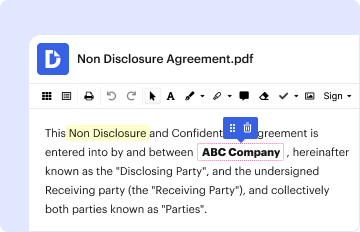
02. Add and configure fillable fields
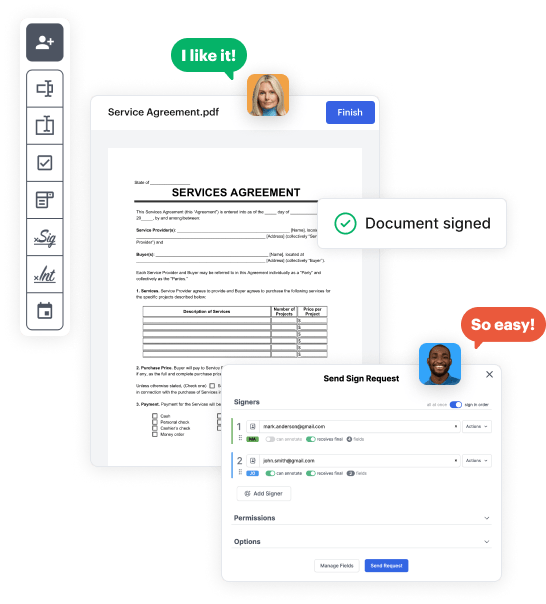
Use the top toolbar to insert fields like text and signature boxes, radio buttons, checkboxes, and more. Assign users to fields.
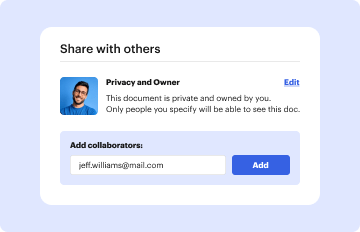
03. Distribute your form
Share your Legal Family Document in seconds via email or a link. You can also download it, export it, or print it out.

A simple tutorial on how to create a professional-looking Legal Family Document

Form edit decoration

Step 1: Log in to DocHub to begin creating your Legal Family Document.

First, log in to your DocHub account. If you don't have one, you can simply sign up for free.

Step 2: Go to the dashboard.

Once logged in, access your dashboard. This is your primary hub for all document-related activities.

Step 3: Start new document creation.

In your dashboard, select New Document in the upper left corner. Choose Create Blank Document to craft the Legal Family Document from scratch.

Step 4: Insert form elements.

Place numerous fields like text boxes, images, signature fields, and other fields to your form and designate these fields to intended recipients as required.

Step 5: Adjust your form.

Customize your form by including guidelines or any other vital information leveraging the text feature.

Step 6: Review and modify the document.

Meticulously review your created Legal Family Document for any discrepancies or essential adjustments. Take advantage of DocHub's editing tools to enhance your form.

Step 7: Share or download the form.

After completing, save your work. You may select to retain it within DocHub, transfer it to various storage platforms, or send it via a link or email.


be ready to get more

Build your Legal Family Document in minutes

Start creating now

Got questions?

We have answers to the most popular questions from our customers. If you can't find an answer to your question, please contact us.
Contact us
To be considered legally binding, a document must include the valid signatures of all parties entering into an agreement and outline all the duties and responsibilities each has to the other(s).
Important points to include in a legal document. Party details. List the names, numbers, addresses (email or physical), and any other relevant information of all parties involved. Background information. Motion. Roles and responsibilities. BdocHubes or contingencies. Dates and signatures.
How to Format a Legal Document in Word Resize Your Document. Pick Your Fonts. Set the Line Spacing. Format Your Columns. Set Up Your Table of Contents. Create Your Table of Authorities. Automating Your Formatting. Creating a Style. Setting Up Autoformatting as You Type. A Note on Different Documents. Pleadings. Briefs. Manuscripts.
Although a document must be signed by each party to be considered legally binding, the mere presence of signatures does not guarantee that an agreement is enforceable in court. To be considered a legally binding contract or document, three critical elements must also be present: Subject, Consideration, and Capacity.
A legally binding document is one in which each party promises to obey or carry out an obligation. Both parties must fulfil the terms of the offer, consideration, and exchange.
be ready to get more

Build your Legal Family Document in minutes

Start creating now

Related Q&A to Legal Family Document

Why You Need a Business Contract Lawyer. If youre asking whether you need a lawyer to draft a contract, legally, the answer is no. Anyone can draft a contract on their own and as long as the elements above are included and both parties are legally competent and consent to the agreement, it is generally lawful.
To make a contract legally binding, it needs to include several key elements: Offer and acceptance One party needs to offer something (money, services, rights, etc.), and the other party needs to accept the offer. Consideration The benefit that both parties receive.
A legal document is typically characterized by its structure, content, and language. Its meticulously crafted, often by legal professionals, to ensure precision and accuracy. The language used is formal and specific, adhering to legal terminologies and protocols to avoid ambiguity.

Additional resources on building your forms


