
Create your Legal Estate Document from scratch

Start Building Now
Title decoration

Here's how it works

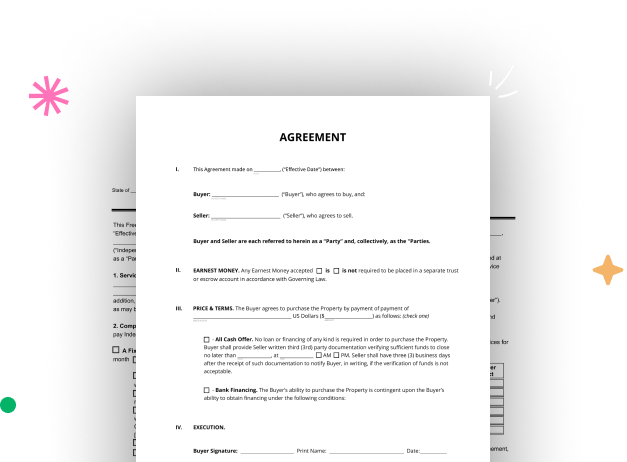
01. Start with a blank Legal Estate Document
Open the blank document in the editor, set the document view, and add extra pages if applicable.
02. Add and configure fillable fields
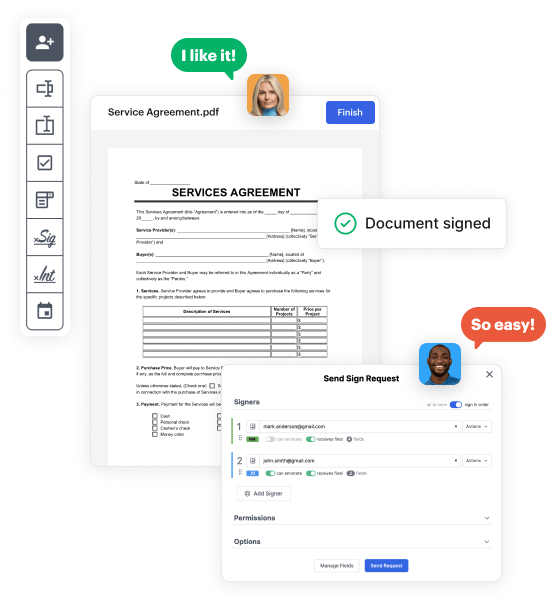
Use the top toolbar to insert fields like text and signature boxes, radio buttons, checkboxes, and more. Assign users to fields.
03. Distribute your form
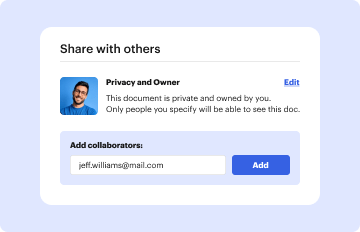
Share your Legal Estate Document in seconds via email or a link. You can also download it, export it, or print it out.

A simple tutorial on how to build a polished Legal Estate Document

Form edit decoration

Step 1: Sign in to DocHub to begin creating your Legal Estate Document.

First, sign in to your DocHub account. If you don't have one, you can easily sign up for free.

Step 2: Head to the dashboard.

Once you’re in, head to your dashboard. This is your central hub for all document-related activities.

Step 3: Launch new document creation.

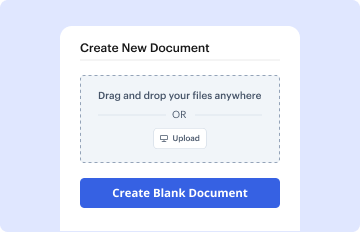
In your dashboard, click on New Document in the upper left corner. Choose Create Blank Document to create the Legal Estate Document from a blank slate.

Step 4: Insert template fillable areas.

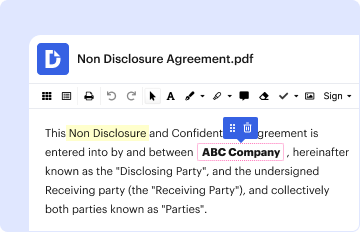
Place various elements like text boxes, images, signature fields, and other elements to your template and designate these fields to specific users as required.

Step 5: Fine-tune your form.

Refine your template by inserting walkthroughs or any other crucial information leveraging the text feature.

Step 6: Double-check and modify the document.

Meticulously check your created Legal Estate Document for any discrepancies or required adjustments. Utilize DocHub's editing capabilities to perfect your form.

Step 7: Send out or export the form.

After completing, save your file. You may opt to retain it within DocHub, export it to various storage solutions, or forward it via a link or email.


be ready to get more

Build your Legal Estate Document in minutes

Start creating now

Got questions?

We have answers to the most popular questions from our customers. If you can't find an answer to your question, please contact us.
Contact us
No requirement for notarization New York does not require you to docHub wills for them to be legal. But, if you want to make your will self-proving, both you and your witnesses can visit a notary. A court can accept a self-proving will without docHubing out to the witnesses, speeding up the probate process.
Although a document must be signed by each party to be considered legally binding, the mere presence of signatures does not guarantee that an agreement is enforceable in court. To be considered a legally binding contract or document, three critical elements must also be present: Subject, Consideration, and Capacity.
To be considered legally valid, a contract must meet certain criteria, such as mutual assent, consideration, capacity, and a legal purpose. However, it is possible to create a legal contract without hiring a lawyer. Seeking lawyers is customary but not necessary.
Heres how to write a legal document in 10 simple steps: Plan Out the Document Before You Begin. Write with Clear and Concise Language. Ensure the Correct Use of Grammar. Be as Accurate as Possible. Make Information Accessible. Ensure All Necessary Information Is Included. Always Use an Active Voice.
Legally binding contracts can be done both in writing or orally. However, when it comes to business transactions, its best to have the majority of your contracts in writing. There is no law requiring contracts to be written by a lawyer. There are no laws that indicate any specific form or font they should be in.
be ready to get more

Build your Legal Estate Document in minutes

Start creating now