

Create your Legal Drainage Contract from scratch

Start Building Now
Title decoration

Here's how it works

01. Start with a blank Legal Drainage Contract
Open the blank document in the editor, set the document view, and add extra pages if applicable.
02. Add and configure fillable fields
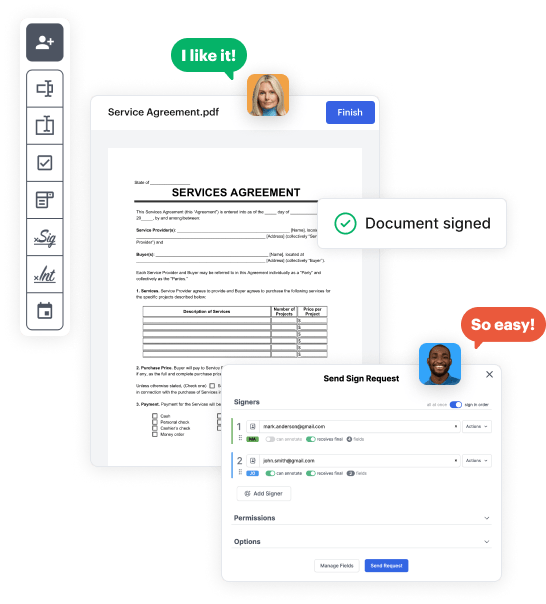
Use the top toolbar to insert fields like text and signature boxes, radio buttons, checkboxes, and more. Assign users to fields.
03. Distribute your form
Share your Legal Drainage Contract in seconds via email or a link. You can also download it, export it, or print it out.

A simple guide on how to create a polished Legal Drainage Contract

Form edit decoration

Step 1: Log in to DocHub to begin creating your Legal Drainage Contract.

First, sign in to your DocHub account. If you don't have one, you can easily register for free.

Step 2: Navigate to the dashboard.

Once signed in, head to your dashboard. This is your primary hub for all document-centric activities.

Step 3: Kick off new document creation.

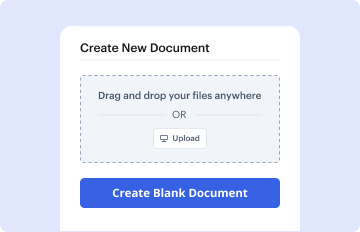
In your dashboard, click on New Document in the upper left corner. Pick Create Blank Document to put together the Legal Drainage Contract from a blank slate.

Step 4: Insert template fillable areas.

Place various items like text boxes, photos, signature fields, and other elements to your template and assign these fields to certain individuals as needed.

Step 5: Adjust your template.

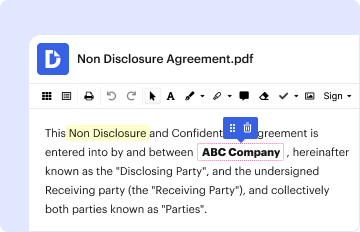
Customize your form by incorporating directions or any other crucial information leveraging the text option.

Step 6: Review and refine the content of the document.

Meticulously go over your created Legal Drainage Contract for any errors or essential adjustments. Leverage DocHub's editing features to perfect your template.

Step 7: Share or export the template.

After finalizing, save your copy. You may opt to retain it within DocHub, export it to various storage solutions, or send it via a link or email.


be ready to get more

Build your Legal Drainage Contract in minutes

Start creating now

Got questions?

We have answers to the most popular questions from our customers. If you can't find an answer to your question, please contact us.
Contact us
Drainage Installation Guide Mark the Area. Dig the Trench. Dig Holes for Catch Basins. Basins. Connect Pipe to Each Basin or Grate. Connect the Pipe Network. Backfill the Trench.
How to Design a Drainage System: 5 Essential Tips Observe Where the Excess Water Comes From. Prepare for Your Soil. Survey Your Lay of the Land Determine Your Drain Layout. Get an Expert Involved. Get Your New Drainage System Planned-Out Today!
1 Assess the site. The first step is to assess the site conditions, such as the topography, soil type, vegetation, climate, and existing drainage features. 2 Define the objectives. 3 Select the components. 4 Design the layout. 5 Implement the construction. 6 Maintain the operation. 7 Heres what else to consider.
You Can Access Property Drainage Plans from the Council It is very likely that your local Council will also have the drainage plans for your property. These can be extracted from the archives (note that you will be charged an administration fee for this access).
Drainage Law in North Carolina is based on Common Law and court precedent. The law states that the person on the lower estate must receive and pass the water from the higher estate(s). Also, specific statutes prohibit the blockage of streams, drainageways and easements that remove water from higher elevations.
be ready to get more

Build your Legal Drainage Contract in minutes

Start creating now

Related Q&A to Legal Drainage Contract

An easement allows the property owner use of the property as long as it does not interfere with easement rights. No permanent structures or encroachments will be permitted or constructed within or over any drainage easement.
The easement area of each and all improvements in it shall be maintained continuously by owner, except those improvements for which a public authority or utility company is responsible.
The first step to designing your drainage system is determining the area that you need to drain. Youll need to map out your property and identify all areas where water accumulates most. Once youve identified drainage areas, you can start designing the system.

Additional resources on building your forms


