
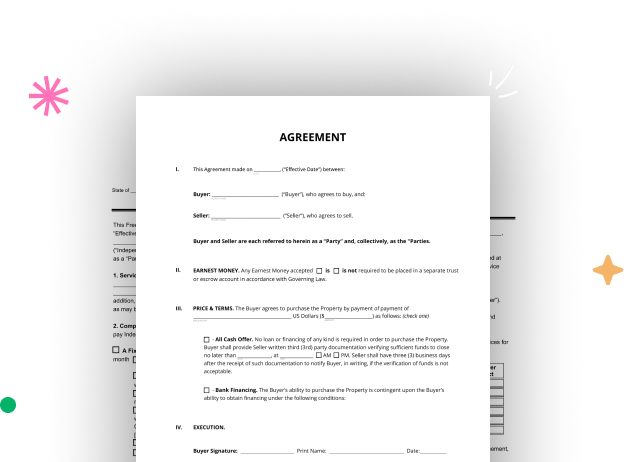
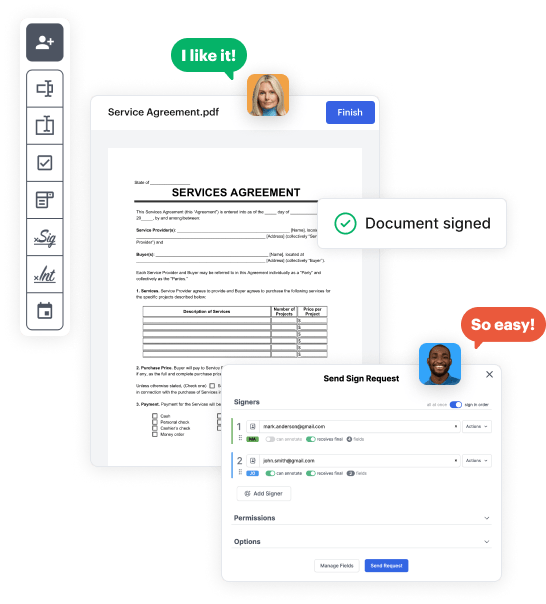
Create your Legal Documents for Startup from scratch

Start Building Now
Title decoration

Here's how it works

01. Start with a blank Legal Documents for Startup
Open the blank document in the editor, set the document view, and add extra pages if applicable.
02. Add and configure fillable fields
Use the top toolbar to insert fields like text and signature boxes, radio buttons, checkboxes, and more. Assign users to fields.
03. Distribute your form
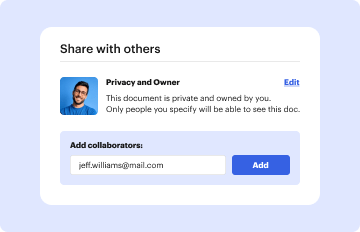
Share your Legal Documents for Startup in seconds via email or a link. You can also download it, export it, or print it out.

Design your Legal Documents for Startup in a matter of minutes

Form edit decoration

Step 1: Access DocHub to set up your Legal Documents for Startup.

Start signining into your DocHub account. Try out the advanced DocHub functionality at no cost for 30 days.

Step 2: Navigate to the dashboard.

Once signed in, go to the DocHub dashboard. This is where you'll build your forms and manage your document workflow.

Step 3: Create the Legal Documents for Startup.

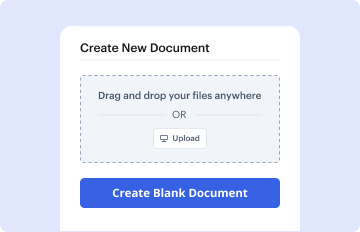
Hit New Document and select Create Blank Document to be taken to the form builder.

Step 4: Set up the form layout.

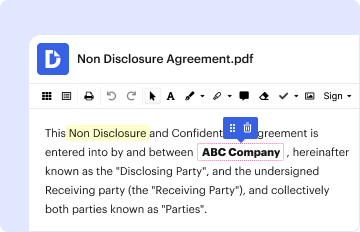
Use the DocHub features to add and configure form fields like text areas, signature boxes, images, and others to your form.

Step 5: Insert text and titles.

Add needed text, such as questions or instructions, using the text tool to guide the users in your document.

Step 6: Configure field properties.

Modify the properties of each field, such as making them compulsory or formatting them according to the data you expect to collect. Assign recipients if applicable.

Step 7: Review and save.

After you’ve managed to design the Legal Documents for Startup, make a final review of your form. Then, save the form within DocHub, transfer it to your selected location, or distribute it via a link or email.


be ready to get more

Build your Legal Documents for Startup in minutes

Start creating now

Got questions?

We have answers to the most popular questions from our customers. If you can't find an answer to your question, please contact us.
Contact us
Heres an easy-to-follow guide for starting your business legally: Create an LLC or Corporation. Register Your Business Name. Trademark your Slogans and Logos. Apply for a Federal Tax ID Number. Determine If You Need a State Tax ID Number. Obtain Business Permits and Licenses. Protect Your Business with Insurance.
A Startup lawyer can provide advice and guidance on structuring business entities, drafting agreements, and implementing policies and procedures that minimize legal exposure.
Can I Create My Own Contract? The short answer is yes. Lawyers are crucial in drafting contracts because they understand legal matters better. They can provide valuable guidance on complex legal issues, ensure compliance with applicable laws, and protect against possible pitfalls.
Most startups incorporate as a C-Corp, the same structure used by Apple, Google and pretty much every large company in the United States. A C-Corp is a fully separate legal entity, responsible for paying corporate taxes and issuing annual reports. It must also appoint a board of directors.
Business licenses and permits: Depending on the type of business and location, various licenses and permits might be required to operate legally. Founders agreements: For startups, the founders agreement details the roles, responsibilities, equity ownership, and other terms agreed upon by the founders.
be ready to get more

Build your Legal Documents for Startup in minutes

Start creating now

Related Q&A to Legal Documents for Startup

What Legal Services Are Needed to Start a Business? Permits and licenses. You will have to register a business with your state to legally operate, and this comes with new tax obligations as well. Insurance. Contract drafting. Business planning.
As you select legal counsel, think about: (1) experience with startups, (2) what your day-to-day experience will be, (3) the law firms culture, (4) connections to capital, (5) cost and (6) chemistry.
As a formal part of court proceedings, a certified legal document preparer should create these. Formal legal entities like notaries can recognize more complex legal forms like articles of incorporation and property deeds. So a licensed attorney or law firm should prepare these for the best results.

Additional resources on building your forms


