
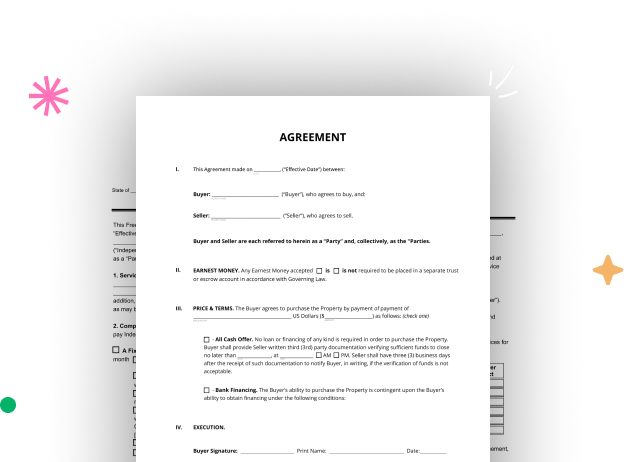

Create your Legal Documents for Judgment from scratch

Start Building Now
Title decoration

Here's how it works

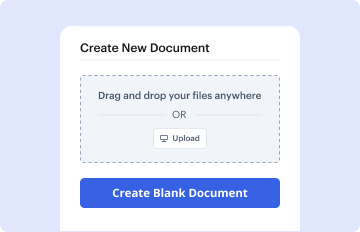
01. Start with a blank Legal Documents for Judgment
Open the blank document in the editor, set the document view, and add extra pages if applicable.
02. Add and configure fillable fields
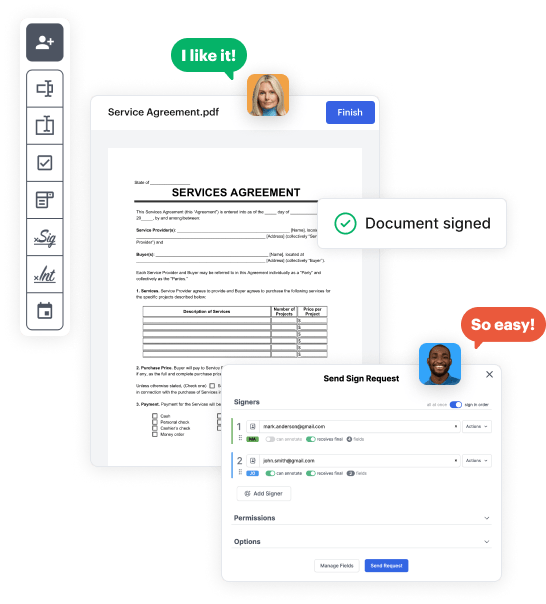
Use the top toolbar to insert fields like text and signature boxes, radio buttons, checkboxes, and more. Assign users to fields.
03. Distribute your form
Share your Legal Documents for Judgment in seconds via email or a link. You can also download it, export it, or print it out.

A brief tutorial on how to create a professional-looking Legal Documents for Judgment

Form edit decoration

Step 1: Sign in to DocHub to begin creating your Legal Documents for Judgment.

First, sign in to your DocHub account. If you don't have one, you can simply sign up for free.

Step 2: Head to the dashboard.

Once logged in, navigate to your dashboard. This is your main hub for all document-related operations.

Step 3: Kick off new document creation.

In your dashboard, select New Document in the upper left corner. Choose Create Blank Document to create the Legal Documents for Judgment from scratch.

Step 4: Add form fillable areas.

Add different fields like text boxes, images, signature fields, and other fields to your form and assign these fields to certain recipients as required.

Step 5: Customize your document.

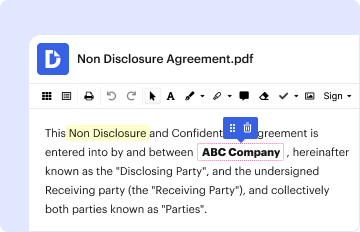
Customize your template by including instructions or any other necessary information utilizing the text tool.

Step 6: Go over and correct the form.

Attentively examine your created Legal Documents for Judgment for any typos or essential adjustments. Make use of DocHub's editing features to enhance your document.

Step 7: Distribute or export the document.

After finalizing, save your copy. You can choose to save it within DocHub, transfer it to various storage platforms, or forward it via a link or email.


be ready to get more

Build your Legal Documents for Judgment in minutes

Start creating now

Got questions?

We have answers to the most popular questions from our customers. If you can't find an answer to your question, please contact us.
Contact us
The default judgment usually gives the plaintiff the right to collect the amount of money that was asked for in the complaint, plus interest and court costs. The judgment will appear on the defendants credit report, and it can be there for up to seven years if it is not paid.
Default judgment. (a) Default and entry. When a defendant has failed to appear, plead or proceed to trial of an action docHubed and called for trial, or when the court orders a dismissal for any other neglect to proceed, the plaintiff may seek a default judgment against him. New York Civil Practice Law and Rules Law 3215 (2023) - Default Justia Law new-york cvp article-32 Justia Law new-york cvp article-32
What Is Default Judgment? A default judgment occurs when the defendant in a legal case fails to respond to a court summons or does not appear in court. If this occurs, a court may rule in favor of the plaintiff by default.
Entry of judgment. (a) What constitutes entry. A judgment is entered when, after it has been signed by the clerk, it is filed by him. (b) Judgment upon verdict. New York Civil Practice Law and Rules Law R5016 (2023) - Entry Justia Law new-york cvp article-50 Justia Law new-york cvp article-50
20 years How Long Are Judgments Valid in New York? Judgments are valid for 20 years and may be extended once for an additional period of 10 years. Judgment Enforcement FAQs - Broome County Broome County clerk judgmentenf Broome County clerk judgmentenf
be ready to get more

Build your Legal Documents for Judgment in minutes

Start creating now

Related Q&A to Legal Documents for Judgment

New York courts usually only vacate default judgments in two situations: Excusable default: The defendant has a good excuse for not appearing and has a valid defense to the lawsuit. Lack of personal jurisdiction (bad service): The defendant wasnt properly served with the required notice of the lawsuit.
A default judgment can be obtained when a defendant fails to respond to a claim issued against them within the specified time. A default judgment can then be entered without the court considering the merits of the case.
Example of a Judgment For example, if a borrower does not repay a loan or a credit card debt, the lender or creditor can obtain a judgment to force the borrower to pay. Judgment: What It Is, How It Works, Examples - Investopedia Investopedia terms judgement Investopedia terms judgement

Additional resources on building your forms


