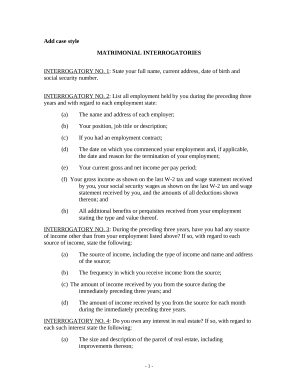
Raise your work productivity with Legal Discovery Forms for Divorce

Record management consumes to half of your office hours. With DocHub, it is possible to reclaim your time and enhance your team's efficiency. Get Legal Discovery Forms for Divorce collection and explore all templates related to your day-to-day workflows.

The best way to use Legal Discovery Forms for Divorce:

  1. Open Legal Discovery Forms for Divorce and employ Preview to get the appropriate form.
  2. Click on Get Form to start working on it.
  3. Wait for your form to open in our online editor and start modifying it.
  4. Add new fillable fields, icons, and pictures, modify pages order, etc.
  5. Complete your document or prepare it for other contributors.
  6. Download or share the form by link, email attachment, or invite.

Boost your day-to-day file management with the Legal Discovery Forms for Divorce. Get your free DocHub account today to explore all templates.


Video Guide on Legal Discovery Forms for Divorce management

video background

Commonly Asked Questions about Legal Discovery Forms for Divorce

The purpose of this discovery procedure is to enable all parties to adequately prepare for trial. After the close of pleadings, a party may, on notice, request the opposing parties to make discovery.
Discovery reports help you identify categories that are highly-correlated to a defined audience, media, sites, or conversion (floodlight activities) events.
Discovery is a way to get the information you need to support your case in court or make informed decisions before you docHub an agreement. You use discovery to find out: What your spouse plans to say about an issue. What facts or witnesses support their side.
Discovery allows you to get information and evidence from the other party or other persons you can use in your lawsuit.
The Discovery Process in Texas Divorce Law This process includes a range of methods such as requests for disclosure, interrogatories, requests for admissions, and depositions. The purpose is to gather relevant information from both parties, ensuring a fair and informed resolution.