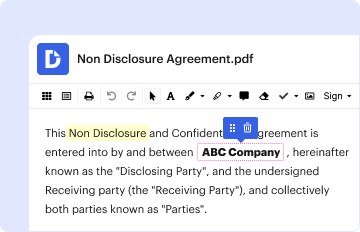
Create your Legal Complaint Template from scratch

Start Building Now
Title decoration

Here's how it works

01. Start with a blank Legal Complaint Template
Open the blank document in the editor, set the document view, and add extra pages if applicable.
02. Add and configure fillable fields
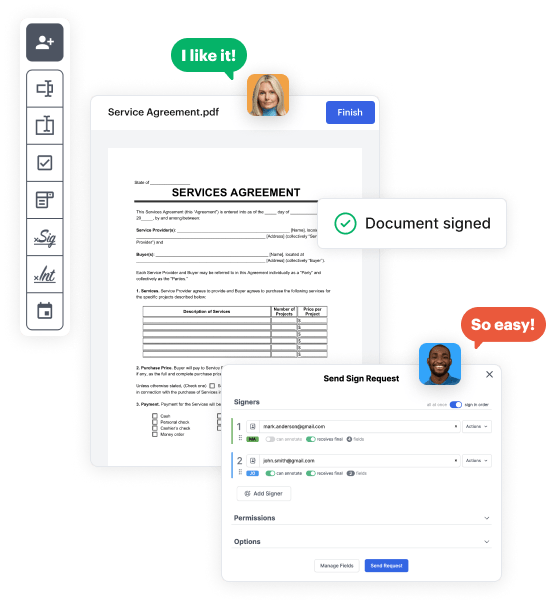
Use the top toolbar to insert fields like text and signature boxes, radio buttons, checkboxes, and more. Assign users to fields.
03. Distribute your form
Share your Legal Complaint Template in seconds via email or a link. You can also download it, export it, or print it out.

A quick guide on how to create a polished Legal Complaint Template
Form edit decoration

Step 1: Sign in to DocHub to begin creating your Legal Complaint Template.

First, log in to your DocHub account. If you don't have one, you can simply sign up for free.

Step 2: Head to the dashboard.

Once signed in, navigate to your dashboard. This is your main hub for all document-centric processes.

Step 3: Initiate new document creation.

In your dashboard, choose New Document in the upper left corner. Choose Create Blank Document to build the Legal Complaint Template from the ground up.

Step 4: Insert form elements.

Add various items like text boxes, photos, signature fields, and other interactive areas to your form and assign these fields to intended recipients as necessary.

Step 5: Configure your template.

Personalize your form by incorporating guidelines or any other necessary information using the text option.

Step 6: Double-check and modify the form.

Meticulously go over your created Legal Complaint Template for any discrepancies or needed adjustments. Leverage DocHub's editing features to polish your template.

Step 7: Distribute or export the template.

After completing, save your file. You may select to keep it within DocHub, transfer it to various storage services, or forward it via a link or email.


be ready to get more

Build your Legal Complaint Template in minutes

Start creating now

Got questions?

We have answers to the most popular questions from our customers. If you can't find an answer to your question, please contact us.
Contact us
General civil cases, usually involving suing someone for money in disputes over things like contracts, damage to property, or someone getting hurt. Family law cases such as divorce, child support, child custody, and adoptions.
In Civil Law, a complaint is the very first formal action taken to officially begin a lawsuit. This written document contains the allegations against the defense, the specific laws violated, the facts that led to the dispute, and any demands made by the plaintiff to restore justice.
A caption identifying the plaintiff and defendant, and the court in which the complaint is being filed. A brief description of the parties (e.g., their name and address). Allegations demonstrating that the court has subject matter jurisdiction, personal jurisdiction, and venue to adjudicate the claims in the complaint.
A verified complaint has a statement at the very end of the complaint, after the attorneys signature (or the plaintiffs signature if there is no attorney), that is signed under penalty of perjury stating that the statements in the complaint are true.
Write a paragraph describing the bdocHub. Identify the part of the contract or agreement that describes what the other party should have done. Make a clear statement of what the party did or failed to do. Do not make any judgments, and avoid inflammatory language.
be ready to get more

Build your Legal Complaint Template in minutes

Start creating now

Related Q&A to Legal Complaint Template

The case could be about a contract dispute, damage to property, injury to a person, credit card or other debt, work-related disputes, and more.
The three most common civil cases are tort claims, contract bdocHubes and landlord/tenant issues. Tort Claim - An act committed by one person that causes harm to another. Tort cases can take many different forms, and can relate to a persons personal safety, safety of their property, and financial security.
In a civil lawsuit, the burden of proof rests on the plaintiff or the person filing the suit. The plaintiff should prove that the allegations are true and that the defendant, or the other party, caused damages. When it comes to establishing a civil case, the plaintiff must usually do so by a preponderance of evidence.

Additional resources on building your forms