Improve your productiveness with Legal Communication Forms

Document managing consumes to half of your business hours. With DocHub, it is possible to reclaim your time and effort and improve your team's efficiency. Get Legal Communication Forms collection and check out all document templates relevant to your everyday workflows.

Easily use Legal Communication Forms:

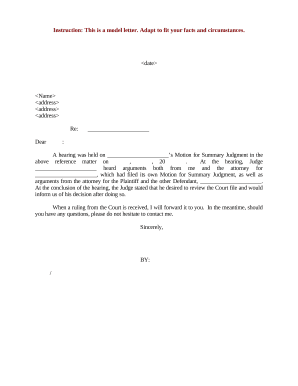
  1. Open Legal Communication Forms and employ Preview to find the relevant form.
  2. Click Get Form to start working on it.
  3. Wait for your form to upload in our online editor and start editing it.
  4. Add new fillable fields, symbols, and images, adjust pages order, and many more.
  5. Complete your document or set it for other contributors.
  6. Download or share the form by link, email attachment, or invite.

Improve your everyday file managing with our Legal Communication Forms. Get your free DocHub account today to explore all forms.

Video Guide on Legal Communication Forms management

video background

Commonly Asked Questions about Legal Communication Forms

There are different methods of communication, and these include: Verbal communication. Non-verbal communication. Written communication. Listening. Visual communication.
Communication can be expressed in three ways, that is, through written and spoken mediums (Express promise) and through conduct (implied promise). Many of the times, implied contract becomes a source of valid contract and becomes easily enforceable in a court of law.
The six types of communication are oral, interpersonal, nonverbal, written, visual, and listening. Oral includes any spoken speech and interpersonal involves verbal and nonverbal communication.
The four types of communication are verbal, non-verbal, visual and written communication. No matter how we communicate, start by thinking about what the reader/listener should think, feel and do once theyve heard or read our message.
A lawyers ability to communicate persuasively can docHubly influence the outcome of a case. Written communication also plays a vital role in the legal profession. Lawyers must draft precise and well-structured legal documents, such as contracts, pleadings, and briefs.
Summary: Lets explore the seven types of communication: verbal, non-verbal, written, feedback, visual, group, and mass. Through examples like speaking, body language, emails, and more, we delve into how each communication form plays a unique role in effective interaction.
Indeed, the communication does not need to be an official document on company letterhead to be admissible as evidence. E-mail, text messages, instant messages, and social media messages can all be admissible under the right circumstances.