
Create your Legal Cohabitation Agreement from scratch

Start Building Now
Title decoration

Here's how it works

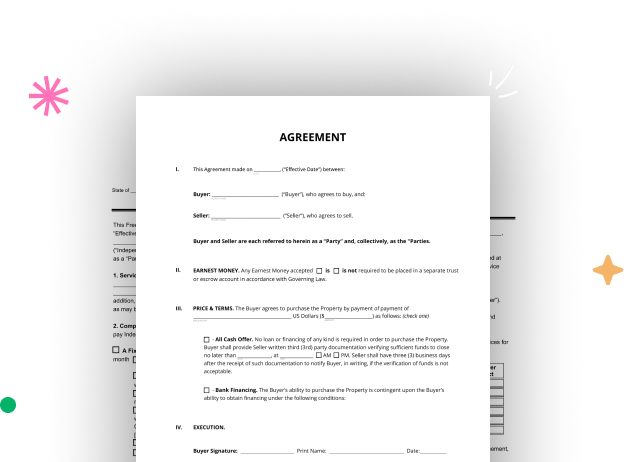
01. Start with a blank Legal Cohabitation Agreement
Open the blank document in the editor, set the document view, and add extra pages if applicable.
02. Add and configure fillable fields
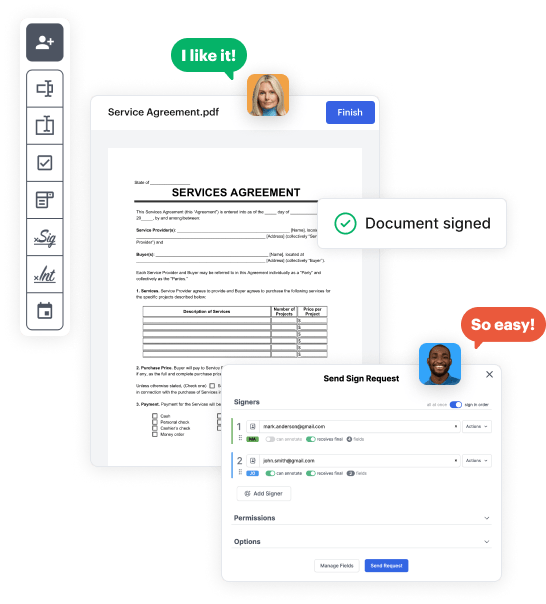
Use the top toolbar to insert fields like text and signature boxes, radio buttons, checkboxes, and more. Assign users to fields.
03. Distribute your form
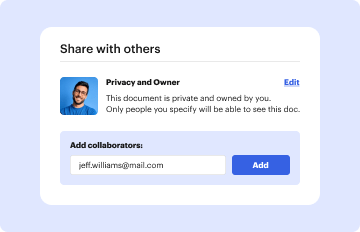
Share your Legal Cohabitation Agreement in seconds via email or a link. You can also download it, export it, or print it out.

A simple tutorial on how to create a professional-looking Legal Cohabitation Agreement

Form edit decoration

Step 1: Sign in to DocHub to create your Legal Cohabitation Agreement.

First, log in to your DocHub account. If you don't have one, you can simply register for free.

Step 2: Navigate to the dashboard.

Once logged in, navigate to your dashboard. This is your central hub for all document-based processes.

Step 3: Start new document creation.

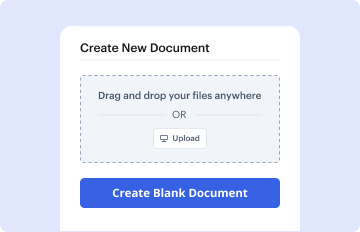
In your dashboard, hit New Document in the upper left corner. Hit Create Blank Document to craft the Legal Cohabitation Agreement from the ground up.

Step 4: Add form fillable areas.

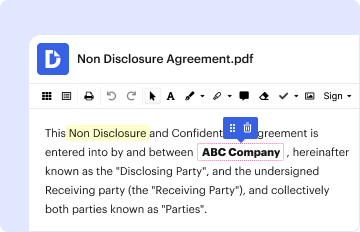
Place numerous fields like text boxes, images, signature fields, and other interactive areas to your form and assign these fields to certain users as necessary.

Step 5: Configure your document.

Refine your document by adding directions or any other crucial details utilizing the text feature.

Step 6: Go over and correct the document.

Carefully review your created Legal Cohabitation Agreement for any discrepancies or necessary adjustments. Make use of DocHub's editing features to perfect your document.

Step 7: Send out or download the document.

After finalizing, save your work. You can opt to retain it within DocHub, transfer it to various storage services, or send it via a link or email.


be ready to get more

Build your Legal Cohabitation Agreement in minutes

Start creating now

Got questions?

We have answers to the most popular questions from our customers. If you can't find an answer to your question, please contact us.
Contact us
In general, states will uphold cohabitation agreements that are written. They are legally binding as long as one partner didnt force the other partner to sign the contract. Further, make sure that the contract doesnt contain anything illegal.
You declare the legal cohabitation together with your partner or cohabitant before the registrar of births, deaths, and marriages. The declaration contains the following information: date of the declaration. surname, first names, place and date of birth, signature of both parties.
New York does not recognize common-law marriages. Obtaining a cohabitation agreement acts similarly to a prenuptial agreement, and can afford you some of these rights.
Yes, it is perfectly legal to draft your own cohabitation agreement with your partner. However, its important to understand the benefits of having this agreement drafted by an attorney.
In some states and certain situations, courts may also recognize implied (unspoken) agreements based on couples actionssuch as combining their money in joint bank accounts, pooling their resources to buy property, taking title in that property jointly, and living under an arrangement where one partner provides most
be ready to get more

Build your Legal Cohabitation Agreement in minutes

Start creating now

Related Q&A to Legal Cohabitation Agreement

Most systems will also require that your cohabitation agreement be in writing and signed by both parties before it can be considered valid. However, many states may also recognize implied and oral cohabitation arrangements.
A court may find that the contract implies meretricious sexual activity. The court may refuse to enforce the contract. Proving an oral agreement or an implied contract between unmarried cohabitants is also tricky. Several courts have refused to recognize such an agreement due to insufficient proof.
Typically, a cohabitation agreement addresses issues such as property ownership, financial responsibilities and division of assets in the event of a breakup and any other important matters that the couple wishes to clarify, Moreschi said.

Additional resources on building your forms


