


Create your Legal Certification Document from scratch

Start Building Now
Title decoration

Here's how it works

01. Start with a blank Legal Certification Document
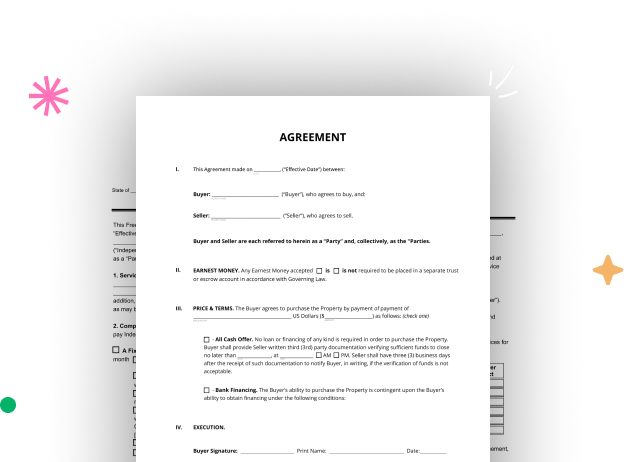
Open the blank document in the editor, set the document view, and add extra pages if applicable.
02. Add and configure fillable fields
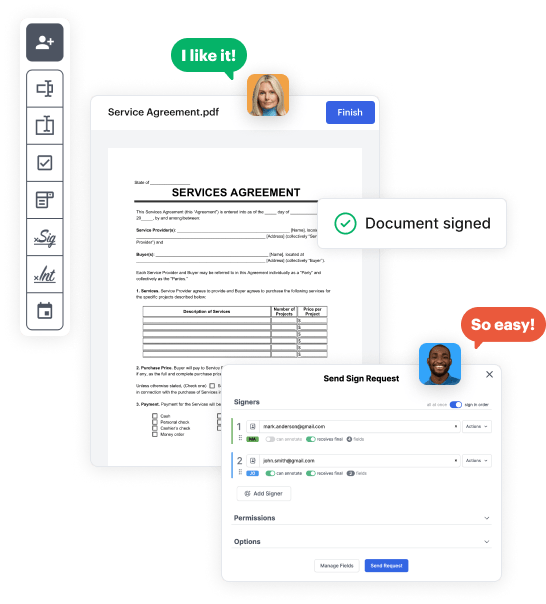
Use the top toolbar to insert fields like text and signature boxes, radio buttons, checkboxes, and more. Assign users to fields.
03. Distribute your form
Share your Legal Certification Document in seconds via email or a link. You can also download it, export it, or print it out.

A simple tutorial on how to build a polished Legal Certification Document

Form edit decoration

Step 1: Log in to DocHub to begin creating your Legal Certification Document.

First, log in to your DocHub account. If you don't have one, you can easily sign up for free.

Step 2: Navigate to the dashboard.

Once signed in, head to your dashboard. This is your central hub for all document-based operations.

Step 3: Launch new document creation.

In your dashboard, hit New Document in the upper left corner. Hit Create Blank Document to build the Legal Certification Document from the ground up.

Step 4: Add form elements.

Add numerous elements like text boxes, images, signature fields, and other elements to your form and designate these fields to certain recipients as needed.

Step 5: Personalize your template.

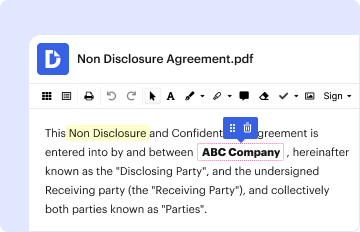
Personalize your document by incorporating guidelines or any other essential information utilizing the text option.

Step 6: Review and refine the content of the form.

Attentively examine your created Legal Certification Document for any inaccuracies or essential adjustments. Leverage DocHub's editing tools to perfect your template.

Step 7: Send out or download the template.

After completing, save your file. You can opt to keep it within DocHub, transfer it to various storage services, or send it via a link or email.


be ready to get more

Build your Legal Certification Document in minutes

Start creating now

Got questions?

We have answers to the most popular questions from our customers. If you can't find an answer to your question, please contact us.
Contact us
Getting your documents apostilled in Canada is a two-step process. STEP 1: Prepare your documents for an apostille: get your documents docHubd and translated (if applicable). STEP 2: Submit your documents to Global Affairs Canada or a provincial competent authority.
Authentication and legalization are the Canadian equivalents of apostille. Authentication is the process of verifying the signature on a document, while legalization is the process of docHubing the authenticity of the signature and the authority of the person who signed it.
Heres how to write a legal document in 10 simple steps: Plan Out the Document Before You Begin. Write with Clear and Concise Language. Ensure the Correct Use of Grammar. Be as Accurate as Possible. Make Information Accessible. Ensure All Necessary Information Is Included. Always Use an Active Voice.
To make a Certified True Copy of your document, you will need to bring the original and a photocopy to a Canadian Notary Public. The notary will compare the copy to the original and will docHub the copy by placing their signature and seal directly on the copy.
Competent authorities in some provinces issue apostilles, and Global Affairs Canada issues apostilles for documents issued by the Government of Canada and for documents issued or docHubd in specific provinces and territories.
be ready to get more

Build your Legal Certification Document in minutes

Start creating now

Related Q&A to Legal Certification Document

This guide will walk you through the steps to legalize a document in Canada. Determine the Type of Document: Verify the Requirements: Find a Notary Public or Commissioner of Oaths: Obtain Authentication or Apostille (if required): Pay Fees: Submit Documents: Receive Authenticated Document: Translate (if necessary):
Although Global Affairs Canada is the primary authentication organization, documents can also be authenticated by Provincial agencies, such as the Official Documents Services branch of the Ontario Ministry of the Attorney General.
Basically, Canada has not signed the Hague Apostille Convention because of how the relationship between provinces and the federal government is structured in this country. Before the federal government is able to sign the convention it would need to actively coordinate the agreement of all provinces.

Additional resources on building your forms


