
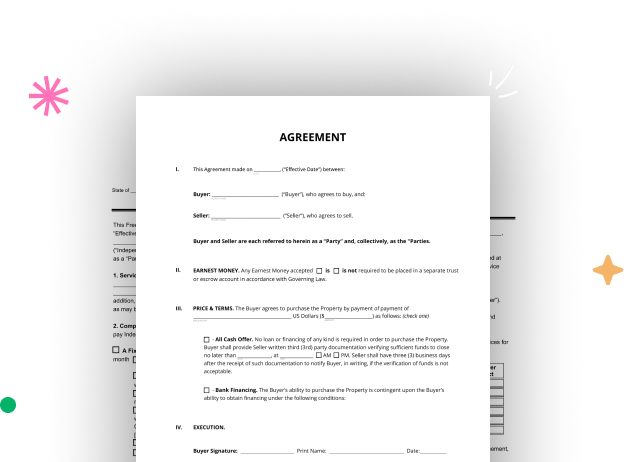

Create your Legal Appeal Document from scratch

Start Building Now
Title decoration

Here's how it works

01. Start with a blank Legal Appeal Document
Open the blank document in the editor, set the document view, and add extra pages if applicable.
02. Add and configure fillable fields
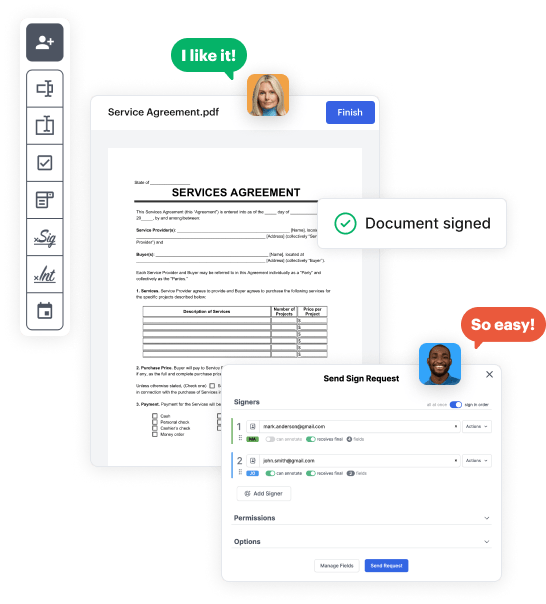
Use the top toolbar to insert fields like text and signature boxes, radio buttons, checkboxes, and more. Assign users to fields.
03. Distribute your form
Share your Legal Appeal Document in seconds via email or a link. You can also download it, export it, or print it out.

Create Legal Appeal Document from scratch by following these step-by-step guidelines

Form edit decoration

Step 1: Open DocHub and get going.

Begin by setting up a free DocHub account using any offered sign-up method. Simply log in if you already have one.

Step 2: Register for a free 30-day trial.

Try out the complete suite of DocHub's advanced tools by registering for a free 30-day trial of the Pro plan and proceed to craft your Legal Appeal Document.

Step 3: Build a new empty doc.

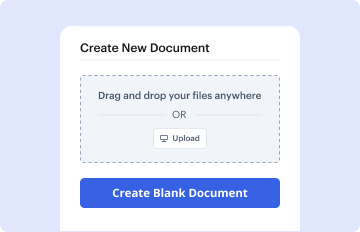
In your dashboard, choose the New Document button > scroll down and hit Create Blank Document. You will be taken to the editor.

Step 4: Organize the document’s view.

Use the Page Controls icon marked by the arrow to toggle between two page views and layouts for more flexibility.

Step 5: Begin by adding fields to design the dynamic Legal Appeal Document.

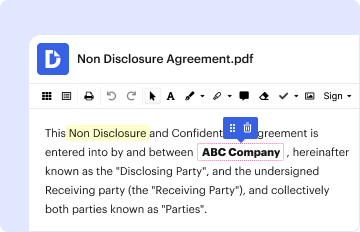
Explore the top toolbar to add document fields. Insert and format text boxes, the signature block (if applicable), insert images, etc.

Step 6: Prepare and configure the added fields.

Arrange the fields you added per your desired layout. Customize the size, font, and alignment to make sure the form is easy to use and professional.

Step 7: Finalize and share your document.

Save the finalized copy in DocHub or in platforms like Google Drive or Dropbox, or design a new Legal Appeal Document. Distribute your form via email or utilize a public link to reach more people.


be ready to get more

Build your Legal Appeal Document in minutes

Start creating now

Got questions?

We have answers to the most popular questions from our customers. If you can't find an answer to your question, please contact us.
Contact us
Trial court Intermediate appellate court Court of last resort U.S. Supreme Court.
The court has total control over what issues to consider. It may review one, some, or all the issues raised in the appeal. The court may also decide not to review any of the issues raised in the appeal and may identify one or more new issues to review.
Remember, the appellate court will not consider new evidence. An appeal is not a new trial. You cannot appeal a courts decision just because you do not like it. There must be a valid reason for you to appeal.
What are the possible outcomes of an appeal? Affirm the decision of the trial court, in which case the verdict at trial stands. Reverse the decision to the trial court, in which case a new trial may be ordered. Remand the case to the trial court.
Select any topic to get more information or step-by-step instructions. Figure out if you can appeal. File the notice of appeal. Designate the record and other filings. Prepare and file a brief. Oral argument. Get the appellate court decision. After the appellate courts decision.
be ready to get more

Build your Legal Appeal Document in minutes

Start creating now

Related Q&A to Legal Appeal Document

GET TO THE POINT IN A FOCUSED, CONCISE MANNER. SET UP THE BRIEF DOCUMENT EARLY ON. CHOOSE YOUR ISSUES WITH CARE. RESEARCH AND WRITE A STANDARD OF REVIEW THAT FITS YOUR CASE. TELL A STORY IN YOUR STATEMENT OF THE FACTS. WRITE THE ARGUMENT IN A CLEAR OUTLINE FORM USING DETAILED SUBHEADINGS.
The Social Security Act (the Act) establishes five levels to the Medicare appeals process: redetermination, reconsideration, Administrative Law Judge hearing, Medicare Appeals Council review, and judicial review in U.S. District Court.
There are five successive levels of appeal in the Medicare Part D program. Redetermination by the Part D Plan Sponsor. Reconsideration by the Independent Review Entity. Hearing by an Administrative Law Judge. Review by the Medicare Appeals Council. Review by a Federal District Court.

Additional resources on building your forms


