Create your Law Enforcement Document from scratch

Start Building Now
Title decoration

Here's how it works

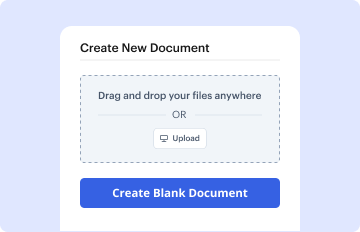
01. Start with a blank Law Enforcement Document
Open the blank document in the editor, set the document view, and add extra pages if applicable.
02. Add and configure fillable fields
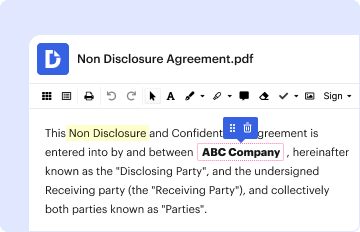
Use the top toolbar to insert fields like text and signature boxes, radio buttons, checkboxes, and more. Assign users to fields.
03. Distribute your form
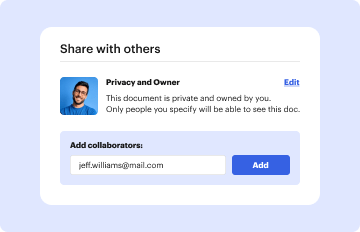
Share your Law Enforcement Document in seconds via email or a link. You can also download it, export it, or print it out.

Design your Law Enforcement Document in a matter of minutes
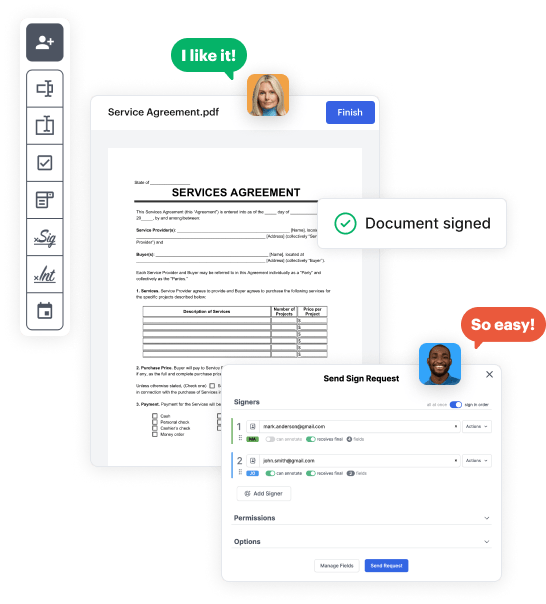
Form edit decoration

Step 1: Access DocHub to set up your Law Enforcement Document.

Start by accessing your DocHub account. Utilize the pro DocHub functionality at no cost for 30 days.

Step 2: Navigate to the dashboard.

Once signed in, head to the DocHub dashboard. This is where you'll build your forms and manage your document workflow.

Step 3: Design the Law Enforcement Document.

Click on New Document and choose Create Blank Document to be taken to the form builder.

Step 4: Design the form layout.

Use the DocHub toolset to insert and configure form fields like text areas, signature boxes, images, and others to your document.

Step 5: Insert text and titles.

Include needed text, such as questions or instructions, using the text field to lead the users in your form.

Step 6: Configure field properties.

Alter the properties of each field, such as making them compulsory or arranging them according to the data you plan to collect. Designate recipients if applicable.

Step 7: Review and save.

After you’ve managed to design the Law Enforcement Document, make a final review of your document. Then, save the form within DocHub, export it to your chosen location, or distribute it via a link or email.

be ready to get more

Build your Law Enforcement Document in minutes

Start creating now

Got questions?

We have answers to the most popular questions from our customers. If you can't find an answer to your question, please contact us.
Contact us
Exemption Two: Internal agency personnel rules and practices. Exemption Three: Information that is prohibited from disclosure by another federal law. Exemption Four: Trade secrets and commercial or financial information obtained from a person that is privileged or confidential.
The Freedom of Information Law (FOIL), Article 6 (Sections 84-90) of the NYS Public Officers Law, provides the public right to access to records maintained by government agencies with certain exceptions.
Explain why you were stopped/ask questions about your trip. Ask for your drivers license, proof of insurance, and vehicle registration. If the documents are out of your docHub, tell the officer where they are and wait for the officers acknowledgment before docHubing to retrieve the documents.
402.90 Exemption four for withholding records: Trade secrets and confidential commercial or financial information. We will withhold trade secrets and commercial or financial information that is obtained from a person and is privileged or confidential.
Exempt: Disclosures resulting in unwarranted invasion of privacy or business/competition enterprises; names of sex crime victims; and some law enforcement records and inter/intra-agency materials. Visit, New York Sample FOIA Request, to view a sample FOIA request for the state.
be ready to get more

Build your Law Enforcement Document in minutes

Start creating now

Related Q&A to Law Enforcement Document

When you are lawfully present in any public space, you have the right to document, including to photograph or record, anything in plain view, including government buildings and the police. (On private property, the owner may set rules about photography or video.)
Exemption 1: Information that is classified to protect national security. Exemption 2: Information related solely to the internal personnel rules and practices of an agency. Exemption 3: Information that is prohibited from disclosure by another federal law.
The statute exempts the following records from disclosure: (1) those exempt from disclosure by state or federal statute; (2) those which if disclosed would constitute an unwarranted invasion of privacy; (3) those which if disclosed would impair contract awards or collective bargaining negotiations; (4) those containing

Additional resources on building your forms