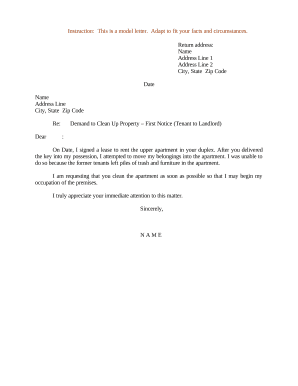
Improve your form administration with Landlord Warning Notices

Your workflows always benefit when you can easily locate all the forms and documents you may need on hand. DocHub delivers a a large collection form templates to alleviate your everyday pains. Get hold of Landlord Warning Notices category and quickly find your document.

Start working with Landlord Warning Notices in a few clicks:

  1. Access Landlord Warning Notices and discover the document you require.
  2. Click on Get Form to open it in our online editor.
  3. Begin adjusting your form: add more fillable fields, highlight sentences, or blackout sensitive facts.
  4. The application saves your adjustments automatically, and once you are ready, you are able to download or share your form with other contributors.

Enjoy smooth record managing with DocHub. Discover our Landlord Warning Notices online library and look for your form right now!


Video Guide on Landlord Warning Notices management

video background

Commonly Asked Questions about Landlord Warning Notices

If you have been living in your home for over a year, your landlord must give at least 60 days notice. If you have been living in your home for more than 2 years, your landlord must give at least 90 days notice. rent as a security deposit. When you move out, they must return the security deposit within 14 days.
New York state anti-harassment laws make it illegal for landlords to engage in any action that is intended to force tenants to leave their homes or otherwise give up their rights under law.
In the simplest of terms, harassment is committing actions with the intent to harass, threaten, seriously annoy or alarm another person. Depending on the severity of the alleged action, it can be a violation-level offense, a misdemeanor, or even a felony.
Under New York States Rent Regulation Laws, harassment is defined as conduct by a landlord that directly or indirectly interferes with, or is intended to interfere with, your privacy, comfort, and enjoyment of your dwelling.
Can Tenants Sue Landlords for Emotional Distress? In short - yes. Every resident of the United States has the right to file a civil lawsuit against another they believe caused them harm. Still, the right to file a suit does not mean the court will agree and award damages.
Tenants have the right to privacy in their rented homes and can refuse entry to landlords who do not provide proper notice or have an illegitimate reason for entry. If this right is violated, tenants can take legal action to prevent continued violations and potentially seek damages.
For example, where a landlords construction activities cause dust, debris, and noise to force a tenant to evacuate their leased apartment, an action for bdocHub of covenant of quiet enjoyment can be supported.
New York landlords must follow a strict legal process for evictions, which includes serving proper notices, filing a court action, and obtaining a court order before an eviction can take place. Self-help measures such as changing locks or physically removing a tenant are illegal.