
Create your Landlord-Tenant Law Document from scratch

Start Building Now
Title decoration

Here's how it works

01. Start with a blank Landlord-Tenant Law Document
Open the blank document in the editor, set the document view, and add extra pages if applicable.
02. Add and configure fillable fields
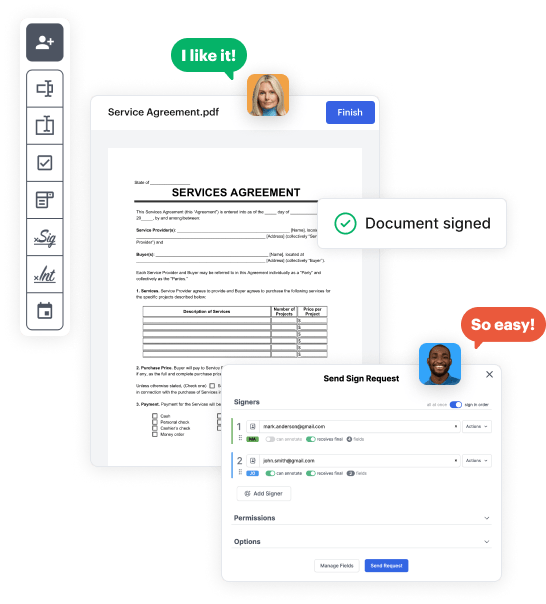
Use the top toolbar to insert fields like text and signature boxes, radio buttons, checkboxes, and more. Assign users to fields.
03. Distribute your form
Share your Landlord-Tenant Law Document in seconds via email or a link. You can also download it, export it, or print it out.

Design your Landlord-Tenant Law Document in a matter of minutes

Form edit decoration

Step 1: Access DocHub to set up your Landlord-Tenant Law Document.

Begin signining into your DocHub account. Explore the pro DocHub functionality free for 30 days.

Step 2: Go to the dashboard.

Once signed in, go to the DocHub dashboard. This is where you'll build your forms and handle your document workflow.

Step 3: Design the Landlord-Tenant Law Document.

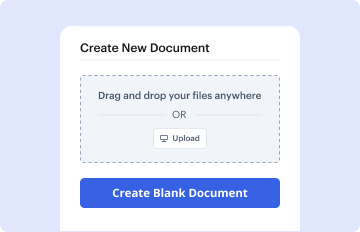
Click on New Document and choose Create Blank Document to be redirected to the form builder.

Step 4: Design the form layout.

Use the DocHub features to insert and configure form fields like text areas, signature boxes, images, and others to your form.

Step 5: Insert text and titles.

Add needed text, such as questions or instructions, using the text tool to guide the users in your document.

Step 6: Customize field settings.

Alter the properties of each field, such as making them mandatory or arranging them according to the data you expect to collect. Assign recipients if applicable.

Step 7: Review and save.

After you’ve managed to design the Landlord-Tenant Law Document, make a final review of your form. Then, save the form within DocHub, send it to your preferred location, or distribute it via a link or email.


be ready to get more

Build your Landlord-Tenant Law Document in minutes

Start creating now

Got questions?

We have answers to the most popular questions from our customers. If you can't find an answer to your question, please contact us.
Contact us
Renters who do not have leases and pay rent on a monthly basis are called month-to-month tenants. In localities without rent regulation, tenants who stay past the end of a lease are treated as month-to-month tenants if the landlord accepts their rent (Real Property Law 232-c).
Waiving the Warranty of Habitability (Real Property Law 235-b); and. Restricting a tenant from living with their immediate family members and/or one additional occupant and the occupants dependent children (Real Property Law 235-f).
This brings us back to our original question; yes, its possible to evict without a lease, but there are some conditions that must be satisfied when doing this. And yes, the process still mandates a formal notice be given to the tenant, but the following must also be satisfied.
Under the new Good Cause Eviction law, New Yorkers have the right to continue living in their homes without fear of unreasonable eviction or extreme rent increases. In many situations, tenants of market rate housing will now be covered by more expansive protections. Read below for details.
While tenants in New York City are generally not legally required to give their landlord a key to their apartment, it is important to understand any provisions related to this in your lease agreement. Consider your personal circumstances and relationship with your landlord before deciding whether to give them a key.
be ready to get more

Build your Landlord-Tenant Law Document in minutes

Start creating now

Related Q&A to Landlord-Tenant Law Document

Tenants without a lease agreement also have the right to privacy. The landlord cannot enter your rental property without your consent, except in emergencies or other legally allowed circumstances. The landlord must provide reasonable notice before entering the rental property for repairs, inspections, or other reasons.

Additional resources on building your forms


