Increase your work productivity with Landlord Legal Responsibilities

Record administration consumes to half of your office hours. With DocHub, it is possible to reclaim your office time and boost your team's productivity. Get Landlord Legal Responsibilities collection and check out all form templates related to your daily workflows.

Effortlessly use Landlord Legal Responsibilities:

  1. Open Landlord Legal Responsibilities and apply Preview to obtain the relevant form.
  2. Click Get Form to start working on it.
  3. Wait for your form to upload in our online editor and begin modifying it.
  4. Add new fillable fields, icons, and images, modify pages, and many more.
  5. Complete your file or set it for other contributors.
  6. Download or share the form by link, email attachment, or invite.

Accelerate your daily file administration with our Landlord Legal Responsibilities. Get your free DocHub profile today to discover all forms.


Video Guide on Landlord Legal Responsibilities management

video background

Commonly Asked Questions about Landlord Legal Responsibilities

8 Essential Landlord Responsibilities Maintaining a safe and habitable rental property. Repairs and maintenance responsibilities. Transparent provisions of the lease agreement. Make legally-required disclosures to tenants. Understand fair housing laws and anti-discriminatory regulations.
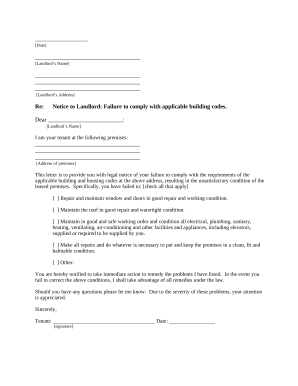
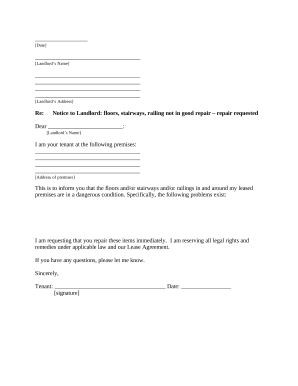
As a landlord, the laws require that you keep rental properties livable. That means that you must repair or keep the mechanical, safety, and other essential structures and parts of a rental home in working order, despite inclement weather or conditions.
But, your landlord can still require you to move out for one of the no-fault reasons listed in the law. If your landlord evicts you for one of these reasons, they must first give you one months rent or waive one months rent to help you move out.
Final answer: The Lease Agreement gives the landlord the legal right to take action against a tenant for nonpayment of rent or destruction of property. While a security deposit can provide some protection for the landlord, it doesnt confer the legal right to take action.
Most lease agreements outline most of these rights. A landlords rights include receiving a security deposit, timely rent payments, and tenant upkeep of the rental unit. A tenants rights include a habitable place to live. Certain federal laws cover other tenants rights, including freedom from housing discrimination.
A rental agreement is a contract (written or oral) under which a landlord allows a tenant to use and occupy its property for short time periods. Commonly, a rental agreement has a monthly duration to the extent it expires and is renewed by the parties each month.
Michigan and U.S. fair housing laws say that landlords cannot discriminate against tenants or applicants because of their race, color, religion, sex, familial status (kids under 18), national origin, disability, age, or marital status.
State laws often require that landlords maintain habitable conditions, comply with relevant housing codes, make repairs, keep common areas in safe conditions, supply running water and heat, and maintain appliances supplied by the property. Laws in 35 states stipulate that a landlord must maintain habitable conditions.