Boost your productiveness with Landlord and Tenant Rights

Record management takes up to half of your business hours. With DocHub, it is simple to reclaim your time and boost your team's productivity. Get Landlord and Tenant Rights online library and discover all templates related to your everyday workflows.

Easily use Landlord and Tenant Rights:

  1. Open Landlord and Tenant Rights and employ Preview to obtain the relevant form.
  2. Click Get Form to start working on it.
  3. Wait for your form to open in the online editor and begin editing it.
  4. Add new fillable fields, icons, and pictures, adjust pages order, and many more.
  5. Complete your template or prepare it for other contributors.
  6. Download or share the form by link, email attachment, or invite.

Accelerate your everyday file management with the Landlord and Tenant Rights. Get your free DocHub profile right now to explore all forms.

Video Guide on Landlord and Tenant Rights management

video background

Commonly Asked Questions about Landlord and Tenant Rights

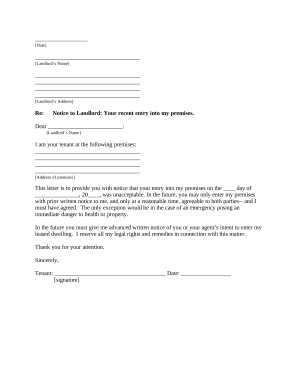
Tenants have the right to privacy in their rented homes and can refuse entry to landlords who do not provide proper notice or have an illegitimate reason for entry. If this right is violated, tenants can take legal action to prevent continued violations and potentially seek damages.
renew your lease or substantially increase your rent. ​Your landlord must give you at least 30 days notice if they are not planning to renew your lease or will raise your rent by more than 5%. If you have been living in your home for over a year, your landlord must give at least 60 days notice.
My landlord refused to accept my payment, what do I do now? It is not legal for your landlord to refuse your rent payment, except under very rare circumstances. If you try to pay your rent and your landlord says you can only pay electronically, you can send a letter to explain your rights.
Tenants Rights and Responsibilities. In New York City, tenants have many rights relating to the safety and quality of their housing. Tenants should expect to live in safe, well-maintained buildings that are free from vermin, leaks, and hazardous conditions. Laws protect tenants from harassment and discrimination.
In New York 5 Page 9 City, 30 days notice is required, rather than one month. Landlords do not need to explain why the tenancy is being terminated, they only need to provide notice that it is, and that refusal to vacate will lead to eviction proceedings.
Before they can raise your rent (by 5% or more), the landlord must give you: 90 days notice if you have lived in your apartment two years or more. 60 days notice if you have lived in your apartment for more than one year. 30 days notice if you have lived in your apartment for less than one year.
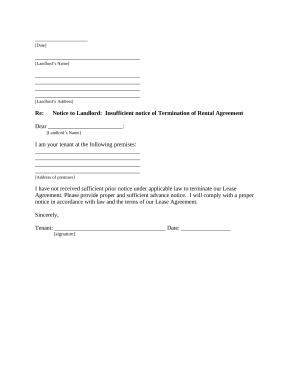
Written notice must include: Termination date: The law says, the termination date must be effective no earlier than thirty days after the date on which the next rental payment is due (after the notice is delivered). The notice is considered delivered five days after mailing.
New York landlords must follow a strict legal process for evictions, which includes serving proper notices, filing a court action, and obtaining a court order before an eviction can take place. Self-help measures such as changing locks or physically removing a tenant are illegal.