

Create your Landlord and Tenant Rental Form from scratch

Start Building Now
Title decoration

Here's how it works

01. Start with a blank Landlord and Tenant Rental Form
Open the blank document in the editor, set the document view, and add extra pages if applicable.
02. Add and configure fillable fields
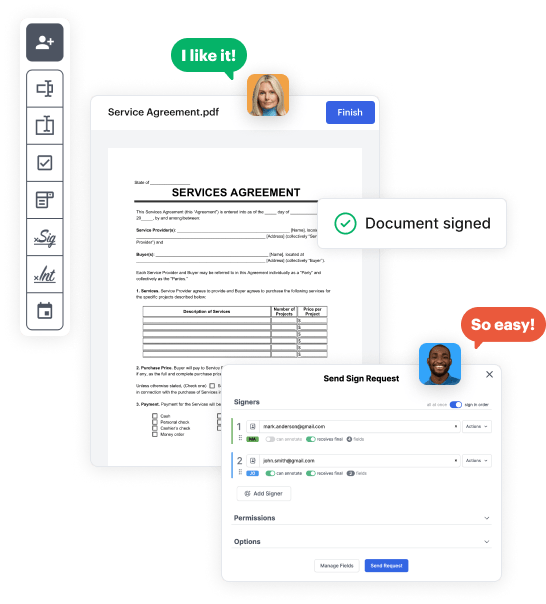
Use the top toolbar to insert fields like text and signature boxes, radio buttons, checkboxes, and more. Assign users to fields.
03. Distribute your form
Share your Landlord and Tenant Rental Form in seconds via email or a link. You can also download it, export it, or print it out.

A brief tutorial on how to build a professional-looking Landlord and Tenant Rental Form

Form edit decoration

Step 1: Log in to DocHub to begin creating your Landlord and Tenant Rental Form.

First, log in to your DocHub account. If you don't have one, you can easily register for free.

Step 2: Navigate to the dashboard.

Once signed in, go to your dashboard. This is your central hub for all document-related operations.

Step 3: Initiate new document creation.

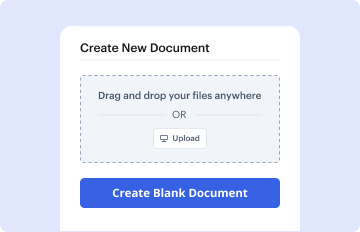
In your dashboard, select New Document in the upper left corner. Choose Create Blank Document to create the Landlord and Tenant Rental Form from scratch.

Step 4: Insert form fillable areas.

Add numerous elements like text boxes, images, signature fields, and other options to your form and assign these fields to intended users as needed.

Step 5: Fine-tune your document.

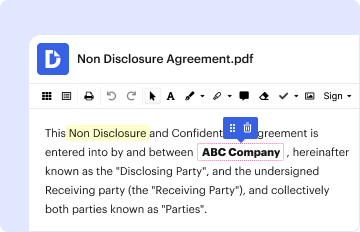
Customize your template by adding directions or any other crucial details leveraging the text option.

Step 6: Review and refine the content of the document.

Meticulously check your created Landlord and Tenant Rental Form for any typos or required adjustments. Leverage DocHub's editing features to enhance your document.

Step 7: Send out or export the document.

After finalizing, save your file. You can choose to save it within DocHub, transfer it to various storage options, or send it via a link or email.


be ready to get more

Build your Landlord and Tenant Rental Form in minutes

Start creating now

Got questions?

We have answers to the most popular questions from our customers. If you can't find an answer to your question, please contact us.
Contact us
In rent controlled apartments statewide and in rent stabilized apartments outside New York City, a landlord may not evict a senior citizen, a person living with a disability, or any person who has been living in the apartment for 15 years or more for purposes of owner occupancy (NYC Admin.
Your landlord can enter your apartment at any time and without notice in an emergency, and at a reasonable time after providing appropriate notice if the entry is either: To provide necessary or agreed upon repairs or services, or. In ance with the lease, or.
New York allows tenants to refuse viewings at any time, including during the leases final month. Landlord entry for the purpose of showing the property requires the tenants explicit consent. Without it, the landlord must obtain a court order to legally conduct viewings.
New York City rent stabilized tenants are entitled to receive from their landlords a fully executed copy of their signed lease within 30 days of the landlords receipt of the lease signed by the tenant. The leases be- ginning and ending dates must be stated.
Yes, Microsoft Word has a free lease agreement template that you can customize to create your own contract and minimize any potential problems between tenant and landlord.
be ready to get more

Build your Landlord and Tenant Rental Form in minutes

Start creating now

Related Q&A to Landlord and Tenant Rental Form

In New York 5 Page 9 City, 30 days notice is required, rather than one month. Landlords do not need to explain why the tenancy is being terminated, they only need to provide notice that it is, and that refusal to vacate will lead to eviction proceedings.
While tenants in New York City are generally not legally required to give their landlord a key to their apartment, it is important to understand any provisions related to this in your lease agreement. Consider your personal circumstances and relationship with your landlord before deciding whether to give them a key.
Tenants have the right to privacy in their rented homes and can refuse entry to landlords who do not provide proper notice or have an illegitimate reason for entry. If this right is violated, tenants can take legal action to prevent continued violations and potentially seek damages.

Additional resources on building your forms


