
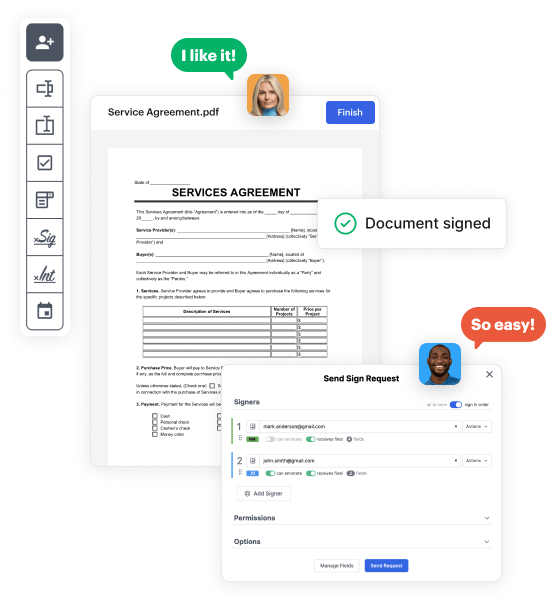
Create your Labor Law from scratch

Start Building Now
Title decoration

Here's how it works

01. Start with a blank Labor Law
Open the blank document in the editor, set the document view, and add extra pages if applicable.
02. Add and configure fillable fields
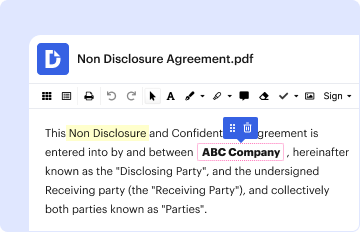
Use the top toolbar to insert fields like text and signature boxes, radio buttons, checkboxes, and more. Assign users to fields.
03. Distribute your form
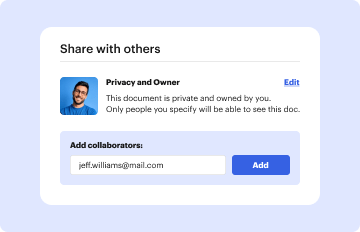
Share your Labor Law in seconds via email or a link. You can also download it, export it, or print it out.

Design your Labor Law in a matter of minutes

Form edit decoration

Step 1: Access DocHub to set up your Labor Law.

Start by accessing your DocHub account. Try out the pro DocHub functionality at no cost for 30 days.

Step 2: Navigate to the dashboard.

Once logged in, head to the DocHub dashboard. This is where you'll build your forms and manage your document workflow.

Step 3: Design the Labor Law.

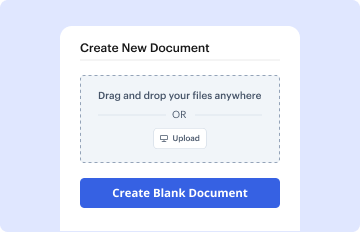
Click on New Document and select Create Blank Document to be redirected to the form builder.

Step 4: Set up the form layout.

Use the DocHub toolset to add and configure form fields like text areas, signature boxes, images, and others to your document.

Step 5: Add text and titles.

Add needed text, such as questions or instructions, using the text field to lead the users in your document.

Step 6: Configure field settings.

Alter the properties of each field, such as making them required or formatting them according to the data you plan to collect. Assign recipients if applicable.

Step 7: Review and save.

After you’ve managed to design the Labor Law, make a final review of your document. Then, save the form within DocHub, transfer it to your chosen location, or distribute it via a link or email.


be ready to get more

Build your Labor Law in minutes

Start creating now

Got questions?

We have answers to the most popular questions from our customers. If you can't find an answer to your question, please contact us.
Contact us
A right-to-work (RTW) law gives workers the choice of whether or not to join a union. States without right-to-work laws often require employees to pay union dues and fees as a term for employment. Proponents of right-to-work laws maintain that workers shouldnt be obliged to join a union.
DOLs rule would extend overtime pay guarantees to workers making just under $44,000, up from the $35,568 cutoff set in 2019. The threshold would jump to $58,656 at the beginning of 2025.
If youre a sole proprietor or limited liability company (LLC) and dont employ anyone you are exempt from posting requirements.
The origins of the labor movement lay in the formative years of the American nation, when a free wage-labor market emerged in the artisan trades late in the colonial period. The earliest recorded strike occurred in 1768 when New York journeymen tailors protested a wage reduction.
Modern US labor law mostly comes from statutes passed between 1935 and 1974, and changing interpretations of the US Supreme Court. However, laws regulated the rights of people at work and employers from colonial times on.
be ready to get more

Build your Labor Law in minutes

Start creating now

Related Q&A to Labor Law

The Fair Labor Standards Act (FLSA) is a federal law that sets basic requirements for both minimum wage and overtime pay: Minimum wage. Employers must pay employees the federal minimum wage (currently set at $7.25 an hour) or their states higher minimum wage if there is one (several states have set a higher rate)
One law was Public Contracts Act of 1936 (Walsh-Healey) which required most government contractors to adopt an 8-hour day and a 40-hour week but it was limited. It took a few more attempts to get a broader law, but in January 1938 the bill that became the FLSA was sent to Congress.
Congress passed the Fair Labor Standards Act in 1938 regulating the employment of those under 16 or 18 years of age, and the Supreme Court upheld the law. After this shift, the amendment has been described as moot and effectively part of the Constitution.

Additional resources on building your forms