
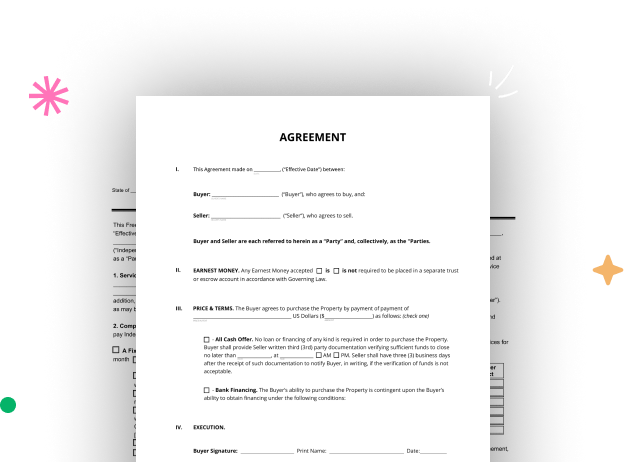

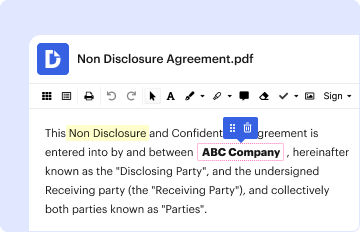


Create your Kentucky Landlord Form from scratch

Start Building Now
Title decoration

Here's how it works

01. Start with a blank Kentucky Landlord Form
Open the blank document in the editor, set the document view, and add extra pages if applicable.
02. Add and configure fillable fields
Use the top toolbar to insert fields like text and signature boxes, radio buttons, checkboxes, and more. Assign users to fields.
03. Distribute your form
Share your Kentucky Landlord Form in seconds via email or a link. You can also download it, export it, or print it out.

A simple tutorial on how to create a polished Kentucky Landlord Form

Form edit decoration

Step 1: Log in to DocHub to begin creating your Kentucky Landlord Form.

First, sign in to your DocHub account. If you don't have one, you can easily register for free.

Step 2: Go to the dashboard.

Once logged in, head to your dashboard. This is your main hub for all document-related activities.

Step 3: Kick off new document creation.

In your dashboard, choose New Document in the upper left corner. Hit Create Blank Document to design the Kentucky Landlord Form from a blank slate.

Step 4: Incorporate form fillable areas.

Add various items like text boxes, images, signature fields, and other interactive areas to your form and designate these fields to specific users as required.

Step 5: Configure your template.

Personalize your form by including walkthroughs or any other crucial details leveraging the text option.

Step 6: Double-check and correct the form.

Thoroughly go over your created Kentucky Landlord Form for any errors or essential adjustments. Make use of DocHub's editing capabilities to perfect your template.

Step 7: Distribute or download the template.

After finalizing, save your work. You can opt to save it within DocHub, transfer it to various storage services, or forward it via a link or email.


be ready to get more

Build your Kentucky Landlord Form in minutes

Start creating now

Got questions?

We have answers to the most popular questions from our customers. If you can't find an answer to your question, please contact us.
Contact us
What are some tenant protections in place in Kentucky? Tenant protections include the right to withhold rent if essential services like water and heat are not provided, the right to be informed of who owns and manages the property, and the right to live in a habitable property that meets health and safety standards.
Kentucky landlords cant raise the rent during the term of a lease unless the lease specifically allows them to do so. For month-to-month tenancies, Kentucky law doesnt specify the amount of notice landlords must give to raise the rent.
In Kentucky, landlords have the flexibility to raise rent without a fixed maximum limit. However, they must adhere to certain regulations that ensure fairness and adequate notice for tenants. There are no rent control laws present at the state level, and local ordinances do not impose caps on rent increases either.
Landlords cannot raise rent more than 10% total or 5% plus the percentage change in the cost of living whichever is lower over a 12-month period. If the tenants of a unit move out and new tenants move in, the landlord may establish the initial rent to charge. (Civ. Code 1947.12.)
Your landlord can enter only at reasonable times and should not make repeated demands for entry. In an emergency, your landlord can enter your apartment without notice. 584-1254 or the Kentucky Lawyer Referral Service at (502) 583-1801.
be ready to get more

Build your Kentucky Landlord Form in minutes

Start creating now

Related Q&A to Kentucky Landlord Form

Limits on Rent Increases This means there is no cap on rent increases for private market-rate housing in Kentucky. Landlords have the right to raise rents as much as they want at the end of a lease term or with proper notice during a lease.
There is no statewide requirement in Kentucky for landlords to obtain a license to rent out their properties. However, some local municipalities may have specific regulations or requirements, so landlords should check with local government agencies to ensure compliance with any local statutes.
In Kentucky, landlords are required to maintain the rental property in a habitable condition. This means providing essential services, such as functional air conditioning and safe living conditions.

Additional resources on building your forms