
Create your Juvenile Court Legal Document from scratch

Start Building Now
Title decoration

Here's how it works

01. Start with a blank Juvenile Court Legal Document
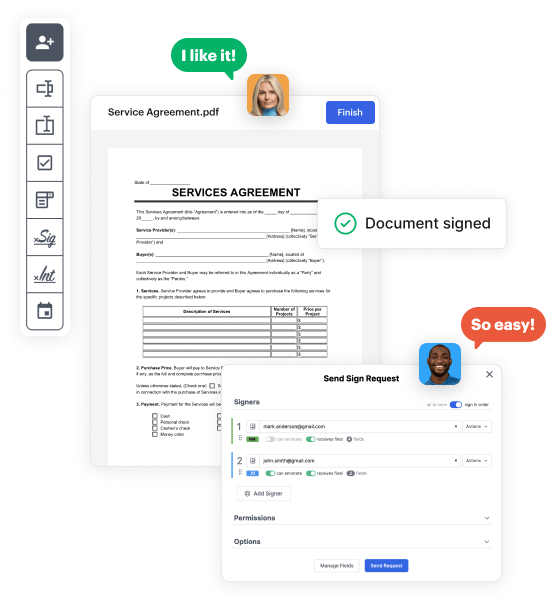
Open the blank document in the editor, set the document view, and add extra pages if applicable.
02. Add and configure fillable fields
Use the top toolbar to insert fields like text and signature boxes, radio buttons, checkboxes, and more. Assign users to fields.
03. Distribute your form
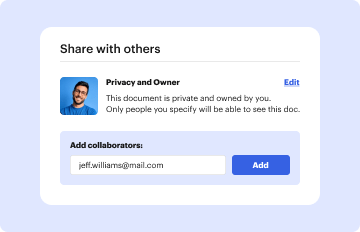
Share your Juvenile Court Legal Document in seconds via email or a link. You can also download it, export it, or print it out.

A quick tutorial on how to create a polished Juvenile Court Legal Document

Form edit decoration

Step 1: Sign in to DocHub to begin creating your Juvenile Court Legal Document.

First, sign in to your DocHub account. If you don't have one, you can simply sign up for free.

Step 2: Head to the dashboard.

Once logged in, navigate to your dashboard. This is your main hub for all document-based operations.

Step 3: Initiate new document creation.

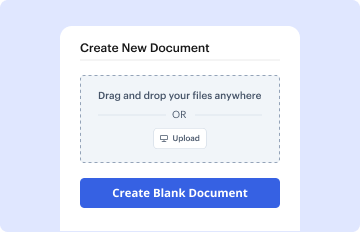
In your dashboard, choose New Document in the upper left corner. Choose Create Blank Document to build the Juvenile Court Legal Document from a blank slate.

Step 4: Insert template fillable areas.

Place various elements like text boxes, photos, signature fields, and other options to your template and designate these fields to certain users as required.

Step 5: Personalize your document.

Personalize your template by incorporating walkthroughs or any other essential information utilizing the text option.

Step 6: Double-check and tweak the form.

Attentively review your created Juvenile Court Legal Document for any discrepancies or required adjustments. Take advantage of DocHub's editing tools to fine-tune your document.

Step 7: Share or export the document.

After completing, save your copy. You may select to retain it within DocHub, transfer it to various storage options, or send it via a link or email.


be ready to get more

Build your Juvenile Court Legal Document in minutes

Start creating now

Got questions?

We have answers to the most popular questions from our customers. If you can't find an answer to your question, please contact us.
Contact us
Adjudication Hearing - the trial court proceeding in which it is determined whether the allegations of the petition are supported by legally admissible evidence. Advisory Hearing - The first court hearing. Juvenile is advised of the charges against him/her and enters a plea of guilty or not guilty.
Petition: A document filed in juvenile court alleging that a juvenile is a delinquent or a status offender and asking that the court assume jurisdiction over the juvenile or that an alleged delinquent be transferred to criminal court for prosecution as an adult.
Other court cases granting further rights include the 1970 Supreme Court case In Re: Winship, that granted the beyond a reasonable doubt standard of proof in the adjudicatory stage of delinquency proceedings, and Breed v. Jones, where the double jeopardy clause was found to apply to minors as well as adults.
What are the steps or stages in the juvenile justice system? The juvenile justice system is a multistage process: (1) delinquent behavior, (2) referral, (3) intake/​diversion, (4) transfer/​waiver, (5) detention, (6) adjudication, (7) disposition, (8) juvenile corrections and (9) aftercare.
Juvenile justice court cases start with the filing of a petition. The Probation Department or the District Attorney can file the petition. A petition asks the court to get involved. It says what the state thinks the youth did.
be ready to get more

Build your Juvenile Court Legal Document in minutes

Start creating now

Related Q&A to Juvenile Court Legal Document

If the juvenile may be adjudicated delinquent or sentenced to incarceration, the prosecution has the burden of proving the charges beyond a reasonable doubt. In other situations, the prosecution has the burden of proving the charges by the preponderance of the evidence.
Petition - A document filed in juvenile court alleging that a juvenile is a delinquent and asking that the court assume jurisdiction over the juvenile or asking that an alleged delinquent be waived to criminal court for prosecution as an adult.
602 proceedings It is part of the civil law system where cases are adjudicated. Juvenile delinquency proceedings are sometimes referred to as Section 602 proceedings after the applicable section of California law that governs delinquency proceedings. 5. Judges hear cases in juvenile court.

Additional resources on building your forms