Create your Joint Tenancy Agreement from scratch

Start Building Now
Title decoration

Here's how it works

01. Start with a blank Joint Tenancy Agreement
Open the blank document in the editor, set the document view, and add extra pages if applicable.
02. Add and configure fillable fields
Use the top toolbar to insert fields like text and signature boxes, radio buttons, checkboxes, and more. Assign users to fields.
03. Distribute your form
Share your Joint Tenancy Agreement in seconds via email or a link. You can also download it, export it, or print it out.

Craft Joint Tenancy Agreement from scratch with these detailed instructions
Form edit decoration

Step 1: Open DocHub and get going.

Begin by registering a free DocHub account using any available sign-up method. Simply log in if you already have one.

Step 2: Sign up for a 30-day free trial.

Try out the complete suite of DocHub's pro features by registering for a free 30-day trial of the Pro plan and proceed to build your Joint Tenancy Agreement.

Step 3: Create a new empty doc.

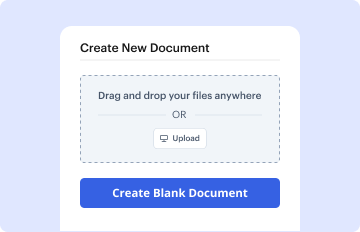
In your dashboard, select the New Document button > scroll down and hit Create Blank Document. You will be redirected to the editor.

Step 4: Organize the document’s view.

Use the Page Controls icon marked by the arrow to toggle between different page views and layouts for more convenience.

Step 5: Start adding fields to create the dynamic Joint Tenancy Agreement.

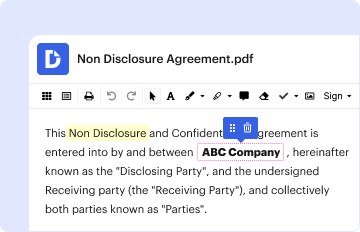
Explore the top toolbar to place document fields. Add and configure text boxes, the signature block (if applicable), embed images, etc.

Step 6: Prepare and configure the added fields.

Organize the fields you added based on your preferred layout. Personalize the size, font, and alignment to ensure the form is straightforward and polished.

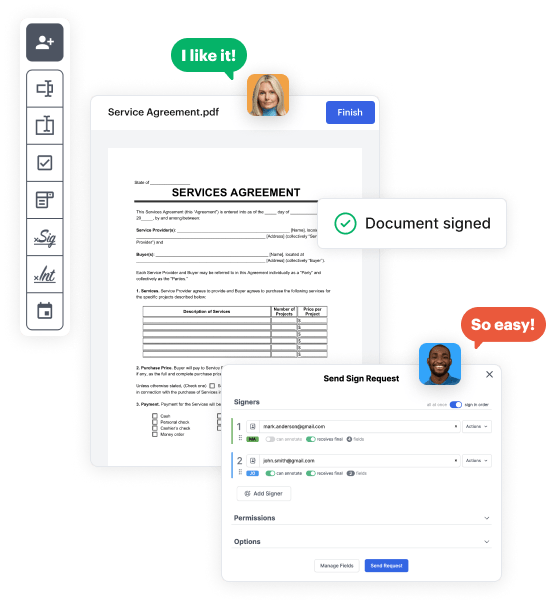
Step 7: Finalize and share your form.

Save the ready-to-go copy in DocHub or in platforms like Google Drive or Dropbox, or create a new Joint Tenancy Agreement. Send out your form via email or use a public link to reach more people.


be ready to get more

Build your Joint Tenancy Agreement in minutes

Start creating now

Got questions?

We have answers to the most popular questions from our customers. If you can't find an answer to your question, please contact us.
Contact us
Joint Tenancy. If you take title as joint tenants, you share equal ownership of the property and each of you has the right to use the entire property. If one joint tenant dies, the other automatically becomes the owner of the deceased persons share, even if theres a will to the contrary.
There are 4 units of joint tenancy (Four conditions that are required in order for there to be a formation of a joint tenancy): Time, Title, Interest, Possession. If any of these conditions are not satisfied or are altered so that they no longer exist, then the joint tenancy is extinguished.
Changing the tenancy agreement A tenancy agreement can normally only be changed if both you and your landlord agree. If you both agree, the change should be recorded in writing, either by drawing up a new written document setting out the terms of the tenancy or by amending the existing written tenancy agreement.
The right of one co-tenant to receive an interest in a property automatically upon the death of another co-tenant. The Four Unities: Four conditions that are required in order for there to be a formation of a joint tenancy. The four unities are: time, title, interest and possession.
Steps to Add a Tenant to an Existing Lease Acquire a Written Request to Add a Tenant. Check the Units Occupancy Limit. Require a Completed Rental Application. Screen and Approve/Deny the New Tenant. Review the Details With Each Tenant.
be ready to get more

Build your Joint Tenancy Agreement in minutes

Start creating now

Related Q&A to Joint Tenancy Agreement

If a co-owner has outstanding debts, their creditors could seize an interest in your home or bank account. Relationship Issues. Holding an asset jointly can complicate a divorce or other relationship problems. If you have a jointly held bank account, your co-owner could withdraw all of the money without your consent.
Problems With Joint Ownership By jointly owning property, you may find yourself party to a lawsuit if your co-owner is sued or the asset could be lost to a creditor of your co-owner. If your co-owner becomes incapacitated, you could find yourself owning the property with the co-owners guardian or the courts.
Historically, the common law required that in order for a joint tenancy to be created, the co-owners must share the four unities of (1) time the property interest must be acquired by both tenants at the same time; (2) title - both tenants must have the same title to the property in the deed; (3) interest - both

Additional resources on building your forms