

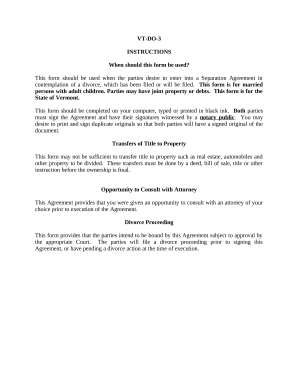
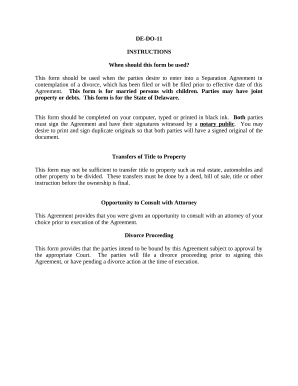
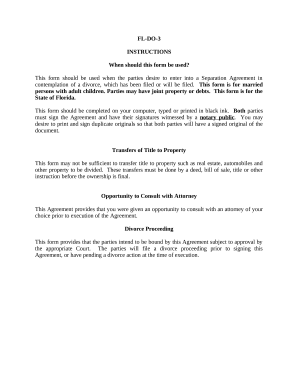
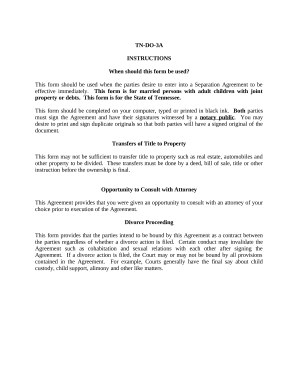
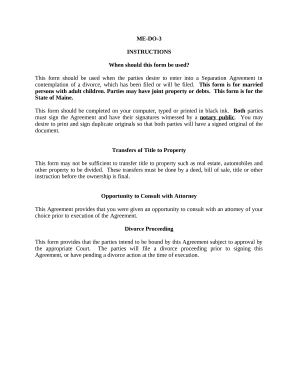
Manage Joint Property Division Legal Forms easily online

Document managing can overwhelm you when you can’t find all the forms you need. Luckily, with DocHub's vast form categories, you can discover all you need and promptly take care of it without changing between apps. Get our Joint Property Division Legal Forms and start working with them.

The best way to manage our Joint Property Division Legal Forms using these easy steps:

  1. Browse Joint Property Division Legal Forms and select the form you need.
  2. Preview the template and then click Get Form.
  3. Wait for it to open in the online editor.
  4. Modify your document: include new information and images, and fillable fields or blackout certain parts if necessary.
  5. Prepare your document, save adjustments, and prepare it for delivering.
  6. When you are ready, download your form or share it with your contributors.

Try out DocHub and browse our Joint Property Division Legal Forms category without trouble. Get your free profile right now!


Video Guide on Joint Property Division Legal Forms management

video background

Commonly Asked Questions about Joint Property Division Legal Forms

How Are Assets Split in a Divorce in New York? The division of assets follows the laws of equitable distribution. Under this type of settlement, spouses are not entitled to a 50/50 division but an equitable division. In a 50/50 division, both spouses would receive the same amount of assets.
For marriages that last up to 15 years, alimony payments will be made for roughly 15-30% of the length of the marriage. For marriages that lasted 15-20 years, alimony payments will be made for roughly 30-40% of the length of the marriage.
To add a co-owner, a new deed has to be created, which must be registered at the sub-registrars office for it to be legal under the Transfer of Property Act. This can be done either by creating a sale deed or a gift deed. Sale deed: The first way is to sell a portion of the property to the other person. Heres How to Add a Co-Owner to Your Property - RoofandFloor Blog thehindu.com raf real-estate-blog thehindu.com raf real-estate-blog
New York courts must divide the marital property equitably. That means fairly, considering the circumstances of the case and of the parties involved, but it does not necessarily mean equally. There is no statutory requirement of a 50/50 split of marital property.
Instead, New York follows the rule of equitable distribution in divorce. That means that judges will distribute a couples assets and debts based on whats fair under the circumstances of each case. Fairness doesnt necessarily translate to a 50/50 split, which is the goal in most community property states.
Relinquishment deed: A relinquishment deed is a legal document through which one co-owner voluntarily gives up their share of ownership in the property. This deed requires the consent of all co-owners and must be executed on stamp paper and registered with the Sub-Registrars office to make it legally valid. Removing a Co-owner from Property Title Deed - 99acres.com 99acres.com articles can-i-remove-co-o 99acres.com articles can-i-remove-co-o
Partition of the property by mutual agreement can be done by Partition Deed or Family settlement. Partition Deed divides the property between the co-owners of the property. This deed is prepared in order to divide the property so that each person gets an absolute title over his own part of the property. Property Partition Laws in India - MyAdvo.in myadvo.in blog family-partition-a-legal- myadvo.in blog family-partition-a-legal-
Is New York a Community Property State? New York is not community property or a 50/50 state. New York is an equitable distribution state for property and debt. Under NY divorce law for property distribution, the court will decide how to divide property and marital debt using the states equitable distribution laws. Equitable Distribution in New York - Wisselman, Harounian Associates Wisselman, Harounian Associates practices divorce equitable-distri Wisselman, Harounian Associates practices divorce equitable-distri
In a recent landmark judgement, the Supreme Court of India held that in a suit for partition of joint property, every interested party is deemed a plaintiff. This means that each co-sharer has the right to initiate and pursue a partition suit, and one co-sharer can prevent another from doing so. How co-owners can seek division of jointly held property - Aarna law aarnalaw.com how-co-owners-can-seek-di aarnalaw.com how-co-owners-can-seek-di
