
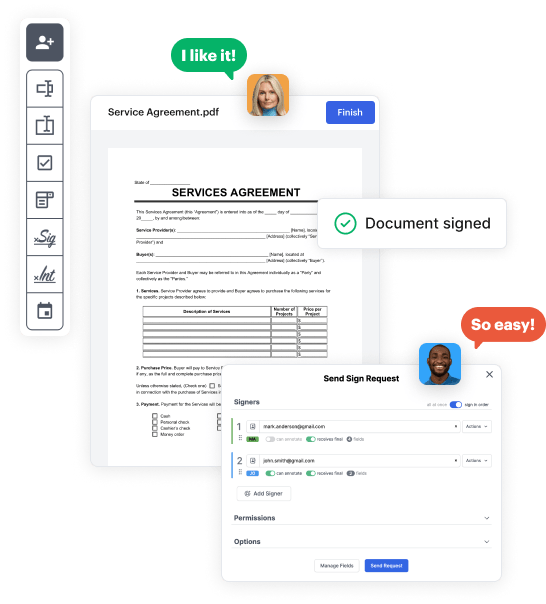
Create your Job Termination Document from scratch

Start Building Now
Title decoration

Here's how it works

01. Start with a blank Job Termination Document
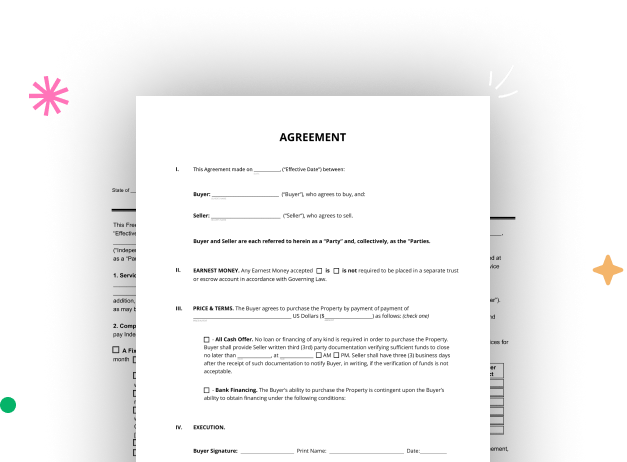
Open the blank document in the editor, set the document view, and add extra pages if applicable.
02. Add and configure fillable fields
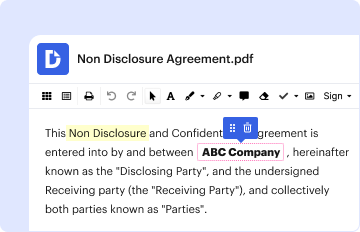
Use the top toolbar to insert fields like text and signature boxes, radio buttons, checkboxes, and more. Assign users to fields.
03. Distribute your form
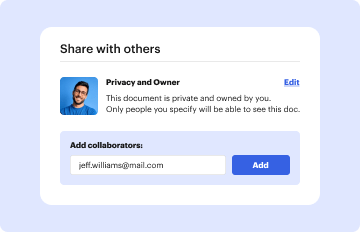
Share your Job Termination Document in seconds via email or a link. You can also download it, export it, or print it out.

Design your Job Termination Document in a matter of minutes

Form edit decoration

Step 1: Access DocHub to set up your Job Termination Document.

Start signining into your DocHub account. Try out the advanced DocHub functionality free for 30 days.

Step 2: Go to the dashboard.

Once signed in, head to the DocHub dashboard. This is where you'll build your forms and manage your document workflow.

Step 3: Design the Job Termination Document.

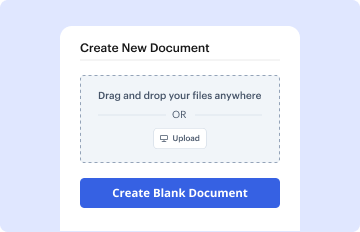
Click on New Document and choose Create Blank Document to be redirected to the form builder.

Step 4: Design the form layout.

Use the DocHub tools to add and configure form fields like text areas, signature boxes, images, and others to your document.

Step 5: Insert text and titles.

Include needed text, such as questions or instructions, using the text tool to assist the users in your document.

Step 6: Configure field settings.

Alter the properties of each field, such as making them compulsory or formatting them according to the data you expect to collect. Designate recipients if applicable.

Step 7: Review and save.

After you’ve managed to design the Job Termination Document, make a final review of your document. Then, save the form within DocHub, transfer it to your chosen location, or distribute it via a link or email.


be ready to get more

Build your Job Termination Document in minutes

Start creating now

Got questions?

We have answers to the most popular questions from our customers. If you can't find an answer to your question, please contact us.
Contact us
Proof of termination is a document that serves as evidence that an employee has been dismissed from their position. It should include the name and job title of the employee, the date they were terminated, and any other relevant information, such as reasons for dismissal or any severance pay offered.
This termination/separation of employment policy should include: Definitions of voluntary and involuntary dismissals, including specific reasons for each. Procedures for resignation, involuntary dismissal, and the necessary documentation.
What is a termination policy? The simplest definition of an employee termination policy is a written document that details how employee termination happens inside your organization. It outlines each step of the termination process and provides guidelines for management and human resources staff.
Termination letters usually include details such as: The date of termination. The reason for the termination (while not always required, many include it) Any severance benefits or other compensation the employee is entitled to. Instructions for the return of company property.
How to Terminate an Employee: 5 Steps Identify and Document the Issues. Coach Employees to Rectify the Issue. Create a Performance Improvement Plan. Terminate the Employee. Have HR Conduct an Exit Interview.
be ready to get more

Build your Job Termination Document in minutes

Start creating now

Related Q&A to Job Termination Document

How to Write Engaging Workplace Policies Explain the Purpose. Create trust between you and your employees by ensuring everyone understands the policys purpose. Avoid Jargon. Use Real-Life Examples. Define the Policys Scope. Define and Communicate Consequences of Infringements. Avoid Restrictions.
An employee dismissal letter should always include the following information: Reason for the dismissal. Effective date of termination. Any outstanding salary, accrued holiday entitlement, statutory entitlements, and when theyll be paid. Instructions for returning company property or completing final tasks.
A termination policy should include the following elements: Explanation of terminations. The termination policy should distinguish the types of terminations: The termination process. Offboarding procedures. Severance pay and support.

Additional resources on building your forms