


Create your Individual to Joint Tenancy Deed from scratch

Start Building Now
Title decoration

Here's how it works

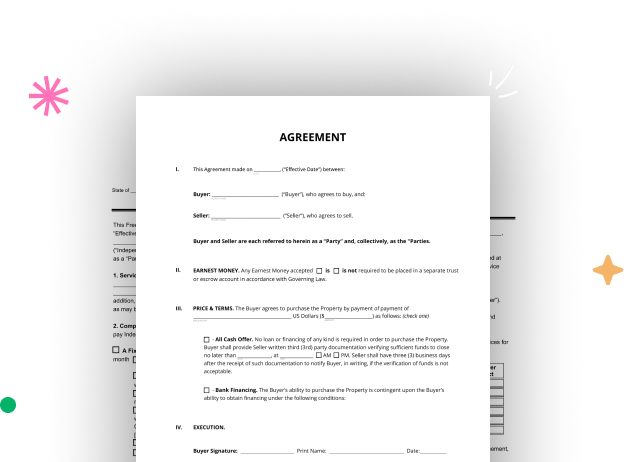
01. Start with a blank Individual to Joint Tenancy Deed
Open the blank document in the editor, set the document view, and add extra pages if applicable.
02. Add and configure fillable fields
Use the top toolbar to insert fields like text and signature boxes, radio buttons, checkboxes, and more. Assign users to fields.
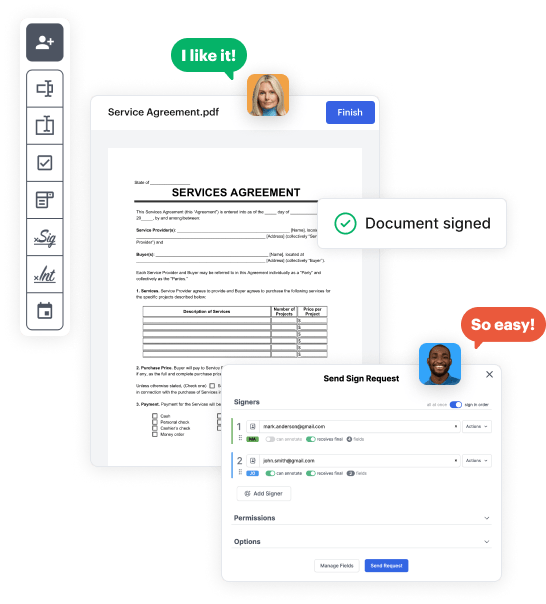
03. Distribute your form
Share your Individual to Joint Tenancy Deed in seconds via email or a link. You can also download it, export it, or print it out.

Design your Individual to Joint Tenancy Deed in a matter of minutes

Form edit decoration

Step 1: Access DocHub to set up your Individual to Joint Tenancy Deed.

Begin by accessing your DocHub account. Utilize the advanced DocHub functionality free for 30 days.

Step 2: Go to the dashboard.

Once logged in, go to the DocHub dashboard. This is where you'll create your forms and handle your document workflow.

Step 3: Design the Individual to Joint Tenancy Deed.

Hit New Document and select Create Blank Document to be redirected to the form builder.

Step 4: Set up the form layout.

Use the DocHub toolset to insert and arrange form fields like text areas, signature boxes, images, and others to your document.

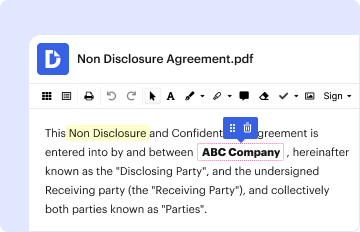
Step 5: Insert text and titles.

Include needed text, such as questions or instructions, using the text field to lead the users in your document.

Step 6: Customize field properties.

Modify the properties of each field, such as making them compulsory or formatting them according to the data you plan to collect. Assign recipients if applicable.

Step 7: Review and save.

After you’ve managed to design the Individual to Joint Tenancy Deed, make a final review of your document. Then, save the form within DocHub, transfer it to your chosen location, or share it via a link or email.


be ready to get more

Build your Individual to Joint Tenancy Deed in minutes

Start creating now

Got questions?

We have answers to the most popular questions from our customers. If you can't find an answer to your question, please contact us.
Contact us
Change in Ownership such as a purchase. Friends or family transfers that are not to a childs primary residence. Completion of new construction including new buildings or additions. An addition to the home will only add the value of the new construction to the existing assessment.
One of the most docHub benefits of using an Interspousal Transfer Deed is that it allows spouses to transfer property without triggering a property tax reassessment.
Pros of Adding Someone to Home Title Including another person(s) on the title of a home means legally adding owners to the property. If the home is titled joint with rights of survivorship (JTWROS) when one owner passes away, the surviving owner will automatically become the sole owner of said property.
Fourth Problem: If you add a child as a co-owner on your property or gift the entire property to them, you could trigger a reassessment of your property taxes.
A person may be added to a property deed as a result of inheritance, marriage or partnership. Its crucial to understand that adding someone to a deed typically involves a transfer of ownership interest in the property. With that transfer comes potential tax consequences.
be ready to get more

Build your Individual to Joint Tenancy Deed in minutes

Start creating now

Related Q&A to Individual to Joint Tenancy Deed

To add a family member to the deed, you would typically use a grant deed or a quitclaim deed. This process involves preparing the deed, ensuring it contains all necessary legal elements, and then recording it with the county recorders office where the property is located.
Will adding a spouse on title to my property result in a reassessment? No. An interspousal transfer will not result in a reassessment.
A property owned by joint tenants is owned by two or more persons in equal shares, by a title created by a single will or transfer, when expressly declared in the will or transfer to be a joint tenancy, or by transfer from a sole owner to himself or herself and others, or from tenants in common or joint tenants to

Additional resources on building your forms


