
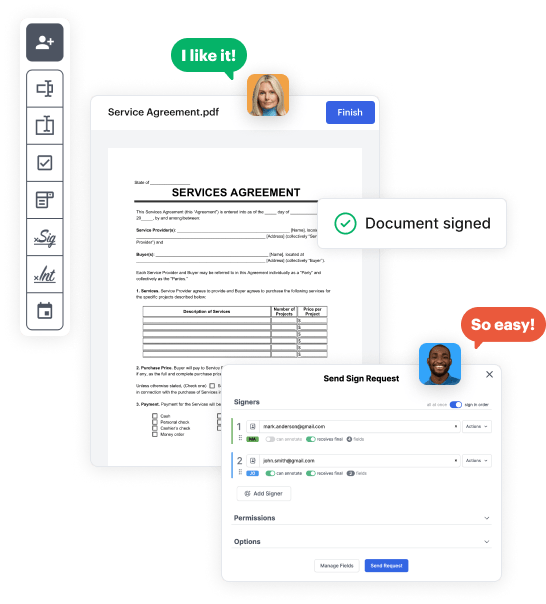
Create your Individual Mortgage Holder Form from scratch

Start Building Now
Title decoration

Here's how it works

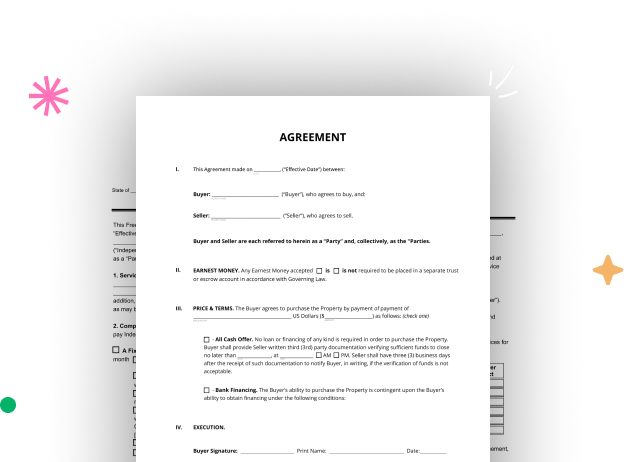
01. Start with a blank Individual Mortgage Holder Form
Open the blank document in the editor, set the document view, and add extra pages if applicable.
02. Add and configure fillable fields
Use the top toolbar to insert fields like text and signature boxes, radio buttons, checkboxes, and more. Assign users to fields.
03. Distribute your form
Share your Individual Mortgage Holder Form in seconds via email or a link. You can also download it, export it, or print it out.

Build Individual Mortgage Holder Form from scratch with these comprehensive guidelines

Form edit decoration

Step 1: Start off by launching DocHub.

Start by setting up a free DocHub account using any offered sign-up method. Just log in if you already have one.

Step 2: Sign up for a 30-day free trial.

Try out the whole collection of DocHub's advanced features by signing up for a free 30-day trial of the Pro plan and proceed to build your Individual Mortgage Holder Form.

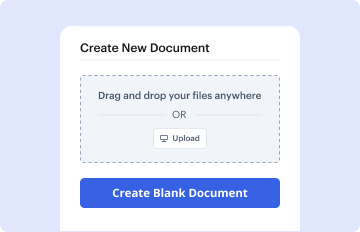
Step 3: Start with a new blank document.

In your dashboard, hit the New Document button > scroll down and hit Create Blank Document. You will be redirected to the editor.

Step 4: Arrange the view of the document.

Utilize the Page Controls icon indicated by the arrow to switch between different page views and layouts for more convenience.

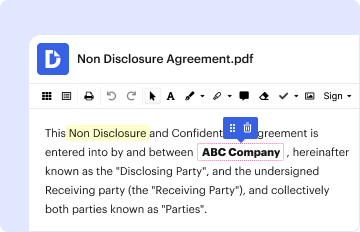
Step 5: Start adding fields to create the dynamic Individual Mortgage Holder Form.

Use the top toolbar to add document fields. Insert and configure text boxes, the signature block (if applicable), add photos, and other elements.

Step 6: Prepare and configure the added fields.

Arrange the fields you added per your desired layout. Adjust each field's size, font, and alignment to ensure the form is user-friendly and polished.

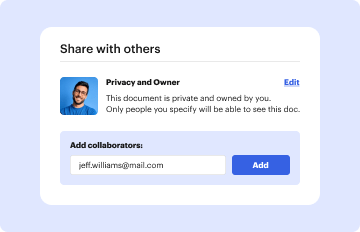
Step 7: Finalize and share your document.

Save the finalized copy in DocHub or in platforms like Google Drive or Dropbox, or design a new Individual Mortgage Holder Form. Send out your form via email or get a public link to reach more people.


be ready to get more

Build your Individual Mortgage Holder Form in minutes

Start creating now

Got questions?

We have answers to the most popular questions from our customers. If you can't find an answer to your question, please contact us.
Contact us
Key takeaways Collecting interest is essential to creating a private mortgage note. Put down all the terms for the loan in a promissory note. Ensure the security of the loan by drawing up a deed of trust. Take notes of all the possible risk involved, do your due diligence.
The application asks questions about the borrowers employment, income, assets, and debts, as well as requiring information about the property. Form 1003 is typically completed twice in the mortgage process: once during the initial application, and again at closing.
If you own a computer and have a sheet of paper, you can create your own mortgage to finance the purchase of real estate.
Filling out a 1003 form is the first step youll take to getting preapproved for a mortgage. Officially known as the uniform residential loan application URLA for short the 1003 application gives your lender the information required to determine whether you qualify for the loan youre applying for.
Fannie Mae and Freddie Mac (the GSEs) redesigned the Uniform Residential Loan Application (URLA) (Fannie Mae Form 1003) and created new automated underwriting system (AUS) specifications (Fannie Mae Desktop Underwriter [DU] Spec) to help lenders better capture relevant loan application information and support the
be ready to get more

Build your Individual Mortgage Holder Form in minutes

Start creating now

Related Q&A to Individual Mortgage Holder Form

Key Takeaways. The 1003 loan application, or Uniform Residential Loan Application, is the standardized form most mortgage lenders in the U.S. use. The application asks questions about the borrowers employment, income, assets, and debts, as well as requiring information about the property.
The Uniform Residential Loan Application is actually a mortgage application form that is managed by Fannie Mae and Freddie Mac. These two agencies, known as Government Sponsored Enterprises (GSEs), require the use of the URLA for mortgage loans they purchase.
Adding a co-borrower requires refinancing. If you want to add a co-borrower to your mortgage loan, its not as easy as calling your mortgage company and asking. You cant add a co-borrower without refinancing your mortgage. It allows you to change the terms of your home loan and add or remove names from mortgages.

Additional resources on building your forms


