



Create your Identity Theft Law from scratch

Start Building Now
Title decoration

Here's how it works

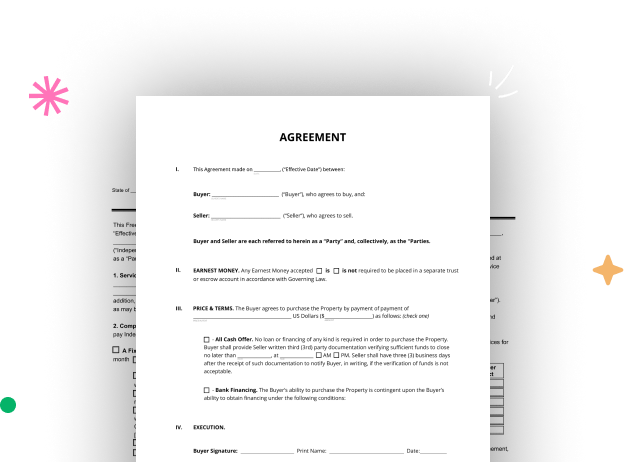
01. Start with a blank Identity Theft Law
Open the blank document in the editor, set the document view, and add extra pages if applicable.
02. Add and configure fillable fields
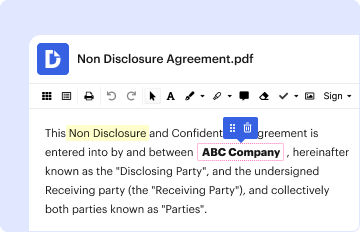
Use the top toolbar to insert fields like text and signature boxes, radio buttons, checkboxes, and more. Assign users to fields.
03. Distribute your form
Share your Identity Theft Law in seconds via email or a link. You can also download it, export it, or print it out.

Design your Identity Theft Law in a matter of minutes

Form edit decoration

Step 1: Access DocHub to set up your Identity Theft Law.

Start by logging into your DocHub account. Try out the advanced DocHub functionality free for 30 days.

Step 2: Go to the dashboard.

Once logged in, head to the DocHub dashboard. This is where you'll create your forms and handle your document workflow.

Step 3: Create the Identity Theft Law.

Click on New Document and select Create Blank Document to be redirected to the form builder.

Step 4: Design the form layout.

Use the DocHub tools to insert and configure form fields like text areas, signature boxes, images, and others to your document.

Step 5: Add text and titles.

Add needed text, such as questions or instructions, using the text tool to lead the users in your form.

Step 6: Customize field properties.

Alter the properties of each field, such as making them mandatory or formatting them according to the data you expect to collect. Designate recipients if applicable.

Step 7: Review and save.

After you’ve managed to design the Identity Theft Law, make a final review of your document. Then, save the form within DocHub, transfer it to your preferred location, or distribute it via a link or email.


be ready to get more

Build your Identity Theft Law in minutes

Start creating now

Got questions?

We have answers to the most popular questions from our customers. If you can't find an answer to your question, please contact us.
Contact us
Are you up on the Red Flags Rule? (Sometimes its referred to as one of the Fair Credit Reporting Acts Identity Theft Rules and it appears in the Code of Federal Regulations as Detection, Prevention, and Mitigation of Identity Theft.) The Red Flags Rule requires many businesses and organizations to implement a
Under the Act, it is a federal crime when a person knowingly transfers or uses, without lawful authority, a means of identification of another person with the intent to commit, or to aid or abet, any unlawful activity that constitutes a violation of Federal law, or that constitutes a felony under any applicable State
18 U.S.C 1028 - Federal Identity Theft Law 18 U.S.C 1028 is the federal statute used by prosecutors to charge someone with identity theft. In other words, its taking another persons identity for fraud, false statements, or misrepresentations.
What does identity theft insurance not cover? Its important to note that these insurance policies typically dont cover stolen money or direct financial losses from fraudulent purchases and other unauthorized use of credit accounts. They typically reimburse you only for the costs of the reporting and recovery process.
Identity theft laws under 18 U.S.C. 1028 makes it a crime to misuse someones identifying information, whether personal or financial. Personal identifying information can include social security numbers, drivers license number, credit card or bank account information, and PIN numbers obtained through the internet.
be ready to get more

Build your Identity Theft Law in minutes

Start creating now

Related Q&A to Identity Theft Law

In the indemnity clause, one party commits to compensate another party for any prospective loss or damage. More common is in insurance contracts, in exchange for premiums paid by the insured to the insurer, the insurer offers to compensate the insured for any potential damages or losses.
Synthetic identity theft is a special form of fraud in which a real persons Social Security number (SSN) is stolen and then a name, date of birth, mailing address, email account and phone number are made up and applied to that legitimate SSN to create a new identity.
The quick answer is that no, you cant completely erase your identity in this day and age -- unless the government does it for you. Legally changing your name isnt too difficult. Legally changing your Social Security number (SSN) is possible as well, but only under certain circumstances.

Additional resources on building your forms