

Create your HVAC Legal Document from scratch

Start Building Now
Title decoration

Here's how it works

01. Start with a blank HVAC Legal Document
Open the blank document in the editor, set the document view, and add extra pages if applicable.
02. Add and configure fillable fields
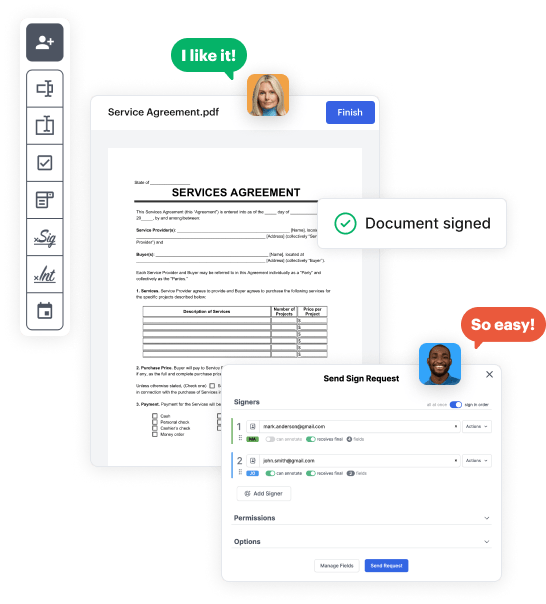
Use the top toolbar to insert fields like text and signature boxes, radio buttons, checkboxes, and more. Assign users to fields.
03. Distribute your form
Share your HVAC Legal Document in seconds via email or a link. You can also download it, export it, or print it out.

Design your HVAC Legal Document in a matter of minutes

Form edit decoration

Step 1: Access DocHub to build your HVAC Legal Document.

Start by accessing your DocHub account. Explore the pro DocHub functionality free for 30 days.

Step 2: Go to the dashboard.

Once logged in, go to the DocHub dashboard. This is where you'll build your forms and handle your document workflow.

Step 3: Design the HVAC Legal Document.

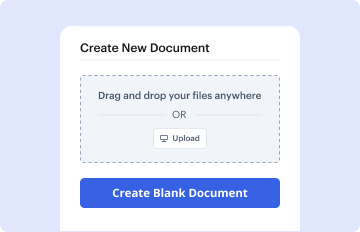
Click on New Document and select Create Blank Document to be redirected to the form builder.

Step 4: Set up the form layout.

Use the DocHub features to insert and configure form fields like text areas, signature boxes, images, and others to your document.

Step 5: Add text and titles.

Add needed text, such as questions or instructions, using the text tool to guide the users in your document.

Step 6: Customize field properties.

Adjust the properties of each field, such as making them compulsory or formatting them according to the data you plan to collect. Designate recipients if applicable.

Step 7: Review and save.

After you’ve managed to design the HVAC Legal Document, make a final review of your document. Then, save the form within DocHub, export it to your chosen location, or share it via a link or email.


be ready to get more

Build your HVAC Legal Document in minutes

Start creating now

Got questions?

We have answers to the most popular questions from our customers. If you can't find an answer to your question, please contact us.
Contact us
Preventive maintenance also helps keep vehicles running well longer by reducing overall wear and tear. This translates into reduced fuel consumption, better gas mileage, and increased resale value. Its important to remember that the purpose of vehicle preventive maintenance is not to make your car last forever.
How to Keep Your HVAC System Working Efficiently Get Annual Pre-Season Check-ups. Hire a professional contractor to perform routine maintenance of your equipment. Inspect and Clean or Change Air Filters. a Smart Thermostat. Seal Your Ducts. Other Considerations.
Its recommended that you service your home air conditioning system at least once every year. The same goes for your heating system.
Servicing your AC unit annually can save money in the long run. AC service includes inspection, cleaning, and the replacement of some parts. The average AC service costs $75 to $200 but can docHub $750 for large units. Unserviced AC units become 5% less efficient per year.
Regular HVAC preventative maintenance and tune-ups keep your unit operating efficiently and catch problems before they become major expenses. With the average cost of a new HVAC at $5,000 to $11,000, you want it to last as long as possible.
be ready to get more

Build your HVAC Legal Document in minutes

Start creating now

Related Q&A to HVAC Legal Document

What Are the Advantages of Preventive Maintenance? Standard maintenance keeps HVAC systems in excellent working order and has myriad benefits such as: Higher Energy Efficiency and Performance: Neglected HVAC systems can show signs of internal damage and inconsistent heating or cooling.
The details that you will need to include in the HVAC Contract are: The contact information for your client. How much it will cost and when payment is due. Whether the project will be ongoing or if it will last for a distinct period of time.

Additional resources on building your forms


