Create your Human Resources Legal Form from scratch

Start Building Now
Title decoration

Here's how it works

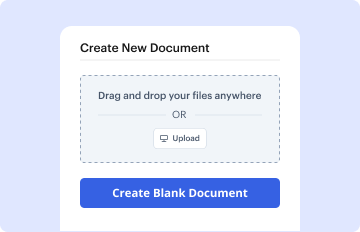
01. Start with a blank Human Resources Legal Form
Open the blank document in the editor, set the document view, and add extra pages if applicable.
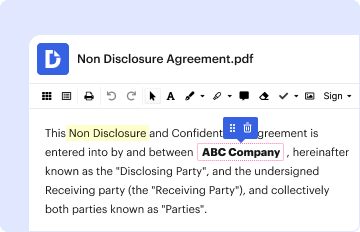
02. Add and configure fillable fields
Use the top toolbar to insert fields like text and signature boxes, radio buttons, checkboxes, and more. Assign users to fields.
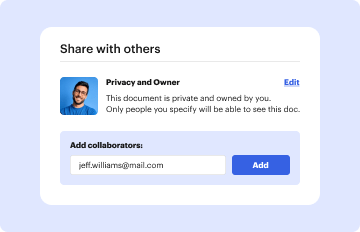
03. Distribute your form
Share your Human Resources Legal Form in seconds via email or a link. You can also download it, export it, or print it out.

Design your Human Resources Legal Form in a matter of minutes
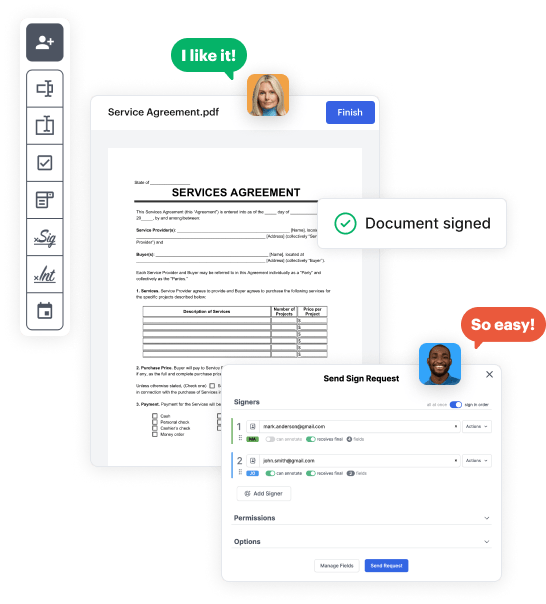
Form edit decoration

Step 1: Access DocHub to build your Human Resources Legal Form.

Begin by logging into your DocHub account. Utilize the pro DocHub functionality at no cost for 30 days.

Step 2: Navigate to the dashboard.

Once logged in, head to the DocHub dashboard. This is where you'll create your forms and handle your document workflow.

Step 3: Design the Human Resources Legal Form.

Hit New Document and choose Create Blank Document to be redirected to the form builder.

Step 4: Set up the form layout.

Use the DocHub features to insert and arrange form fields like text areas, signature boxes, images, and others to your form.

Step 5: Insert text and titles.

Add needed text, such as questions or instructions, using the text field to lead the users in your form.

Step 6: Configure field properties.

Alter the properties of each field, such as making them mandatory or arranging them according to the data you plan to collect. Assign recipients if applicable.

Step 7: Review and save.

After you’ve managed to design the Human Resources Legal Form, make a final review of your form. Then, save the form within DocHub, transfer it to your preferred location, or share it via a link or email.

be ready to get more

Build your Human Resources Legal Form in minutes

Start creating now

Got questions?

We have answers to the most popular questions from our customers. If you can't find an answer to your question, please contact us.
Contact us
The following are the most important documents that every manager needs to include in their HR document checklist. Job Description Document. Employee Handbook. Warning Letters. Regulatory Compliance Documents. Compensation Records. Orientation Documents. Employee Schedules. Exit Documents.
Employers should keep all job-related documentation such as hiring records, performance reviews, disciplinary actions and job descriptions in an employees general personnel file. Consider whether the document would be relevant to a supervisor who may review this file when making employment decisions.
Hence, you need to start with learning and development planning early on when building your HR department. Define your goals. Identify the competencies and skills needed. Speak to your employees. Create a training framework. Help develop personal development plans.
A human resource program is a valuable way to gain the necessary skills and knowledge for managing human capital without doubt the key competitive advantage for organizations and companies. Such a program is usually essential for anyone wishing to enter the human resource function.
Six key steps to implement a HR system Project planning. Installation and configuration. Onboarding and training. Testing. Rollout. Monitoring.
be ready to get more

Build your Human Resources Legal Form in minutes

Start creating now

Related Q&A to Human Resources Legal Form

10 HR Documents Every Small Business Should Have Offer Letter. After choosing the right person for the job, send an offer letter for them to sign. Employment Agreement. New Employee Documents. Personnel File. Employee Medical Records. Workforce Data Report. Payroll Information. Employee Handbook.
HR managers must have a Masters degree in human resources, business administration, or labour laws. If you want to take your HR career to a new level, you can pursue a doctoral program in Human Resource Management after completing your Masters degree.
How to develop a human resource plan Define roles and responsibilities. Consult an organization chart. Create a staffing strategy. Consider training and development. Include potential rewards. List physical resources. Ensure compliance and safety. Organizational chart.
The structure of HR that includes functional areas such as recruiting and staffing, benefits, compensation, employee relations, HR compliance, organizational design, training and development, human resource information systems (H.R.I.S.) and payroll.
Best practices for HR documentation Its important to have a written, accessible statement of the companys expectations for employees so theyre aware of the rules, policies and goals. Be specific. Always be thorough and specific when preparing documentation, including dates, times and evidence wherever possible.

Additional resources on building your forms