
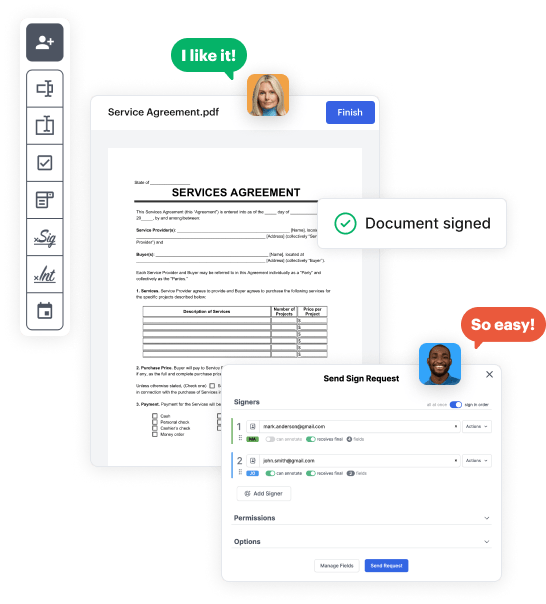
Create your Home Sales Legal Document from scratch

Start Building Now
Title decoration

Here's how it works

01. Start with a blank Home Sales Legal Document
Open the blank document in the editor, set the document view, and add extra pages if applicable.
02. Add and configure fillable fields
Use the top toolbar to insert fields like text and signature boxes, radio buttons, checkboxes, and more. Assign users to fields.
03. Distribute your form
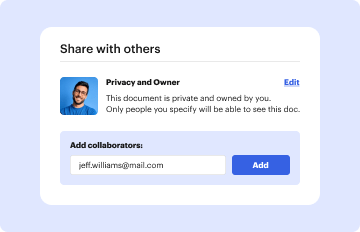
Share your Home Sales Legal Document in seconds via email or a link. You can also download it, export it, or print it out.

Build Home Sales Legal Document from scratch by following these detailed guidelines

Form edit decoration

Step 1: Get started with DocHub.

Begin by creating a free DocHub account using any offered sign-up method. If you already have one, simply log in.

Step 2: Register for a 30-day free trial.

Try out the entire suite of DocHub's pro tools by signing up for a free 30-day trial of the Pro plan and proceed to craft your Home Sales Legal Document.

Step 3: Build a new blank document.

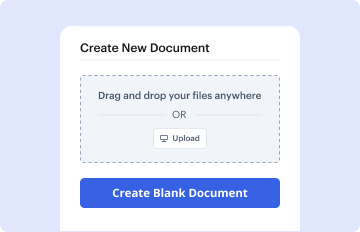
In your dashboard, click the New Document button > scroll down and choose to Create Blank Document. You’ll be taken to the editor.

Step 4: Organize the document’s layout.

Use the Page Controls icon marked by the arrow to switch between two page views and layouts for more convenience.

Step 5: Begin by inserting fields to create the dynamic Home Sales Legal Document.

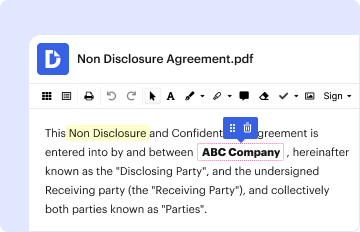
Use the top toolbar to place document fields. Add and arrange text boxes, the signature block (if applicable), add photos, and other elements.

Step 6: Prepare and configure the added fields.

Configure the fillable areas you added based on your preferred layout. Modify each field's size, font, and alignment to make sure the form is straightforward and neat-looking.

Step 7: Finalize and share your form.

Save the ready-to-go copy in DocHub or in platforms like Google Drive or Dropbox, or craft a new Home Sales Legal Document. Distribute your form via email or get a public link to engage with more people.


be ready to get more

Build your Home Sales Legal Document in minutes

Start creating now

Got questions?

We have answers to the most popular questions from our customers. If you can't find an answer to your question, please contact us.
Contact us
At its most basic, a purchase agreement should include the following: Name and contact information for buyer and seller. The address of the property being sold. The price to be paid for the property. The date of transfer. Disclosures. Contingencies. Signatures.
Identify the names and addresses of both the buyer and the seller. Detail the price of the property and the terms of the purchase. Set the closing date and closing costs. Detail any taxes and other related costs, and establish which party is paying those costs.
How do I fill out a Real Estate Purchase Agreement? Describe the property. Provide buyer and seller details. Establish the sale details. Set conditions on the sale. Add final details. Outline tactics for conflict resolution.
Either the seller or the buyer can prepare a purchase agreement. Like any contract, it can be a standard document that one party uses in the normal course of business or it can be the end result of back-and-forth negotiations.
Important points to include in a legal document. Party details. List the names, numbers, addresses (email or physical), and any other relevant information of all parties involved. Background information. Motion. Roles and responsibilities. BdocHubes or contingencies. Dates and signatures.
be ready to get more

Build your Home Sales Legal Document in minutes

Start creating now

Related Q&A to Home Sales Legal Document

I, [Your Name], the undersigned seller, in acknowledgment of the receipt of [Deposit Amount], hereby agree to sell and transfer ownership of the property located at [Property Address], further described as [any additional details or legal description of the property], to [Buyers Name], the undersigned buyer, subject
Elements of a sales agreement Buyer and seller names and contact information. Description of goods, services, or property being purchased. Payment amount, dates, and method. Liability of each party in the case of loss, damage, or delivery failure. Ownership information, such as when ownership formally transfers to the buyer.

Additional resources on building your forms


