
Create your Health Insurance Legal Form from scratch

Start Building Now
Title decoration

Here's how it works

01. Start with a blank Health Insurance Legal Form
Open the blank document in the editor, set the document view, and add extra pages if applicable.
02. Add and configure fillable fields
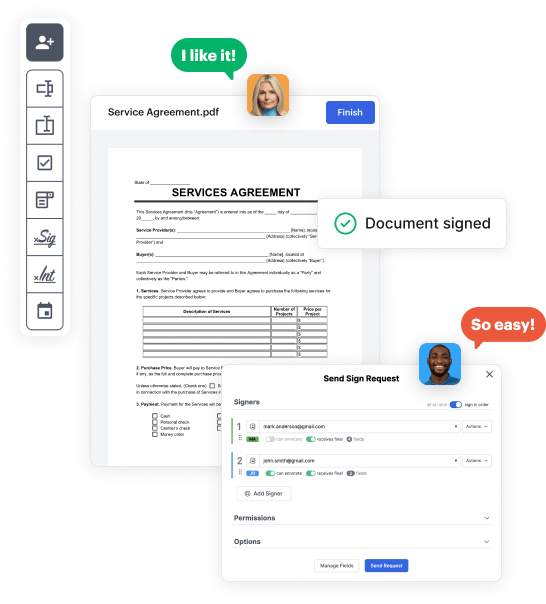
Use the top toolbar to insert fields like text and signature boxes, radio buttons, checkboxes, and more. Assign users to fields.
03. Distribute your form
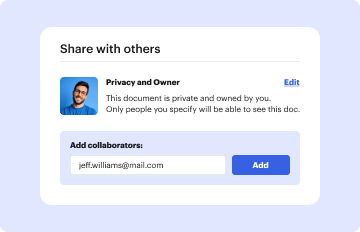
Share your Health Insurance Legal Form in seconds via email or a link. You can also download it, export it, or print it out.

Create your Health Insurance Legal Form in a matter of minutes

Form edit decoration

Step 1: Access DocHub to set up your Health Insurance Legal Form.

Begin by accessing your DocHub account. Try out the pro DocHub functionality free for 30 days.

Step 2: Go to the dashboard.

Once signed in, head to the DocHub dashboard. This is where you'll build your forms and manage your document workflow.

Step 3: Create the Health Insurance Legal Form.

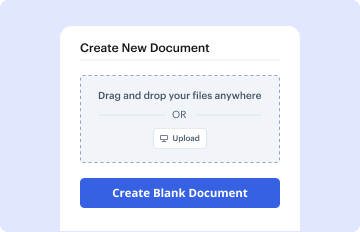
Click on New Document and choose Create Blank Document to be redirected to the form builder.

Step 4: Set up the form layout.

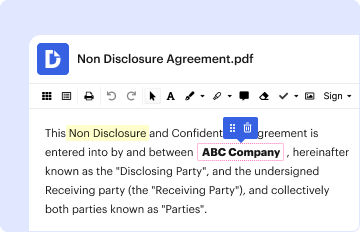
Use the DocHub tools to add and arrange form fields like text areas, signature boxes, images, and others to your form.

Step 5: Insert text and titles.

Add needed text, such as questions or instructions, using the text tool to lead the users in your form.

Step 6: Customize field properties.

Alter the properties of each field, such as making them required or formatting them according to the data you expect to collect. Assign recipients if applicable.

Step 7: Review and save.

After you’ve managed to design the Health Insurance Legal Form, make a final review of your form. Then, save the form within DocHub, transfer it to your chosen location, or distribute it via a link or email.


be ready to get more

Build your Health Insurance Legal Form in minutes

Start creating now

Got questions?

We have answers to the most popular questions from our customers. If you can't find an answer to your question, please contact us.
Contact us
The NSA requires the Secretary of Health and Human Services (Secretary) to conduct audits to ensure that group health plans and health insurance issuers offering group or individual health insurance coverage are in compliance with the requirements related to calculation of the qualifying payment amount (QPA).
The out-of-pocket maximum is a limit on what you pay out on top of your premiums during a policy period for deductibles, coinsurance and copays. Once you docHub your out-of-pocket maximum, your health insurance will pay for 100% of most covered health benefits for the rest of that policy period.
A deductible is the cost a you pay on health care before the health plan starts covering any expenses, whereas an out-of-pocket maximum is the amount a you must spend on eligible healthcare expenses through copays, coinsurance, or deductibles before the health plan starts covering all covered expenses.
This law is sometimes referred to as the Age 29 law, because it permits young adults to continue or obtain coverage under a parents policy through the age of 29. The law provides two distinct ways in which coverage may be extended: a young adult option and a make available option.
Eligibility and Cost Family ContributionsMonthly Income by Family Size* (Effective for applications received on or after 2/18/2024) 12 Free Insurance $2,787 $3,782 $15 Per Child Per Month (Maximum of $45 per family) $3,138 $4,259 $30 Per Child Per Month (Maximum of $90 per family) $3,765 $5,1103 more rows
be ready to get more

Build your Health Insurance Legal Form in minutes

Start creating now

Related Q&A to Health Insurance Legal Form

What Is It? An out-of-pocket maximum (OOP) is the most youll pay for medical services within your policys calendar year. Almost all insurance carriers require services to be in-network and covered by your plan to count toward your OOP. The goal of an OOP is to protect patients from high healthcare costs.
The most you have to pay for covered services in a plan year. After you spend this amount on. deductibles. The amount you pay for covered health care services before your insurance plan starts to pay.
An out-of-pocket maximum is a cap, or limit, on the amount of money you have to pay for covered health care services in a plan year. If you meet that limit, your health plan will pay 100% of all covered health care costs for the rest of the plan year.

Additional resources on building your forms