Increase your efficiency with General Warranty Deed North Carolina

Papers administration takes up to half of your business hours. With DocHub, you can easily reclaim your time and effort and enhance your team's efficiency. Access General Warranty Deed North Carolina collection and discover all templates related to your daily workflows.

Effortlessly use General Warranty Deed North Carolina:

  1. Open General Warranty Deed North Carolina and apply Preview to find the appropriate form.
  2. Click on Get Form to begin working on it.
  3. Wait for your form to upload in our online editor and begin modifying it.
  4. Add new fillable fields, symbols, and images, adjust pages, etc.
  5. Fill out your form or set it for other contributors.
  6. Download or deliver the form by link, email attachment, or invite.

Improve your daily file administration using our General Warranty Deed North Carolina. Get your free DocHub account right now to explore all forms.


Video Guide on General Warranty Deed North Carolina management

video background

Commonly Asked Questions about General Warranty Deed North Carolina

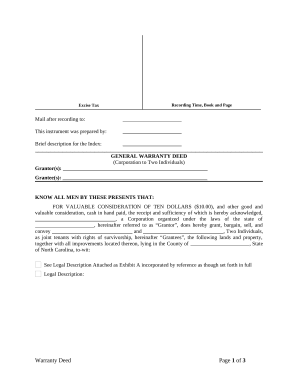
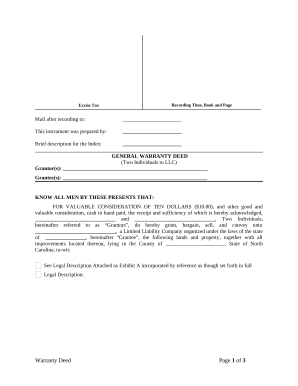
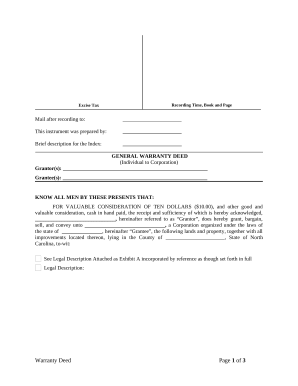
A general warranty deed is a legal agreement that protects a property buyer from any debts held against the property theyre purchasing. If such a debt emerges after the sale, the seller, not the buyer, is financially responsible for that debt.
The main difference between these deeds is that general warranty deeds apply to the entire history of a piece of land while special warranty deeds only cover the period of time that the previous owner (the grantor) has held the land. As such, special warranty deeds offer fewer protections to a grantee.
The general warranty deed is the most common type of deed used in North Carolina. This deed is different from the rest because the seller protects the buyer against any title defects or claims arising at any point in time, not just for the length of time when the seller owned the property.
Both a warranty deed and deed of trust are used to transfer the title of a property from one person to another. However, the difference between these two contracts is who is protected. As you now know, a deed of trust protects the beneficiary (lender). A warranty deed, on the other hand, protects the property owner.
Key Takeaways. A warranty deed protects the buyer and ensures that the seller holds a free and clear title to a property without any outstanding liens or mortgages. A warranty deed is a legal real estate document and protects the buyer against future claims to the title of the property.
No, a warranty deed does not prove ownership. A title search is the best way to prove that a grantor rightfully owns a property. The warranty deed is a legal document that offers the buyer protection. In other words, the property title and warranty deed work in tandem together.