
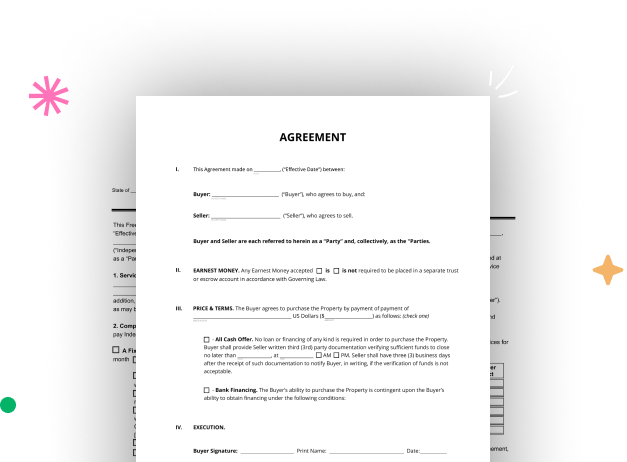
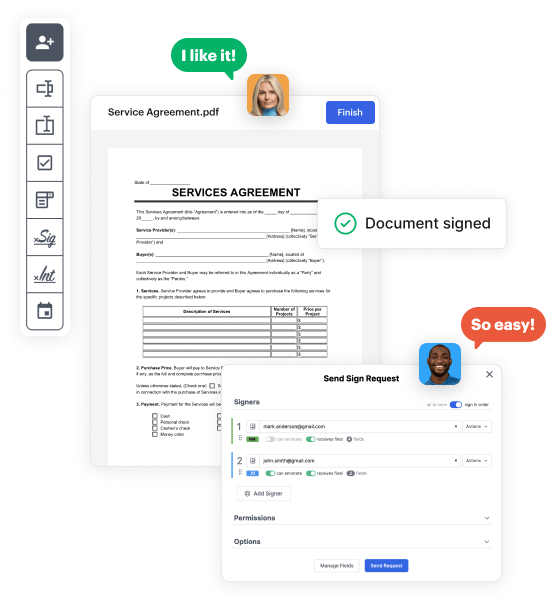
Create your Formal Legal Letter from scratch

Start Building Now
Title decoration

Here's how it works

01. Start with a blank Formal Legal Letter
Open the blank document in the editor, set the document view, and add extra pages if applicable.
02. Add and configure fillable fields
Use the top toolbar to insert fields like text and signature boxes, radio buttons, checkboxes, and more. Assign users to fields.
03. Distribute your form
Share your Formal Legal Letter in seconds via email or a link. You can also download it, export it, or print it out.

Craft Formal Legal Letter from scratch with these comprehensive guidelines

Form edit decoration

Step 1: Get started with DocHub.

Begin by signing up for a free DocHub account using any available sign-up method. Simply log in if you already have one.

Step 2: Sign up for a free 30-day trial.

Try out the entire collection of DocHub's pro features by signing up for a free 30-day trial of the Pro plan and proceed to craft your Formal Legal Letter.

Step 3: Start with a new empty document.

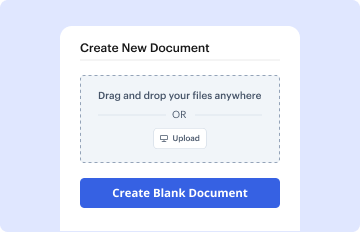
In your dashboard, click the New Document button > scroll down and choose to Create Blank Document. You will be taken to the editor.

Step 4: Arrange the view of the document.

Utilize the Page Controls icon marked by the arrow to switch between two page views and layouts for more flexibility.

Step 5: Start inserting fields to create the dynamic Formal Legal Letter.

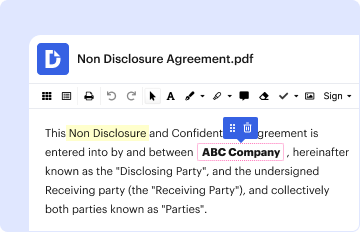
Use the top toolbar to place document fields. Add and format text boxes, the signature block (if applicable), insert images, etc.

Step 6: Prepare and customize the added fields.

Configure the fields you added per your desired layout. Modify the size, font, and alignment to ensure the form is straightforward and professional.

Step 7: Finalize and share your document.

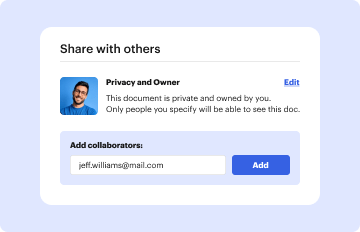
Save the completed copy in DocHub or in platforms like Google Drive or Dropbox, or design a new Formal Legal Letter. Share your form via email or use a public link to reach more people.


be ready to get more

Build your Formal Legal Letter in minutes

Start creating now

Got questions?

We have answers to the most popular questions from our customers. If you can't find an answer to your question, please contact us.
Contact us
Drafting Legal Letters 1. Start by giving readers context so they immediately understand the letters purpose. for example: This letter addresses the impact of recent tax legislation changes on your estate planning.
Formal Salutation: Start with a formal salutation. If you know the attorneys name, the most common and respectful way is to use Dear followed by their title and surname. For example, Dear Mr. Smith or Dear Ms.
Lead with the main purpose of your letter and then explain the reasons for your question or request. Be specific when referencing relevant information including names, dates and places. The more information you include, the better your attorney will be able to assist you.
I hereby call upon you to have the deed of conveyance executed by my client against payment of the balance of the consideration money on or before the day of .. in terms of the said agreement, failing which the said agreement will stand cancelled and the earnest money paid by you will stand forfeited.
Here are some simple steps to help you create a flawless notice every time: Identify the parties. Write a clear subject line. Explain the legal basis. Provide the facts. Use simple language. State your demands and consequences.
be ready to get more

Build your Formal Legal Letter in minutes

Start creating now

Related Q&A to Formal Legal Letter

A legal notice is a notification that is required by law or agreement, or given by operation of law as a result of some fact. It is a way of informing someone about their legal rights or obligations. There are different types of legal notices, such as actual notice, constructive notice, and inquiry notice.
How to write a formal letter in block style Step 1: Write the contact information and date. Step 2: Write the salutation. Step 3: Write the body of the letter. Step 4: Write the complimentary close. Step 5: Mention enclosed materials. Step 1: Put the date at the top (optional) Step 2: Write the salutation.
Include the date of the legal statement; the topic of the statement; the date(s) of the topic to be discussed; the basic facts involved in the reasoning for the statement; the identities of all pertinent parties; their connections to the case; and if possible, the signatures of the parties.

Additional resources on building your forms

