
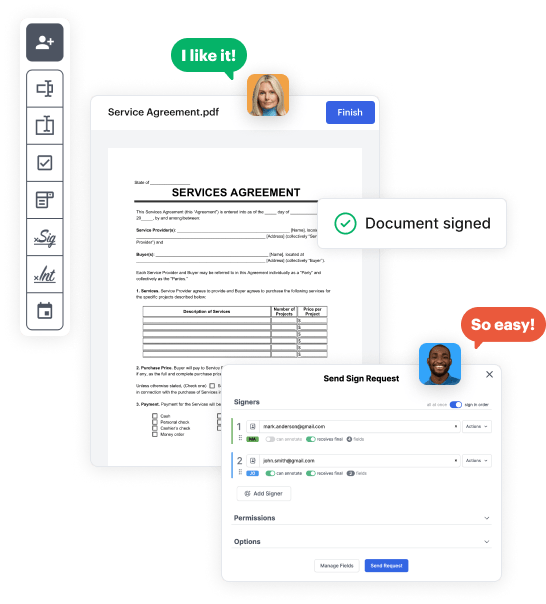
Create your Forestry Industry Legal Document from scratch

Start Building Now
Title decoration

Here's how it works

01. Start with a blank Forestry Industry Legal Document
Open the blank document in the editor, set the document view, and add extra pages if applicable.
02. Add and configure fillable fields
Use the top toolbar to insert fields like text and signature boxes, radio buttons, checkboxes, and more. Assign users to fields.
03. Distribute your form
Share your Forestry Industry Legal Document in seconds via email or a link. You can also download it, export it, or print it out.

Create Forestry Industry Legal Document from the ground up with these step-by-step guidelines

Form edit decoration

Step 1: Get started with DocHub.

Begin by signing up for a free DocHub account using any offered sign-up method. If you already have one, simply log in.

Step 2: Register for a free 30-day trial.

Try out the entire set of DocHub's advanced features by registering for a free 30-day trial of the Pro plan and proceed to build your Forestry Industry Legal Document.

Step 3: Add a new empty form.

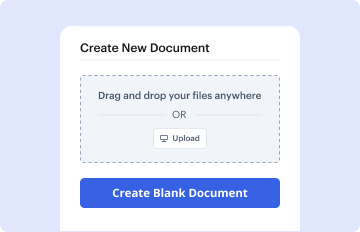
In your dashboard, click the New Document button > scroll down and choose to Create Blank Document. You’ll be redirected to the editor.

Step 4: Organize the document’s layout.

Use the Page Controls icon marked by the arrow to switch between two page views and layouts for more convenience.

Step 5: Begin by inserting fields to create the dynamic Forestry Industry Legal Document.

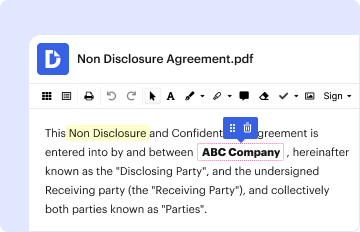
Navigate through the top toolbar to add document fields. Insert and format text boxes, the signature block (if applicable), add photos, and other elements.

Step 6: Prepare and customize the added fields.

Organize the fields you added per your chosen layout. Personalize the size, font, and alignment to make sure the form is easy to use and neat-looking.

Step 7: Finalize and share your document.

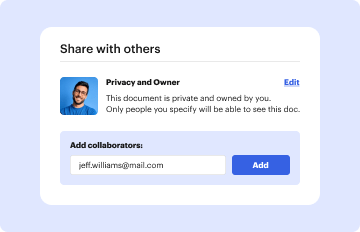
Save the ready-to-go copy in DocHub or in platforms like Google Drive or Dropbox, or design a new Forestry Industry Legal Document. Share your form via email or get a public link to engage with more people.


be ready to get more

Build your Forestry Industry Legal Document in minutes

Start creating now

Got questions?

We have answers to the most popular questions from our customers. If you can't find an answer to your question, please contact us.
Contact us
Forest Stewardship Program All private, non-industrial, forest landowners who are looking for introductory management and technical advice are eligible for a free visit with a DEC forester. Often a visit is a landowners first step towards getting professional guidance for their property.
Businesses can apply for certificates that exempt them from paying sales tax on certain items. These certificates are issued by the New York State Department of Taxation and Finance (DTF). Businesses complete the certificate, and provide it to the vendor. The vendor keeps the certificate and makes a sale without tax.
Forest management is beneficial to both the forest land and its owner. If you own at least 50 contiguous acres of forest land, and are willing to follow one of our custom DEC-authorized forest management plans, you can save money annually via tax exemption due to a law called 480-a Forest Tax Law.
Under New Yorks homestead protection law, the amount property owners may declare exempt varies based on county location and range from $75,000 to $150,000.
The exemption allowed under Section 480-a is either 80 percent of the assessed value of the eligible land, or any assessed value in excess of $40/acre (equalized), whichever is less.
be ready to get more

Build your Forestry Industry Legal Document in minutes

Start creating now

Related Q&A to Forestry Industry Legal Document

The U.S.Forest Service was established in 1905 under the Transfer Act of February 1, 1905 (16 U.S.C. 472) which transferred the Federal forest reserves and the responsibility for their management from the Department of the Interior to the Department of Agriculture.
The New York Forest Tax Law Program (commonly called 480-a after the section of the tax code relating to it) is a property tax reduction program. Participation is voluntary, and you must own at least 50 acres of woods in adjoining properties in New York to be eligible.
Any assessed valuation of the eligible land in excess of its agricultural assessment is exempt from taxation. To qualify, the owner must annually submit an application verifying that the land is located within an established agricultural district and that it satisfies the property use requirements.

Additional resources on building your forms


