Create your Florida Real Estate Legal Document from scratch

Start Building Now
Title decoration

Here's how it works

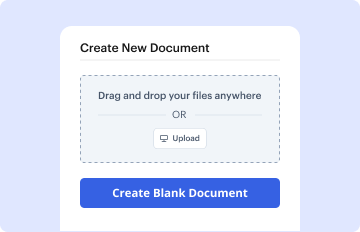
01. Start with a blank Florida Real Estate Legal Document
Open the blank document in the editor, set the document view, and add extra pages if applicable.
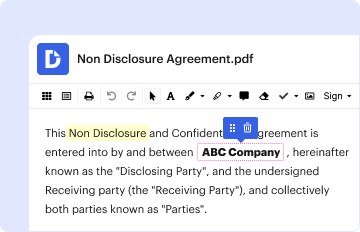
02. Add and configure fillable fields
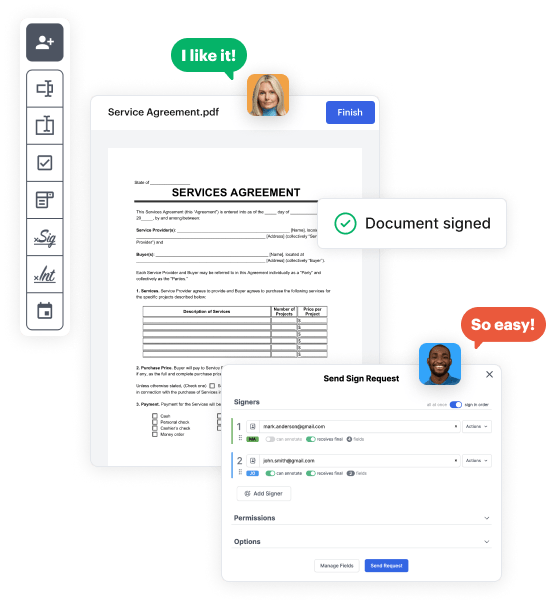
Use the top toolbar to insert fields like text and signature boxes, radio buttons, checkboxes, and more. Assign users to fields.
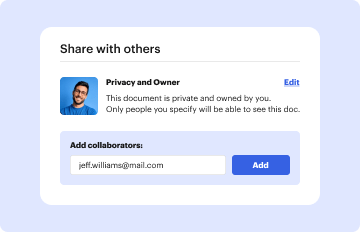
03. Distribute your form
Share your Florida Real Estate Legal Document in seconds via email or a link. You can also download it, export it, or print it out.

A brief tutorial on how to set up a polished Florida Real Estate Legal Document
Form edit decoration

Step 1: Sign in to DocHub to create your Florida Real Estate Legal Document.

First, log in to your DocHub account. If you don't have one, you can easily sign up for free.

Step 2: Go to the dashboard.

Once logged in, head to your dashboard. This is your central hub for all document-related processes.

Step 3: Start new document creation.

In your dashboard, hit New Document in the upper left corner. Choose Create Blank Document to craft the Florida Real Estate Legal Document from the ground up.

Step 4: Insert template elements.

Place different fields like text boxes, photos, signature fields, and other options to your template and designate these fields to intended individuals as needed.

Step 5: Adjust your document.

Customize your template by incorporating directions or any other vital details utilizing the text tool.

Step 6: Go over and correct the form.

Carefully review your created Florida Real Estate Legal Document for any typos or essential adjustments. Leverage DocHub's editing features to perfect your document.

Step 7: Send out or download the document.

After completing, save your file. You may choose to keep it within DocHub, transfer it to various storage services, or send it via a link or email.


be ready to get more

Build your Florida Real Estate Legal Document in minutes

Start creating now

Got questions?

We have answers to the most popular questions from our customers. If you can't find an answer to your question, please contact us.
Contact us
While the act of recording a quitclaim deed makes the transfer official in public records, Florida law does not mandate such recordation for the deeds validity.
Recording a Deed Must present a photocopy of a government issued photo identification for each grantor(s) and grantee(s) listed on the deed. Prepared by statement (name and address of the natural person preparing the Deed) Grantor(s) (Sellers-Party Giving Title) names legibly printed in the body of the deed.
In the state of Florida, all real estate contracts must be made in writing and must contain certain relevant information in order to be valid and legally binding. Required information includes the identification of all parties, the legal description and address of the property, and the purchase price.
Before a transfer of property can occur, a deed must be prepared by an attorney. Usually the sellers attorney will draft the deed, and the deed will be signed at the closing.
If it is not recorded, the party holding the deed may not be recognized under the law as the legal property owner to third parties, though the deed may be legally effective to transfer the property from the grantor to the grantee.
be ready to get more

Build your Florida Real Estate Legal Document in minutes

Start creating now

Related Q&A to Florida Real Estate Legal Document

Forgeryand fraud A forged deed is void under Florida law and is a third-degree felony. The term covers the fraudulent production of a legal document or making alterations to a legal document which may render it void. These forged documents can make their way into public records and be treated like legitimate documents.
Examples might include typographical errors that dont pertain to the property description, named grantors or grantees, witnesses, acknowledgements, consideration, and other material components of the deed. Another example is a missing or incorrect date.
Not recording a deed can cause problems for the grantee. They may be unable to obtain a mortgage, insure the property, or sell it. Even more problematic, an unrecorded deed may make it possible for the grantor to sell the property to a buyer and subsequently sell the same property to a different buyer.

Additional resources on building your forms