


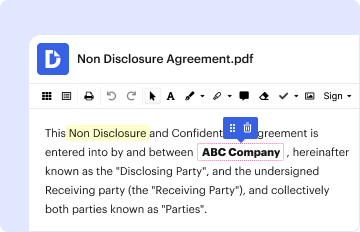


Create your Financial Planning Legal Form from scratch

Start Building Now
Title decoration

Here's how it works

01. Start with a blank Financial Planning Legal Form
Open the blank document in the editor, set the document view, and add extra pages if applicable.
02. Add and configure fillable fields
Use the top toolbar to insert fields like text and signature boxes, radio buttons, checkboxes, and more. Assign users to fields.
03. Distribute your form
Share your Financial Planning Legal Form in seconds via email or a link. You can also download it, export it, or print it out.

Create Financial Planning Legal Form from scratch by following these comprehensive guidelines

Form edit decoration

Step 1: Start off by launching DocHub.

Begin by setting up a free DocHub account using any offered sign-up method. Simply log in if you already have one.

Step 2: Sign up for a free 30-day trial.

Try out the whole suite of DocHub's advanced features by signing up for a free 30-day trial of the Pro plan and proceed to craft your Financial Planning Legal Form.

Step 3: Add a new blank document.

In your dashboard, click the New Document button > scroll down and choose to Create Blank Document. You’ll be taken to the editor.

Step 4: Organize the document’s layout.

Use the Page Controls icon marked by the arrow to toggle between different page views and layouts for more flexibility.

Step 5: Begin by adding fields to design the dynamic Financial Planning Legal Form.

Explore the top toolbar to place document fields. Add and format text boxes, the signature block (if applicable), insert images, etc.

Step 6: Prepare and customize the added fields.

Arrange the fields you added per your preferred layout. Personalize each field's size, font, and alignment to ensure the form is easy to use and neat-looking.

Step 7: Finalize and share your document.

Save the finalized copy in DocHub or in platforms like Google Drive or Dropbox, or design a new Financial Planning Legal Form. Share your form via email or get a public link to engage with more people.


be ready to get more

Build your Financial Planning Legal Form in minutes

Start creating now

Got questions?

We have answers to the most popular questions from our customers. If you can't find an answer to your question, please contact us.
Contact us
Very generally, having between $50,000 and $500,000 of liquid assets to invest can be a good point to start looking at hiring a financial advisor. Some advisors have minimum asset thresholds. This could be a relatively low figure, like $25,000, but it could also be higher, such as $500,000, $1 million or even more.
Average Cost to Start an RIA On average, an advisor may need to invest anywhere from $10,000 to $50,000 to start an RIA. The actual amount youll pay to launch an RIA is dependent on several variables, including your: Registration status.
Is a will from FreeWill legally valid? Yes. As soon as you print out your will, and sign it in front of two witnesses, it is a valid legal document.
If youre a disciplined spender, saver, planner, and investor, you may be competent enough to manage your own finances. By doing it yourself, youll save on costs. But youll also need to read up, stay focused, and take it seriouslyfor the rest of your life.
Yes, financial advisors can earn hefty amounts and be profitable as they work with wealthy clients and firms. They also earn a substantial income through fees, commissions, and managing clients investments. Owning your own financial planning firm can give you profitable returns.
be ready to get more

Build your Financial Planning Legal Form in minutes

Start creating now

Related Q&A to Financial Planning Legal Form

If you are good at tracking your spending, saving, and investing, theres a strong likelihood that you may be able to serve as your own financial planner.
How to Build a Financial Advisor Practice Tip #1: Niche Down. Tip #2: Clarify Your Mission. Tip #3: Get Involved In Your Community. Tip #4: Embrace Digital Marketing. Tip #5: Cultivate Relationships.
How to Start a Financial Advisor Business: Tips for Success Step 1: Defining your target audience. Step 2: Setting your financial planning services. Step 3: Conducting competitive analysis. Step 4: Staying ahead of market trends. Step 5: Developing realistic financial projections. Step 6: Securing funding and managing assets.

Additional resources on building your forms


